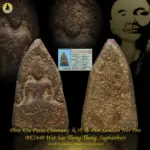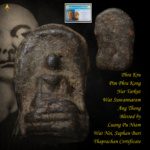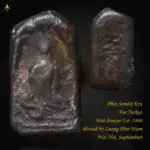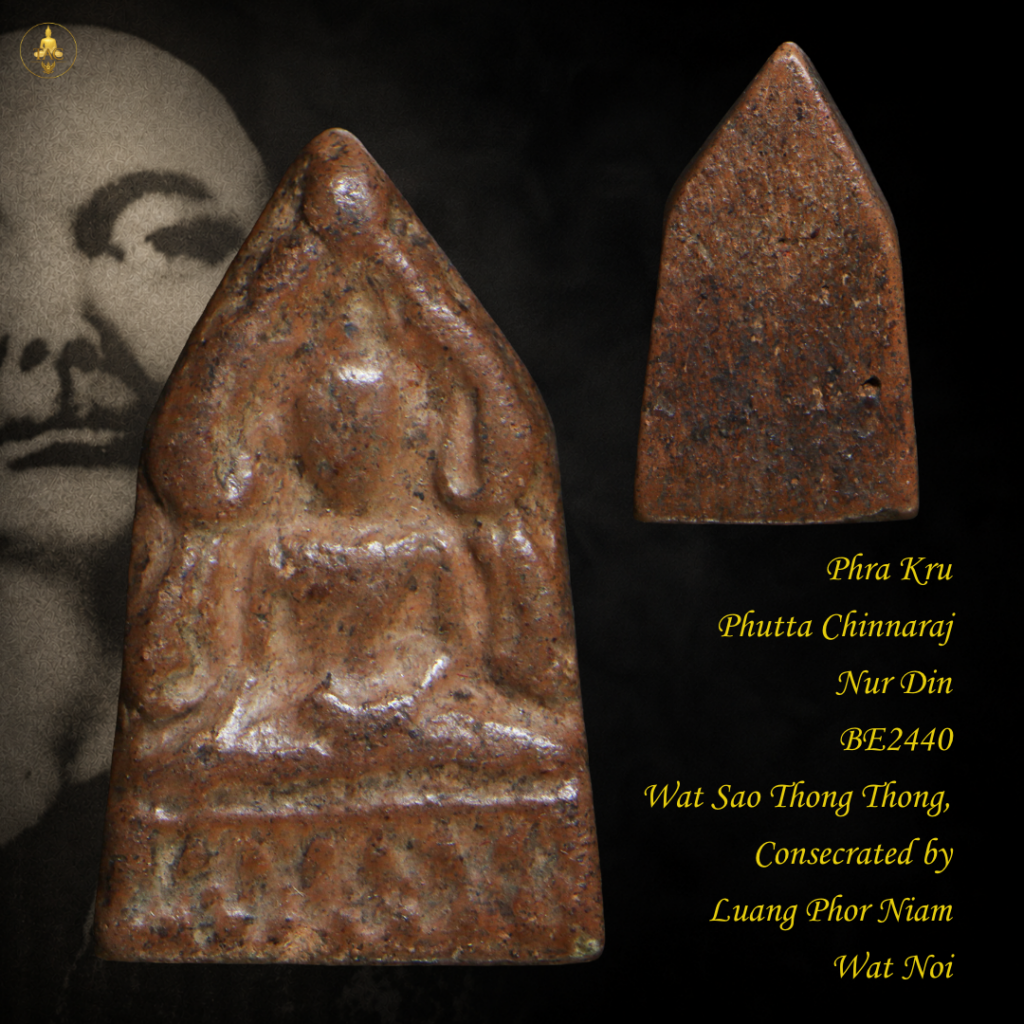
Phra Kru Phutta Chinnaraj Nur Din BE2440 Wat Sao Thong Thong, Consecrated by Luang Phor Niam Wat Noi
| Type | Phra Kru Phutta Chinnaraj |
| Monk | Luang Phor Niam Puttaso (Lp Niam), Wat Noi, Suphanburi |
| Temple | Wat Sao Thong Thong |
| B.E. Year | 2440 |
| Material | Nur Din |
| Condition | Good |
| SKU | TAC-PhraKruPhuttaChinnaraj-LpNiamWatNoi-001 |
Authentic Phra Kru Phutta Chinnaraj Luang Phor Niam Wat Noi, Wat Sao Thong Thong BE 2440. Nur Din terracotta. One of the earliest small-format Chinnaraj amulets. Singapore dealer.
What is the Phra Kru Phutta Chinnaraj amulet by Luang Phor Niam Wat Noi?
The Phra Kru Phutta Chinnaraj Luang Phor Niam Wat Noi is a historically significant Thai amulet created around BE 2430–2440 at Wat Sao Thong Thong in Suphanburi province. Crafted from Nur Din — a terracotta base of clay and ground rice mixture — this piece is widely regarded as one of the earliest known small-format representations of Phra Buddha Chinnarat in Thai amulet history.
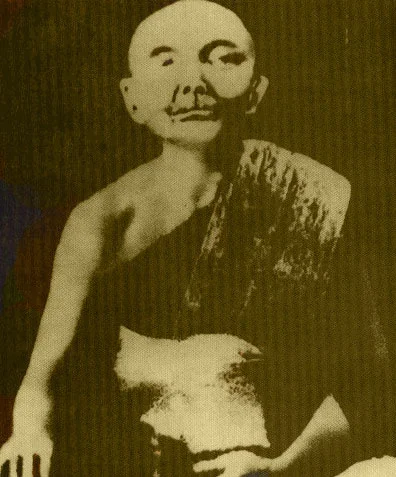
Luang Phor Niam Wat Noi was one of three highly respected ritual masters who presided over the grand Putthapisek consecration ceremony for this amulet series. He participated alongside Luang Pu Perm, abbot of Wat Sao Thong Thong, and Luang Por Nong of Khlong Madan Temple, forming a triad of revered masters whose combined spiritual authority is central to the Chinnarat lineage amulet tradition.
The consecration process emphasised scriptural chanting, mindful intention, and careful selection of sacred materials — practices that have contributed directly to the enduring reputation of the Phra Kru Phutta Chinnaraj Luang Phor Niam Wat Noi series among both devotees and serious collectors across Southeast Asia.
These pieces served a dual ritual role from their inception. They were installed as kru amulets on the ceilings of the chapel and simultaneously distributed to local villagers, reflecting the intent to perpetuate the Buddha’s teachings while extending protective blessings to the surrounding community. This unique dual function distinguishes them as both architectural sacred objects and personal devotional amulets.
Phra Kru Phutta Chinnaraj Luang Phor Niam Wat Noi and Wat Sao Thong Thong Heritage
Wat Sao Thong Thong, located in Suphanburi province, is historically recognised for its early Chinnarat-related votive tablets and the strength of its monastic leadership during the late 19th century. The temple played a pivotal role in establishing the Chinnarat image tradition within the central Thai amulet canon, and its output from this period is regarded as foundational by scholars and collectors alike.
The collaborative effort between Luang Pu Perm as abbot, Luang Phor Niam Wat Noi, and Luang Por Nong of Khlong Madan formed one of the most respected ritual partnerships of the era. Their combined emphasis on doctrinal rigour and precise ceremonial practice is widely credited with giving the Phra Kru Phutta Chinnaraj Wat Sao Thong Thong series its lasting spiritual and historical authority.
For collectors seeking to understand the broader context of Thai Buddhist amulet tradition, the Thai Buddhist amulet tradition reflects centuries of sacred craftsmanship in which temple, master, and material converge to produce objects of genuine devotional significance. The Wat Sao Thong Thong series from BE 2440 exemplifies this convergence at its most historically compelling.
Nur Din Phra Kru Phutta Chinnaraj — Composition and Craftsmanship
The Nur Din Phra Kru Phutta Chinnaraj is composed of a terracotta base incorporating clay and ground rice mixture, materials traditionally selected for their earthen purity and capacity to absorb sacred intent during consecration. Depending on the firing method and age of each individual piece, the colour spectrum ranges from reddish-brown through to deep black.
Surface finishes vary across this series: some pieces were gilded, others left in their natural fired state, and some were coated with rubber for preservation. Each finish reflects deliberate choices made during the production process, and all variants are considered authentic expressions of the original BE 2440 batch.
A particularly notable construction detail on authentic pieces is the presence of small holes or indentations on the reverse face. These marks are direct physical evidence of the amulets’ original attachment to ceiling panels or structural boards within the chapel — a feature that simultaneously confirms their historical function as architectural sacred objects and provides a key authentication marker for collectors.
Spiritual Benefits of Phra Kru Phutta Chinnaraj by Luang Phor Niam Wat Noi
According to Thai Buddhist belief, the Phra Kru Phutta Chinnaraj Luang Phor Niam Wat Noi is traditionally venerated for its broad protective and auspicious qualities. The Chinnarat image itself symbolises the unwavering victory of wisdom over defilements, making it a powerful and deeply meaningful devotional focus for practitioners and collectors alike.
Devotees across Singapore, Malaysia, and Greater China associate this amulet with the following spiritual qualities:
- Protection from dangers and obstacles — the Chinnarat image is regarded by devotees as a shield against physical and spiritual harm.
- Wealth attraction and financial stability — collectors associate this amulet with drawing favourable conditions for prosperity and material well-being.
- Metta Mahaniyom — traditionally venerated for cultivating charm and kindness that attracts goodwill and social support from others.
- Nobleman luck (Maha Amnaj) — regarded by devotees as drawing the support of benefactors, influential figures, and powerful allies.
Phra Kru Phutta Chinnaraj BE 2440 — Authentication and Collector Value
The Phra Kru Phutta Chinnaraj BE 2440 has been verified by Standard Amulet with certificate, supporting its originality and correct period attribution to the late 19th century. This certification provides collectors with documented assurance regarding the amulet’s provenance within the Wat Sao Thong Thong Chinnarat lineage.
As one of the earliest small-format representations of Phra Buddha Chinnarat in the Thai amulet tradition, pieces from this batch occupy a rare and distinguished position in the collector market. Their age of over 130 years, combined with the combined spiritual authority of the three presiding masters, places them firmly within the category of early Rattanakosin-era amulets of significant historical importance.
Collectors acquiring an authentic Thai amulet from this series — particularly through a reputable Thai amulet Singapore dealer — should verify the characteristic reverse holes, the Nur Din terracotta composition, and the presence of valid certification documentation. The natural ageing of the clay surface, consistent with pieces approaching 130 years old, is another reliable indicator of a genuine example.
Attributes reflect Thai Buddhist devotional tradition and are not measurable claims.