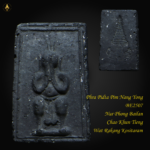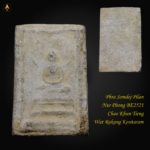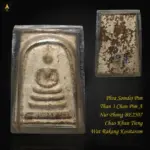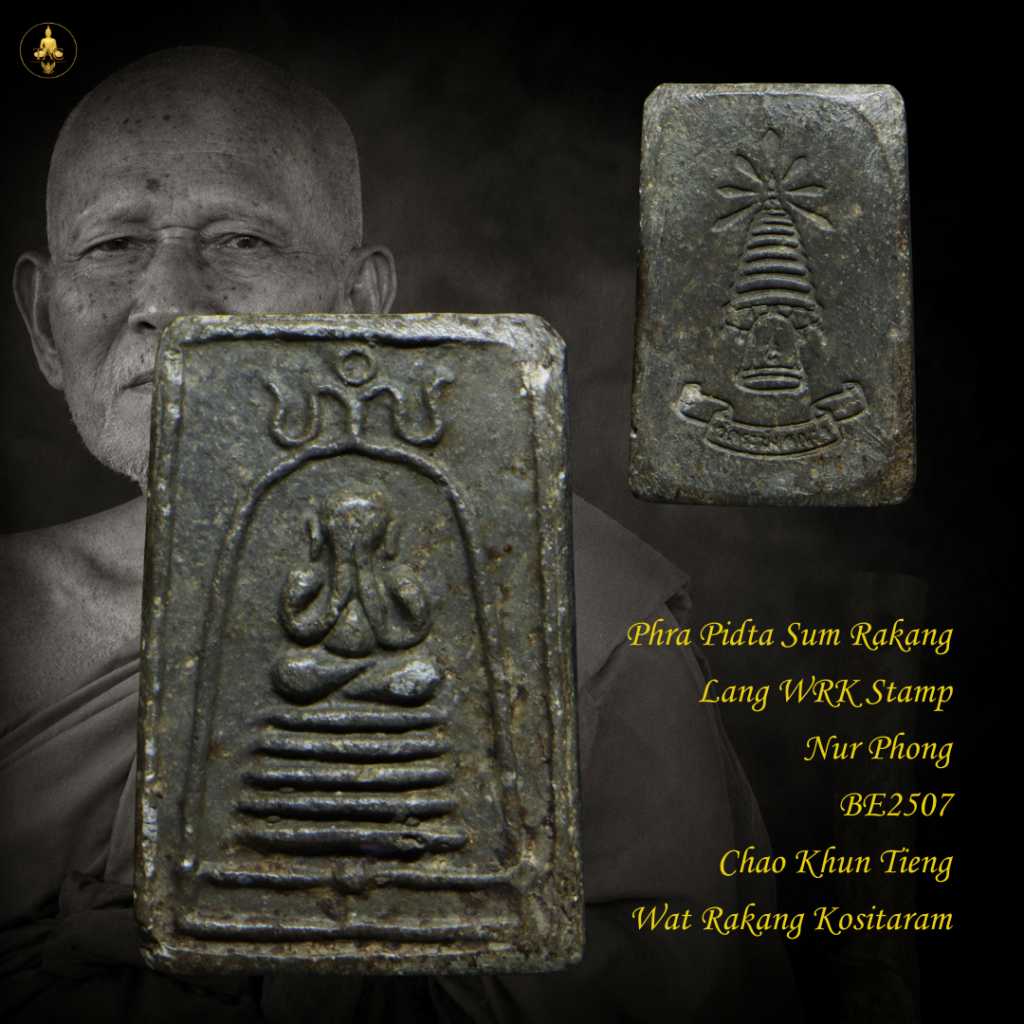
Phra Pidta Sum Rakang Lang WRK Stamp Nur Phong BE2507 Chao Khun Tieng Wat Rakang Kositaram
| Type | Phra Pidta Sum Rakang Lang WRK Stamp |
| Monk | Chao Khun Tieng (CK Tieng) (Phra Thammathirat Ratchamuni) Wat Rakang Kositaram |
| Temple | Wat Rakang |
| B.E. Year | 2507 |
| Material | Nur Phong |
| Condition | Good |
| SKU | TAC-PhraPidtaSumRakangLangWRKStamp-ChaoKhunTieng-001 |
Authentic Phra Pidta Sum Rakang Lang WRK Stamp Chao Khun Tieng, Wat Rakang BE 2507, Nur Phong. Highly sought by Singapore & SEA collectors.
What is the Phra Pidta Sum Rakang Lang WRK Stamp amulet by Chao Khun Tieng?
The Phra Pidta Sum Rakang Lang WRK Stamp Chao Khun Tieng is an authentic Thai amulet consecrated in BE 2507 at Wat Rakang, Bangkok. Crafted from Nur Phong (sacred powder), it features the Phra Pidta form — the “closed-eyes Buddha” — with the distinctive WRK stamp on the reverse, identifying its prestigious temple origin.
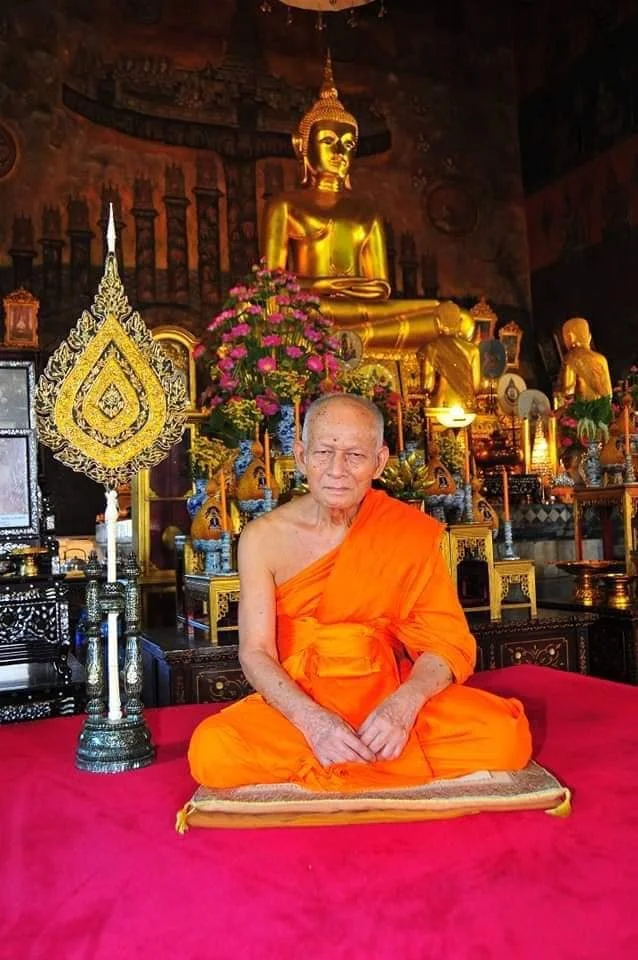
Chao Khun Tieng was a highly respected senior monk whose association with Wat Rakang lent great spiritual authority to the amulets produced under his guidance. His rank as a Chao Khun — a royal ecclesiastical title awarded to accomplished monks in Thailand — signifies deep mastery of Buddhist practice and Wicha (sacred knowledge).
The BE 2507 batch represents a significant period in Thai amulet history, when sacred powder amulets from Wat Rakang were produced with meticulous attention to both material purity and ritual consecration. Collectors regard pieces from this era as particularly potent examples of the Phra Pidta tradition.
Phra Pidta Sum Rakang Lang WRK Stamp and Wat Rakang Heritage
Wat Rakang, formally known as Wat Rakang Kositaram, is one of Bangkok’s most historically significant temples and has been a centre of Thai Buddhist amulet production for well over a century. Its association with sacred powder amulets is deeply embedded in the broader Thai Buddhist amulet tradition, which spans centuries of devotional practice across Thailand and Southeast Asia.
The WRK stamp — an abbreviation derived from Wat Rakang Kositaram — is a hallmark of authenticity and temple provenance, pressed into the reverse face of amulets to identify their sacred origin. For collectors seeking a Phra Pidta Sum Rakang Lang WRK Stamp Wat Rakang piece, this stamp is one of the primary markers of a genuine example from the temple’s storied production history.
Wat Rakang’s long tradition of producing Nur Phong amulets means that pieces bearing the WRK stamp are held in exceptionally high regard across collector communities in Singapore, Malaysia, Thailand, Hong Kong, Taiwan, and China. The temple’s enduring reputation makes these amulets perennial favourites among serious devotees.
Nur Phong Phra Pidta Sum Rakang Lang WRK Stamp — Composition and Craftsmanship
The Nur Phong Phra Pidta Sum Rakang Lang WRK Stamp is crafted from sacred powder — a composite material blended from consecrated herbs, dried flowers, mineral earths, aromatic resins, and blessed binding agents traditionally prepared by temple monks. Each ingredient is selected for its ritual significance and believed energetic properties within Thai Buddhist practice.
The powder mixture is pressed into moulds under carefully supervised conditions, with monks chanting Kata (sacred verses) throughout the production process to imbue each amulet with spiritual potency. The resulting Nur Phong tablet has a characteristic texture and density that experienced collectors can recognise as consistent with BE 2507-era Wat Rakang production standards.
The craftsmanship of the Phra Pidta Sum Rakang Lang WRK Stamp BE 2507 reflects the high standards maintained at Wat Rakang during this period. The fine detailing of the seated Phra Pidta figure, combined with the clearly impressed WRK reverse stamp, are hallmarks that distinguish authentic examples from later reproductions.
Spiritual Benefits of Phra Pidta Sum Rakang Lang WRK Stamp by Chao Khun Tieng
The Phra Pidta — meaning “closed eyes” — iconography is traditionally venerated in Thai Buddhist belief as a form representing inward meditation, self-sufficiency, and the closing off of negativity and misfortune. Devotees who wear or enshrine the Phra Pidta Sum Rakang Lang WRK Stamp Chao Khun Tieng regard it as a powerful protective presence in daily life.
Collectors and devotees across Singapore and the wider Thai amulet community associate this amulet with a range of traditional spiritual qualities, including:
- Protection from harm and misfortune — the Phra Pidta form is regarded by devotees as symbolically closing out negative forces and danger.
- Wealth attraction and financial wellbeing — collectors associate the closed-eyes posture with the accumulation and retention of wealth, as nothing is allowed to “escape” the bearer’s grasp.
- Metta (loving-kindness) and charm — the amulet is traditionally venerated for enhancing goodwill, social harmony, and the favour of others in both personal and business dealings.
Phra Pidta Sum Rakang Lang WRK Stamp BE 2507 — Authentication and Collector Value
Authenticating a Phra Pidta Sum Rakang Lang WRK Stamp BE 2507 requires close examination of several key features: the crispness and style of the Phra Pidta mould impression, the composition and ageing characteristics of the Nur Phong material, and the clarity and correct form of the WRK reverse stamp. Experienced collectors and specialist dealers examine these details against documented reference examples from the BE 2507 batch.
As a Chao Khun Tieng amulet from a respected senior monk at one of Bangkok’s most prestigious temples, this piece occupies a meaningful position in the Thai amulet collector market. Genuine examples from the BE 2507 series are considered scarce, and collector demand for well-preserved specimens remains consistent across Southeast Asia and Greater China.
For collectors in Singapore and the region seeking an authentic Thai amulet with verified temple provenance, the Phra Pidta Sum Rakang Lang WRK Stamp represents a highly desirable acquisition. The combination of Wat Rakang’s heritage, Chao Khun Tieng’s monastic credentials, and the BE 2507 production period positions this piece as a meaningful addition to any serious collection.
Attributes reflect Thai Buddhist devotional tradition and are not measurable claims.