Chapter 01
The short answer
Are Thai amulets Buddhist? Mostly, yes — the mainstream tradition and the most treasured pieces are Buddhist through and through. But the fuller answer is more interesting: Thai amulets grew out of a culture that blends Buddhism with older Brahmanic and animist beliefs, so the category also includes charms that aren't strictly Buddhist at all. Here's how to tell them apart (and if you're new to the subject, start with what a Thai amulet is).Chapter 02
What makes most of them Buddhist
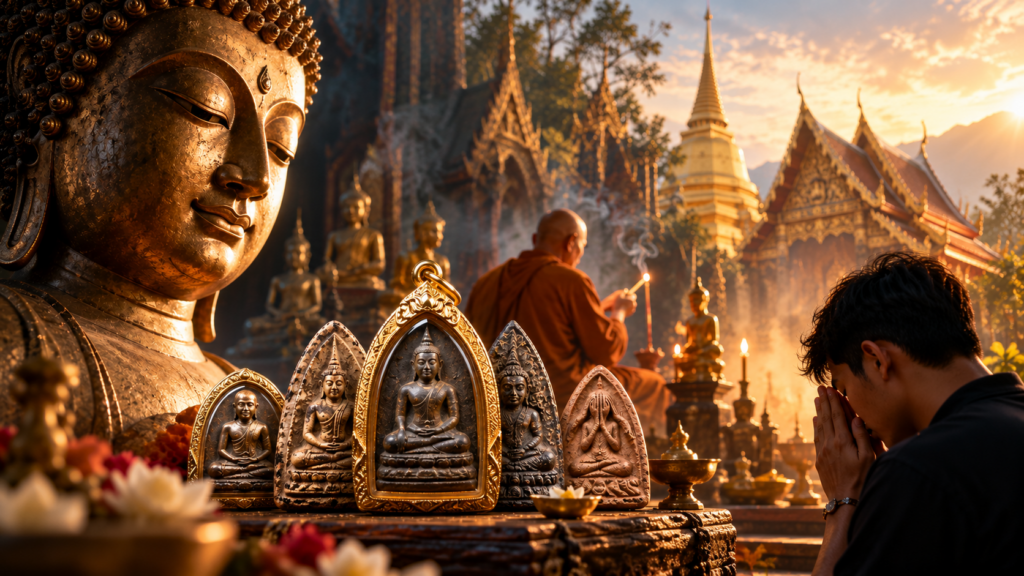
The great majority of Thai amulets are unmistakably Buddhist. They carry the image of the Buddha or a revered monk; they're made at temples; and — most importantly — they're consecrated by monks through chanting and blessing (pluk sek), often at a formal temple ceremony. The famous classical pieces — Phra Somdej, Phra Pidta, the Benjaphakhi — all sit firmly in this Buddhist heart of the tradition. When people picture a Thai amulet, this is what they're picturing.Chapter 03
The parts that aren't purely Buddhist
Alongside the Buddhist mainstream, you'll meet charms drawn from two older streams:- Brahmanic (Hindu-derived) — deities venerated within Thai practice, such as Phra Phrom (Brahma, of the Erawan shrine), Phra Pikanet (Ganesh), Phra Rahu, Hanuman and the hermit-sage lersi.
- Animist / folk — talismans rooted in spirit belief, such as Nang Kwak (the beckoning lady of fortune), Kuman Thong, the wealth-turtle Phaya Tao Ruean, and various takrut and spirit charms.
Chapter 04
Why the mix exists
Thai religion has never been a single, sealed system. Over centuries, Buddhism settled over an older base of Brahmanism and local spirit worship, and rather than erasing them it absorbed them. The result is a living, layered practice — a person can bow to the Buddha, make an offering to a Brahma shrine, and respect local spirits, all without feeling any contradiction. Amulets simply reflect that same layering.Chapter 05
Does that make them "less Buddhist"?
Not in the way Thais experience it. A devout Thai Buddhist might wear a Phra Somdej for blessing and a Nang Kwak for business, and see no conflict at all — the Buddhist piece and the fortune charm serve different corners of life. The honest summary is this: the core and most prized amulets are Buddhist, while the wider category also holds Brahmanic and animist talismans, and in practice the layers sit together rather than compete.Chapter 06
What this means if you're not Buddhist
You don't need to be Buddhist to wear a Thai amulet. Thai-Chinese communities and collectors worldwide wear them for their meaning, craft and history. What matters is respect — treating the piece as something meaningful rather than merely decorative. If you'd like a Buddhist piece specifically, look for a Buddha image or a monk's amulet with clear temple provenance; our guide to choosing and authenticating a Thai amulet walks you through it, and why Thai people wear them gives the wider context.Chapter 07
In closing
So — are Thai amulets Buddhist? The ones at the heart of the tradition certainly are, blessed by monks and made at temples. The broader world of Thai charms also draws on Brahmanic and animist belief, and in everyday Thai life those layers coexist comfortably. Knowing which is which simply helps you choose a piece whose meaning matches your own. When you're ready, browse our pieces and ask us anything.Chapter 08
Frequently Asked Questions
Are Thai amulets Buddhist?
Most are — they carry Buddha or monk images, are made at temples, and are consecrated by monks. The wider category also includes Brahmanic (Hindu-derived) and animist charms, which in Thai practice are worn alongside Buddhist pieces without conflict.Which Thai amulets are not Buddhist?
Charms drawn from older beliefs — Brahmanic deities like Phra Phrom (Brahma), Phra Pikanet (Ganesh) and Phra Rahu, and animist talismans like Nang Kwak, Kuman Thong and the wealth-turtle Phaya Tao Ruean. They're often still blessed by monks.Why do Thai amulets mix Buddhism with other beliefs?
Thai religion layered Buddhism over older Brahmanism and local spirit worship rather than replacing them. That syncretic, layered practice is reflected in the amulets Thais wear.Can non-Buddhists wear Thai amulets?
Yes. Thai-Chinese communities and collectors worldwide wear them for their meaning, craft and history. The key is to treat the piece with respect rather than as mere decoration.Are Thai amulets idols?
No. A Buddhist amulet is respected as a link to the virtue (barami) of the monk who blessed it and as a reminder to live well — not worshipped as an idol in its own right.Dealer's Note — Thai Amulets Collection has sourced and authenticated Thai amulets from Singapore since 2015, both the Buddhist classics and the Brahmanic and folk charms. We're always happy to explain the background of any piece and help you choose one whose meaning fits you — just message us on WhatsApp.