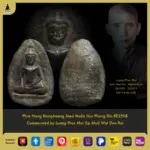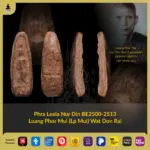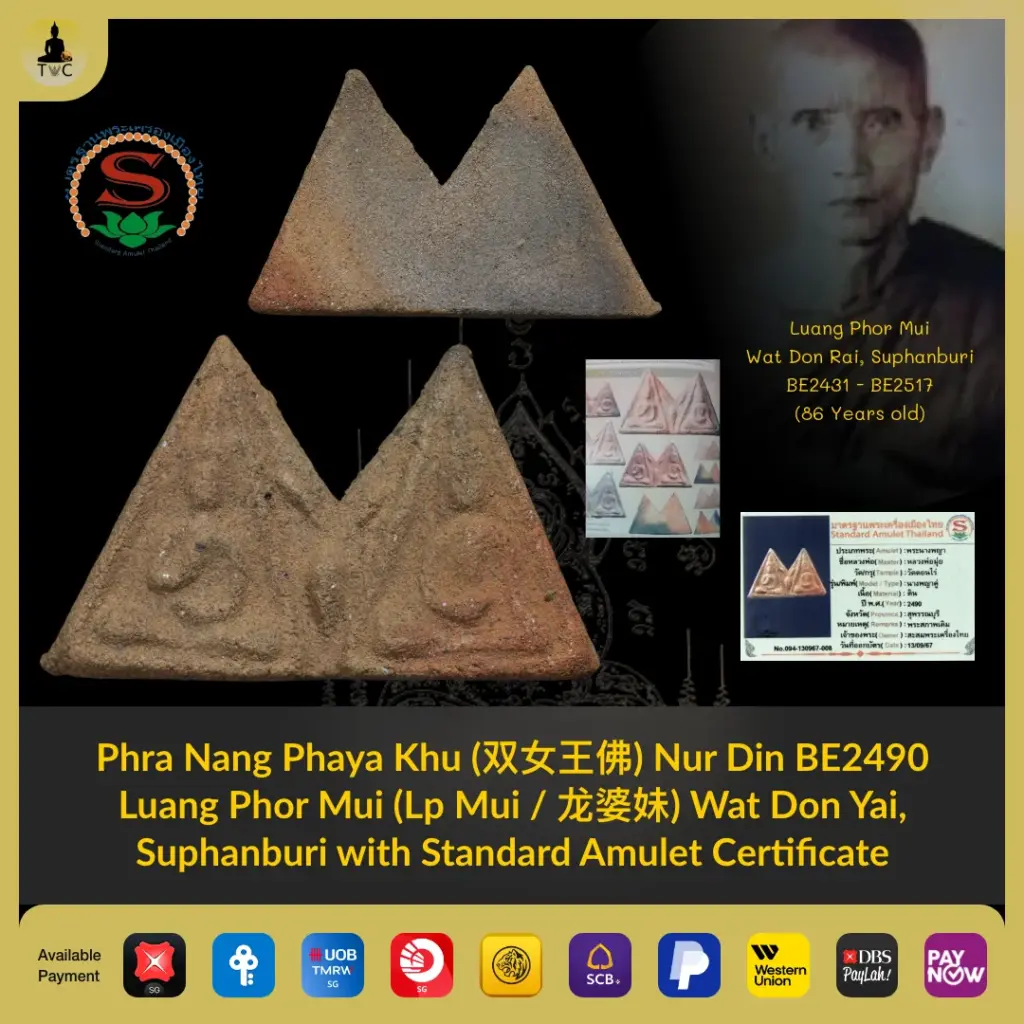
Phra Nang Phaya Khu (双女王佛) Nur Din BE2490 Luang Phor Mui (Lp Mui / 龙婆妹) Wat Don Yai, Suphanburi
| Monk | Luang Phor Mui Wat Don Rai |
| Temple | Wat Don Rai |
| B.E. Year | 2490 |
| Material | Din |
| SKU | TAC-0221 |
Phra Nang Phaya Khu (双女王佛) • Nur Din BE2490 / CE1947 • Wat Don Yai, Suphanburi • Consecrated by Luang Phor Mui (Phra Kru Suwanwutacharn) • Associated with Wat Don Yai’s mid-century earthen votive tradition
Phra Nang Phaya Khu (双女王佛) • Nur Din
BE2490 / CE1947 • Wat Don Yai, Suphanburi • Consecrated by Luang Phor Mui (Phra Kru Suwanwutacharn) • Associated with Wat Don Yai’s mid-century earthen votive tradition
Overview of the phim (molded form): a paired Nang Phaya presentation in nur din (sacred clay), attributed to LP Mui of Wat Don Yai in BE2490 / CE1947.
What This Piece Represents (Collector Lens)
In Thai amulet culture, Phra Nang Phaya pieces are often read through dignity, protection, and composed inner strength. This Phra Nang Phaya Khu carries an added collector interest because the “khu” or paired queen motif suggests doubled auspicious symbolism rather than a standard single-form presentation. Collectors typically look at how the triangular silhouette settles into the clay body, how the surface shows natural age, and whether the overall impression retains a calm, balanced phuttha silpa (Buddhist artistic character). For those who study provincial issues, this example also reflects post-war temple craftsmanship in Suphanburi, where sincerity of material often matters as much as visual sharpness.
Amulet Information
Name: Phra Nang Phaya Khu (双女王佛)
Material: Nur Din (din phet / sacred baked clay composite)
Year: BE2490 / CE1947
Temple: Wat Don Yai, Suphanburi
Province: Suphanburi
Monk: Luang Phor Mui (Phra Kru Suwanwutacharn)
Lineage Note: A mid-20th-century Wat Don Yai earthen amulet associated with Luang Phor Mui and the temple’s provincial votive tradition in Suphanburi.
SKU: TAC-LPMui-PhraNangPhayaKhu-001
Price:
SGD 238
History & Lineage — Phra Nang Phaya Khu (双女王佛) (Wat Don Yai, Suphanburi)
The historical reading of this piece sits within the late 1940s, a period when many regional temples continued issuing clay amulets for merit-making, temple support, and devotional use. In Thai amulet culture, a nur din body from this era is valued not only for age but for what it records: hand-mixed clay, simple mold pressing, and the practical conditions of provincial production. The paired “queen” interpretation gives this issue a distinct identity within the broader Nang Phaya family, where grace, steadiness, and protection are traditional themes.
Luang Phor Mui of Wat Don Yai is remembered among devotees as a disciplined monk whose amulets are appreciated for straightforward regional character rather than excessive ornament. Collectors typically study whether an LP Mui piece shows the honest visual language associated with local temple making: settled surfaces, measured form, and a restrained sacred presence or saksit (numinous sanctity) that comes through quietly. That collector lens is especially relevant with clay issues, where authenticity cues are often subtle rather than dramatic.
Wat Don Yai belongs to the old provincial temple culture of Suphanburi, where devotional objects often served both ritual and communal purposes. The issue purpose for this exact batch is not fully documented in the provided listing, but the surviving form, certificate reference, and material character support its reading as a temple amulet from a mid-century consecration context. In practice, collectors place such pieces within the broader lineage of regional earthen tablets made for faith, remembrance, and household veneration.
About the Material — Nur Din Composition
Nur din means an earth-based composition, but in Thai amulet study it often implies more than simple clay. Devotees and collectors understand such bodies to be prepared from selected soil, powdered sacred remnants, and sometimes herbal or temple-added binding matter before pressing and drying or firing. The evidence cues are usually tactile and visual: fine grit, mineral specks, tiny pores, edge softening, and a matte maturity that differs from modern commercial reproduction. When the surface remains coherent without looking overly fresh, collectors read that as a positive sign of age-consistent structure.
- Earth-toned clay body with natural micro-grit and small pores consistent with hand-prepared nur din.
- Surface maturity appears dry and settled rather than glossy, a useful cue in provincial clay amulet study.
- Edge transitions and minor texture variation suggest practical mold work instead of overly uniform modern casting.
Design / Pim / Variant Notes
The visual identity follows the classic Nang Phaya family through its triangular presence, but the “Khu” reading gives this example a special collector note. In amulet language, phim refers to mold or typology, and here the interest lies in how the form expresses paired-queen symbolism within a compact earthen body. Collectors usually study whether the upper apex, shoulder lines, and seated Buddha mass feel integrated rather than mechanically sharp. That integration matters because older clay pieces often carry their beauty through proportion and calm composition, not through aggressive detail. The result is a form that feels devotional first and technical second.
Traditional Spiritual Attributes & Metaphysical Properties
In Thai amulet culture, Nang Phaya amulets are traditionally associated with composed authority, protective grace, and a type of benevolent regard that supports daily conduct. Such attributes are matters of inherited belief and devotional interpretation, not measurable proof. Devotees often keep these pieces for metta (loving-kindness), household stability, and klaew klad (safe avoidance of danger), while collectors note how the paired motif may symbolically reinforce harmony and supportive relationships. The most respectful framing is that an amulet accompanies practice, character, and intention rather than replacing them.
- เมตตา (metta): Traditionally linked with warmth, likability, and smoother social dealings in personal or business settings.
- แคล้วคลาด (klaew klad): Commonly understood as protective blessing and safe passage through obstacles or uncertain situations.
- มหาลาภ (maha larp): Often interpreted as supportive fortune, especially when paired with disciplined conduct and right livelihood.
Rarity & Collector Significance — Phra Nang Phaya Khu (双女王佛) BE2490
From a collector standpoint, the significance of this piece rests in three converging factors: the BE2490 / CE1947 date, the LP Mui attribution at Wat Don Yai, and the paired Nang Phaya interpretation in an earthen medium. Regional clay amulets can be overlooked when compared with more famous central-market issues, yet that is precisely why well-preserved documented examples attract serious study. Evidence cues include coherent clay aging, stable overall form, and a certificate accompanying the piece. Collectors typically value such amulets for their provincial honesty, lineage context, and their ability to show how mid-century Thai temple culture expressed sacred art through modest material means.
Conclusion
Phra Nang Phaya Khu in nur din from Wat Don Yai offers more than a devotional object; it offers a readable chapter in Suphanburi temple material culture. The LP Mui association, the BE2490 / CE1947 dating, and the paired-queen motif together make it meaningful for both devotees and collectors. In practical collector terms, this is the kind of piece best appreciated slowly: by studying the clay, the proportion, the quiet sacred tone, and the continuity it shares with older provincial amulet traditions.
Front view showing the triangular Nang Phaya outline, seated Buddha form, and naturally matured nur din surface.
Back view with compact earthen body, natural handling wear, and surface character useful for collector study.
Side profile image not separately provided in the source set; overview image is repeated here for layout continuity and overall thickness reference.
Attributes reflect Thai Buddhist devotional tradition and are not measurable claims.
![[SOLD] Singha Nur Na Gae BE2512 Luang Phor Mui Wat Don Rai, Suphan Buri](https://tac-media.sgp1.digitaloceanspaces.com/2026/03/singha-nur-na-gae-be2512-luang-phor-mui-wat-don-rai-suphan-buri-150x150.webp)