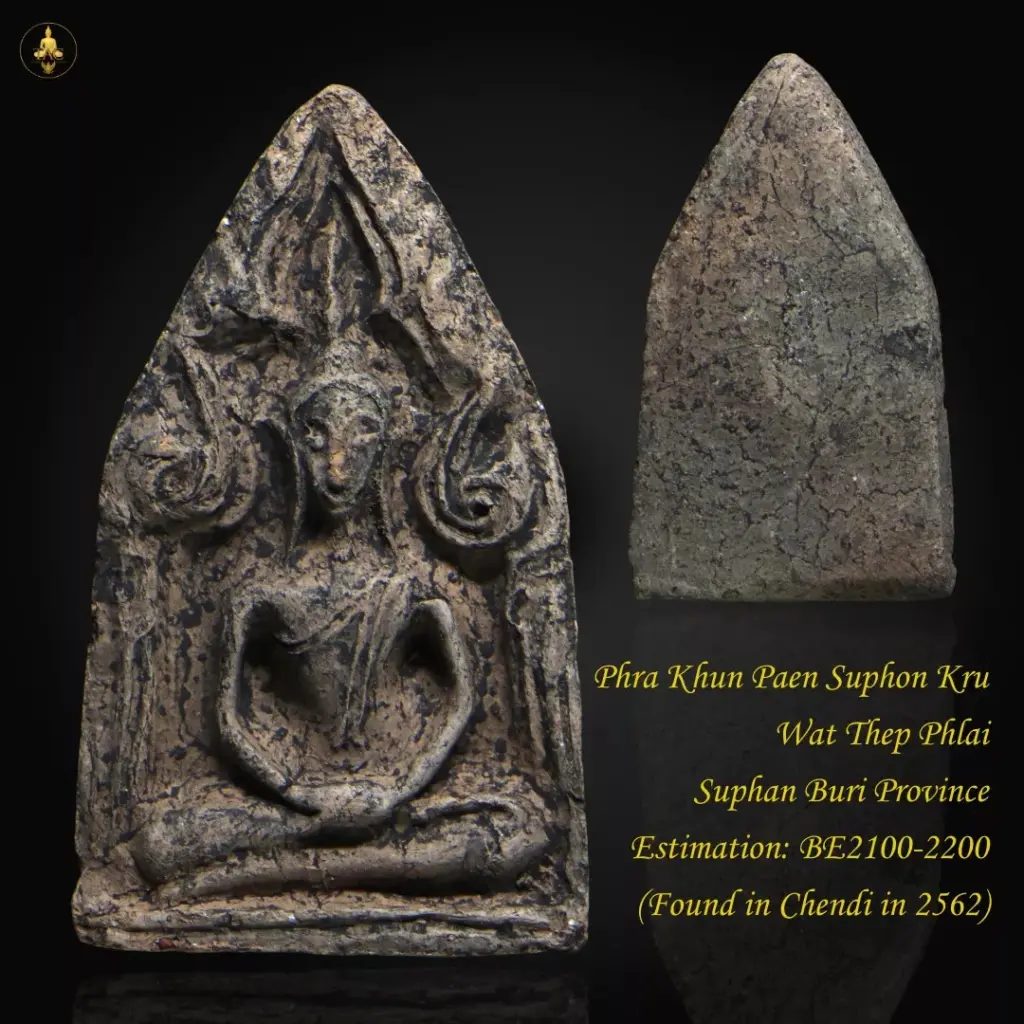
Phra Khun Paen Suphon Kru Nur Din Wat Thep Phlai Suphan Buri Province Estimation: BE2100-2200 (Found in Chendi in 2562)
| Type | Phra Khun Paen |
| Temple | Wat Thep Phlai |
| B.E. Year | 2100 |
| Material | Din |
| SKU | TAC-0491 |
Phra Khun Paen Suphon Kru • Ancient Kru Find BE2100-2200 (Estimated) • Wat Thep Phlai, Suphan Buri • Chedi find reported in BE2562 • Old Khun Paen devotional form in classic kru style O
Phra Khun Paen Suphon Kru • Ancient Kru Find
BE2100-2200 (Estimated) • Wat Thep Phlai, Suphan Buri • Chedi find reported in BE2562 • Old Khun Paen devotional form in classic kru style
Overview of an old Phra Khun Paen kru amulet attributed to Wat Thep Phlai, Suphan Buri. In Thai amulet culture, pieces described as พระกรุ are typically appreciated through burial history, old surface character, and regional mold identity rather than modern finish.
What This Piece Represents (Collector Lens)
This piece represents the appeal of a traditional Suphan Buri kru discovery: old devotional form, archaeological context, and the visual language of age. Collectors typically approach this kind of Khun Paen through its burial provenance, earthen surface, mold silhouette, and regional identity. The listing’s note that the piece was found in a chedi in BE2562 adds an important contextual layer, because kru amulets are valued not only as Buddhist objects but also as survivors of long temple history.
Amulet Information
Name: Phra Khun Paen Suphon Kru / พระขุนแผน สุพรรณ กรุ
Material: Ancient fired clay / earthen composition (old kru material appearance)
Year (BE): Estimated BE2100-2200
Temple: Wat Thep Phlai, Suphan Buri / วัดเทพพลาย สุพรรณบุรี
Monk: Not available
Lineage Note: Old kru amulet attributed to Wat Thep Phlai, with listing noting discovery in a chedi in BE2562
SKU: TAC-WatThepPhlai-PhraKhunPaenSuphonKru-001
Price:
SGD 608
History & Lineage Context
The listing identifies this amulet as Phra Khun Paen Suphon Kru from Wat Thep Phlai in Suphan Buri Province, with an estimated date range of BE2100-2200 and a note that it was found in a chedi in BE2562. In collector language, that immediately places the piece in the kru-amulet category, where burial context and old temple deposition become central to how the amulet is understood.
No individual monk maker is specified in the source details, which is normal for many older kru finds. In Thai amulet culture, ancient temple-buried pieces are often studied as products of an earlier religious era, with attention placed on temple provenance, regional mold family, age-consistent surfaces, and how the object aligns with other accepted finds from the same kru tradition.
Suphan Buri has long been regarded as one of the important historical provinces in Thai amulet collecting, especially for old kru material. Because of that reputation, amulets described as Suphan kru pieces are typically examined with particular care: collectors look at old clay texture, burial accretions, mold balance, and whether the overall visual language feels coherent with ancient central Thai devotional art.
About the Material
The source listing does not provide a formal material label, but the visual presentation reads as an ancient fired-clay or earthen kru composition. For old burial amulets, collectors usually avoid over-precise material claims unless laboratory or reference documentation exists. Instead, they study the visible body of the amulet through tone, porosity, burial dryness, mineral accretion, and the natural wear patterns that develop over long deposition periods.
- Old kru amulets are often appreciated through surface truthfulness: whether the clay body, aging, and burial character appear naturally integrated.
- Collectors typically study recessed areas, edges, and high points to see whether wear and soil interaction look consistent with long-term deposition.
- When the exact recipe is unknown, the safest collector description is to frame the piece as an ancient earthen or fired-clay devotional object with kru characteristics.
Design / Pim / Variant Notes
This amulet follows the recognisable Phra Khun Paen devotional type, a standing or seated noble-heroic Buddhist image format deeply rooted in Thai amulet culture. In practical collector terms, the focus is on overall silhouette, figure placement, frame outline, rear surface behavior, and the way the mold presents as an old kru example rather than a later commemorative issue. Because no separate named pim is supplied in the listing, the piece is best described carefully and comparatively rather than forced into an unsupported subtype.
Traditional Spiritual Attributes & Metaphysical Properties
In Thai amulet culture, Khun Paen amulets are traditionally associated with a blend of เมตตา (metta or warm regard), มหาเสน่ห์ (mahasaneh or strong charm), and คุ้มครอง (protective support). Older kru examples are also often worn as devotional links to merit, history, and reverence for the Buddhist past. These are traditional cultural attributions rather than guarantees, and collectors usually frame them respectfully within the context of faith, conduct, and personal devotion.
- เมตตา (Metta): Traditionally associated with a gentler social presence and smoother interpersonal dealings.
- มหาเสน่ห์ (Mahasaneh): In Thai amulet culture, Khun Paen pieces are often linked with charisma and personal attraction.
- คุ้มครอง (Khum Khrong): Devotees may also regard old kru amulets as protective devotional companions grounded in merit and reverence.
Rarity Assessment & Collector Significance
Rarity should be described carefully. The listing gives meaningful evidence cues — Wat Thep Phlai attribution, Suphan Buri provenance, estimated BE2100-2200 dating, and chedi discovery reported in BE2562 — but it does not provide a formal excavation report, issue count, or named reference classification. For that reason, the strongest collector significance comes from the kru context itself: old temple-buried origin, regional importance of Suphan Buri, and the visual impression of an ancient Khun Paen form. In collector practice, those features make the piece worthy of serious study even when some historical fields remain open.
Conclusion
This Phra Khun Paen Suphon Kru is best appreciated as an old Suphan Buri kru devotional piece with temple-burial context and strong historical atmosphere. Its appeal lies in its age language, kru surface character, and the enduring collector fascination with ancient Khun Paen forms from central Thailand. Rather than needing exaggeration, the piece speaks through provenance, material honesty, and the quiet weight of a temple find.
Front reference view showing the Khun Paen form, frame outline, and old surface character.
Back reference view for studying clay body, rear surface behavior, and burial-age consistency.
Side reference image: Not available
No side-view image was provided in the source set.
Attributes reflect Thai Buddhist devotional tradition and are not measurable claims.