Luang Phor Sothon, Wat Sothon Wararam Worawihan, Chachoengsao Province, for building the Ubosot BE2535 (with original temple box)
S$10
S$18save S$8 (44%)

| Type | Phra Somdej |
| Monk | Luang Phor Phueng (Lp Phueng) Wat Sawang Arom, Supan Buri |
| Temple | Wat Sawang Arom |
| B.E. Year | 2462 |
| Material | Phong |
| SKU | TAC-0585 |
Luang Phor Sothon, Wat Sothon Wararam Worawihan, Chachoengsao Province, for building the Ubosot BE2535 (with original temple box)
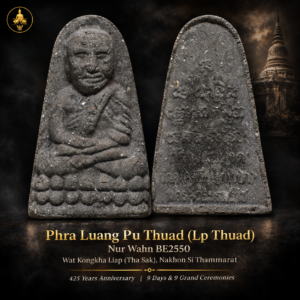 Phra Luang Pu Thuad (Lp Thuad) Nur Wahn BE2550 Wat Kongkha Liap (Tha Sak), Nakhon Si Thammarat (425 Years Anniversary, 9 Days & 9 Grand Ceremonies)
 Phra Pang Umbat (Wednesday Buddha) BE2512 Luang Phor Tae (Lp Tae) Khongthong Wat Sam Ngam
 Phra Lp Thuad 龙婆托 (Shenzhen Version) Pim Lek (RED) BE2539 Phor Than Wan Apiyo Wat Saba You Blessed by Archan Nong Wat Sai Khao
 Phra Mahesuan Nur Tarkut BE2552 Luang Phor Tad (Lp Tad) Wat Chaina with original temple box
Each adds this amulet plus the offer at the bundle price — ready at checkout, or mention it when you enquire on WhatsApp.
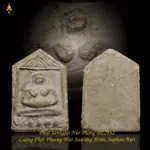
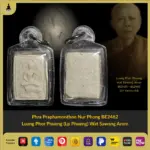
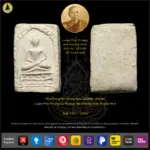
Authentic Phra Somdej by Luang Phor Phueng (Lp Phueng) Wat Sawang Arom, Supan Buri. BE 2462 phong amulet from Wat Sawang Arom, Suphan Buri. Over 100 years old.
The Phra Somdej Luang Phor Phueng (Lp Phueng) Wat Sawang Arom, Supan Buri is a sacred phong (powder) amulet created in BE 2462 (1919) at Wat Sawang Arom, Suphan Buri. Pressed from muan sarn — a sacred powder blend accumulated by Luang Phor Phueng through years of yant inscription ritual — and consecrated over three months of continuous chanting, it represents serious early-twentieth-century Thai amulet making.
Luang Phor Phueng (Lp Phueng) Wat Sawang Arom, Supan Buri did not take shortcuts with his muan sarn. His method was methodical: he wrote yant (sacred inscriptions) repeatedly on a slate board using chalk, erased them, then collected the chalk residue. That cycle continued until the accumulated phong — the nuea (substance) of the amulet — was sufficient to press a batch.
The process meant every particle of powder had passed through a consecration act. When the molds were finally filled, Luang Phor Phueng chanted incantations throughout the pressing. That dual layer — accumulated ritual in the powder itself, then active blessing during pressing — is what distinguishes his production method from simpler powder amulets of the same era.
His standing among Suphan Buri monks was solid, though he operated outside the circle of the most nationally famous masters of his generation. Collectors familiar with the Suphan Buri province often place him alongside other disciplined rural practitioners whose work repays closer attention. The Thai Buddhist amulet tradition has long recognised that provincial masters working with rigorous personal practice can produce pieces that outlast their own fame.
Once the amulets were pressed, they moved into the main chapel at Wat Sawang Arom. Monks chanted morning, noon, and night across three months — a phutthaphisek (grand consecration ceremony) by any practical measure. After that collective phase, Luang Phor Phueng personally blessed each piece again, channelling his own accumulated meditative energy into individual amulets.
The pim (mould form collectors authenticate against) on this piece depicts a Phra Putta Kwak — the Buddha in a gesture associated with calling wealth and prosperity. The nuea is phong throughout, pressed firm. Age-appropriate surface characteristics for a BE 2462 piece will show over a century of natural ageing in the powder matrix. That ageing, visible under close examination, is one of the primary authentication markers.
No third-party certificate accompanies this piece. For a piece of this age, authentication rests on the pim characteristics, the condition of the phong surface, and comparison against documented reference examples from Luang Phor Phueng’s known output.
Age, pim integrity, and surface condition drive value here. Collectors examining a BE 2462 phong piece should check that the powder matrix shows genuine age rather than artificial treatment, that the pim lines are sharp and consistent with documented examples, and that there is no restoration work that alters the original surface.
Luang Phor Phueng’s pieces from this period are less widely traded than those of the most prominent national masters, which cuts both ways. Prices remain accessible compared with equivalent-age pieces from more famous monks, but authentication requires familiarity with his specific output. For a collector building a serious Suphan Buri province collection, that combination of age, documented method, and relative scarcity is exactly the kind of gap worth filling.
This BE 2462 phong piece from Luang Phor Phueng's Wat Sawang Arom is one of the older items we carry from the Suphan Buri province, and the production method alone — muan sarn built up through years of personal yant ritual — sets it apart from routine powder amulets of the same period. For a collector focused on early-twentieth-century provincial masters, this is the kind of piece that rewards careful study rather than impulse.
Attributes reflect Thai Buddhist devotional tradition and are not measurable claims.