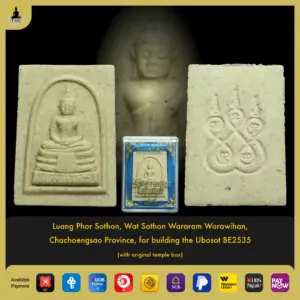
 Luang Phor Sothon, Wat Sothon Wararam Worawihan, Chachoengsao Province, for building the Ubosot BE2535 (with original temple box)
S$10
S$18save S$8 (44%)
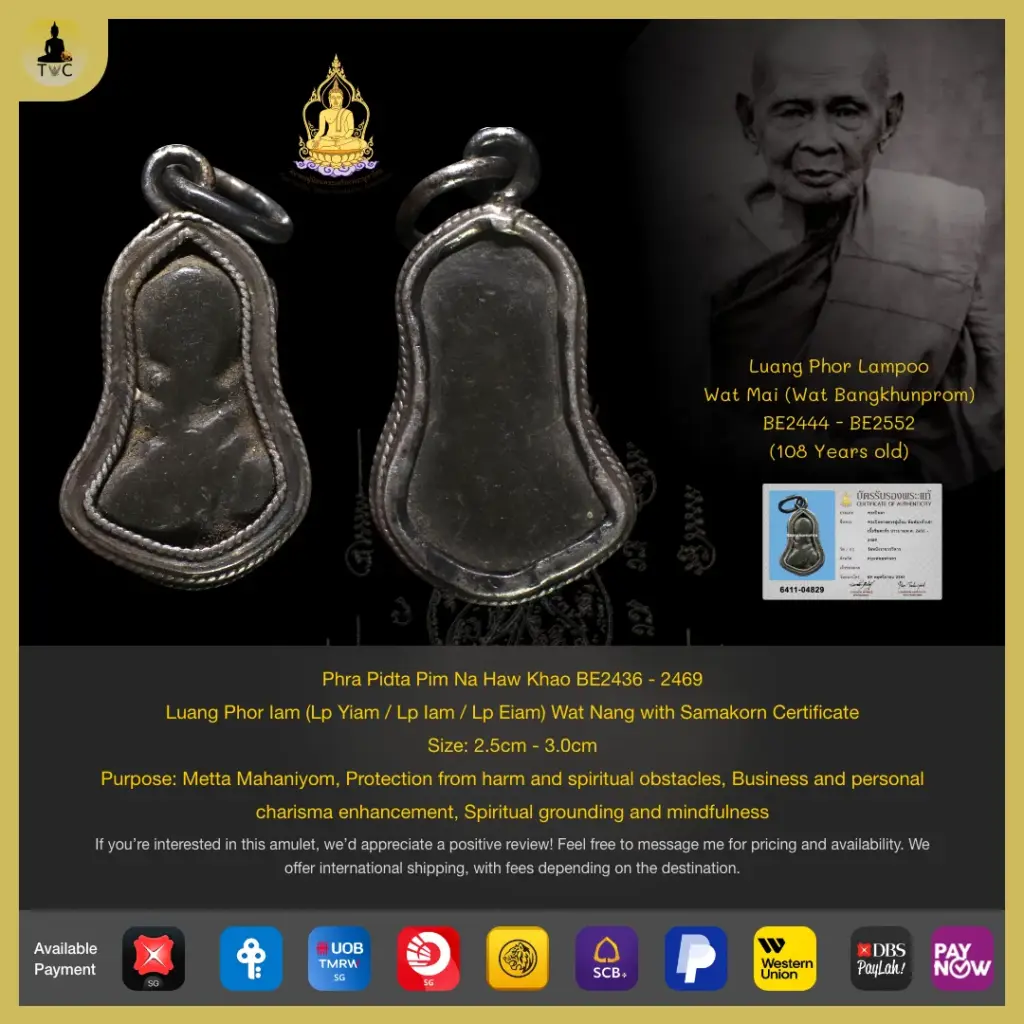
| Type | Phra Pidta |
| Monk | Luang Pu Iam (Phra Kru Kasem Kitkoson) Wat Nang Ratchawihan |
| Temple | Wat Nang Ratchawihan |
| B.E. Year | 2436 |
| Condition | Fair |
| Certificate | Samakom |
| SKU | TAC-0590 |
Luang Phor Sothon, Wat Sothon Wararam Worawihan, Chachoengsao Province, for building the Ubosot BE2535 (with original temple box)
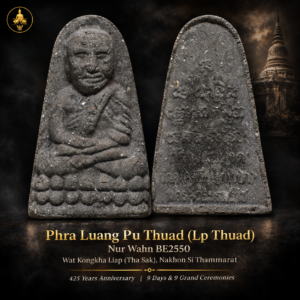 Phra Luang Pu Thuad (Lp Thuad) Nur Wahn BE2550 Wat Kongkha Liap (Tha Sak), Nakhon Si Thammarat (425 Years Anniversary, 9 Days & 9 Grand Ceremonies)
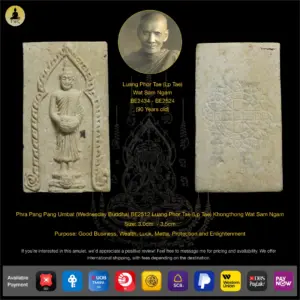 Phra Pang Umbat (Wednesday Buddha) BE2512 Luang Phor Tae (Lp Tae) Khongthong Wat Sam Ngam
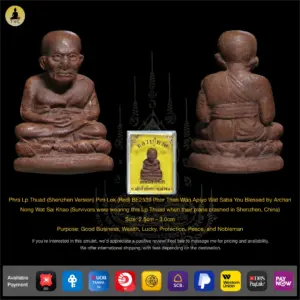 Phra Lp Thuad 龙婆托 (Shenzhen Version) Pim Lek (RED) BE2539 Phor Than Wan Apiyo Wat Saba You Blessed by Archan Nong Wat Sai Khao
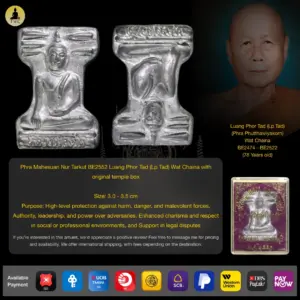 Phra Mahesuan Nur Tarkut BE2552 Luang Phor Tad (Lp Tad) Wat Chaina with original temple box
Each adds this amulet plus the offer at the bundle price — ready at checkout, or mention it when you enquire on WhatsApp.
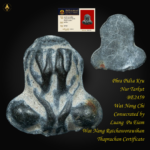
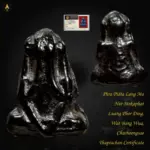
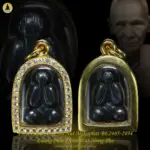
Authentic Phra Pidta by Luang Pu Iam (Phra Kru Kasem Kitkoson) Wat Nang Ratchawihan, BE 2436–2469. Sacred powder, Na Haw Khao pim. Certified Samakom.
The Phra Pidta Luang Pu Iam (Phra Kru Kasem Kitkoson) Wat Nang Ratchawihan is a sacred powder amulet pressed in the Na Haw Khao pim and produced across the BE 2436–2469 period at Wat Nang Ratchawihan, Bangkok. Luang Pu Iam personally supervised creation and consecration at every stage. Certified by Samakom, surviving examples now exceed 130 years of age.
Luang Pu Iam (Phra Kru Kasem Kitkoson) Wat Nang Ratchawihan held the ecclesiastical title Phra Kru Kasem Kitkoson — a formal recognition of his seniority within the Thai Theravada monastic hierarchy. His amulet-making practice spanned several decades at Wat Nang Ratchawihan, and he is consistently ranked among the foremost Phra Pidta masters in Thai amulet scholarship and collector consensus. That standing is not recent revisionism; it was documented while he was still active.
What distinguishes his output is the degree of personal involvement. He did not delegate the ritual stages or abbreviate the consecration process. Every batch of muan sarn (sacred powder blend) was formulated under his direction, and the pluk sek (consecration ceremony) involved Luang Pu Iam entering deep meditative absorption — kathā incantation sustained across multiple sessions — to concentrate intention directly into each piece.
The Phra Pidta form itself — a seated figure with both hands covering the face — carries specific meaning here. For Luang Pu Iam, it was a direct expression of the sensory withdrawal he practised throughout his monastic life, not a decorative convention adopted for the market. That alignment between the monk’s own practice and the iconography he chose to produce is one reason serious collectors rate his Phra Pidta above comparable issues from the same era.
Wat Nang Ratchawihan is a Bangkok temple whose reputation in the amulet world is anchored almost entirely to Luang Pu Iam’s tenure there. The temple served as both his place of practice and the ritual centre where the Na Haw Khao pieces were produced and consecrated. Its place in Thai amulet history is inseparable from his name.
During the late nineteenth and early twentieth centuries, Wat Nang Ratchawihan conducted multi-session consecration ceremonies that drew broader monastic participation. These extended blessing rituals were designed to layer and concentrate protective energy within each amulet — consistent with the classical frameworks described in the wider Thai Buddhist amulet tradition. Collectors recognise those ceremonies as a key factor in the series’ enduring desirability.
The BE 2436 start date places the earliest examples firmly in the final decade of the nineteenth century. Attrition through loss, damage, and institutional acquisition has meaningfully reduced the number of verified pieces remaining in private circulation. What was already a finite run has become genuinely scarce.
The muan sarn used for these amulets incorporated ground material from ancient Buddhist manuscripts and temple wall plaster, holy ash from ceremonial incense, and rare medicinal herbs with established ritual significance. The precise formulation was determined by Luang Pu Iam himself and varied across batches within the BE 2436–2469 production period. Certain examples also carry metal inserts or surface treatments in gold or silver — these are original to the piece, not later additions, and are consistent with documented craftsmanship practices of the era.
The pim designation Na Haw Khao identifies a specific facial expression and compositional layout that sets this Phra Pidta variant apart from other Luang Pu Iam issues. Correct identification depends on three things:
Samakom certification — from the Thai Amulet Association, the principal certifying body across the collecting community — confirms that a piece has passed physical inspection against documented reference standards for this exact pim and era. It is a baseline requirement for any serious acquisition, and it directly affects where a piece sits in the market. Always verify that the certificate accompanies the physical amulet and that the mould designation on the certificate matches the piece in hand.
We at TAC consider the Phra Pidta Pim Na Haw Khao by Luang Pu Iam (Phra Kru Kasem Kitkoson) Wat Nang Ratchawihan to be one of the most doctrinally grounded Phra Pidta series accessible to collectors today, with a production history traceable to BE 2436 and supported by Samakom certification. For a collector seeking a certified, century-old Phra Pidta with a well-documented monastic lineage and strong recognition across Singapore, Malaysian, and Chinese-speaking markets, this piece represents a serious and considered acquisition.
Attributes reflect Thai Buddhist devotional tradition and are not measurable claims.