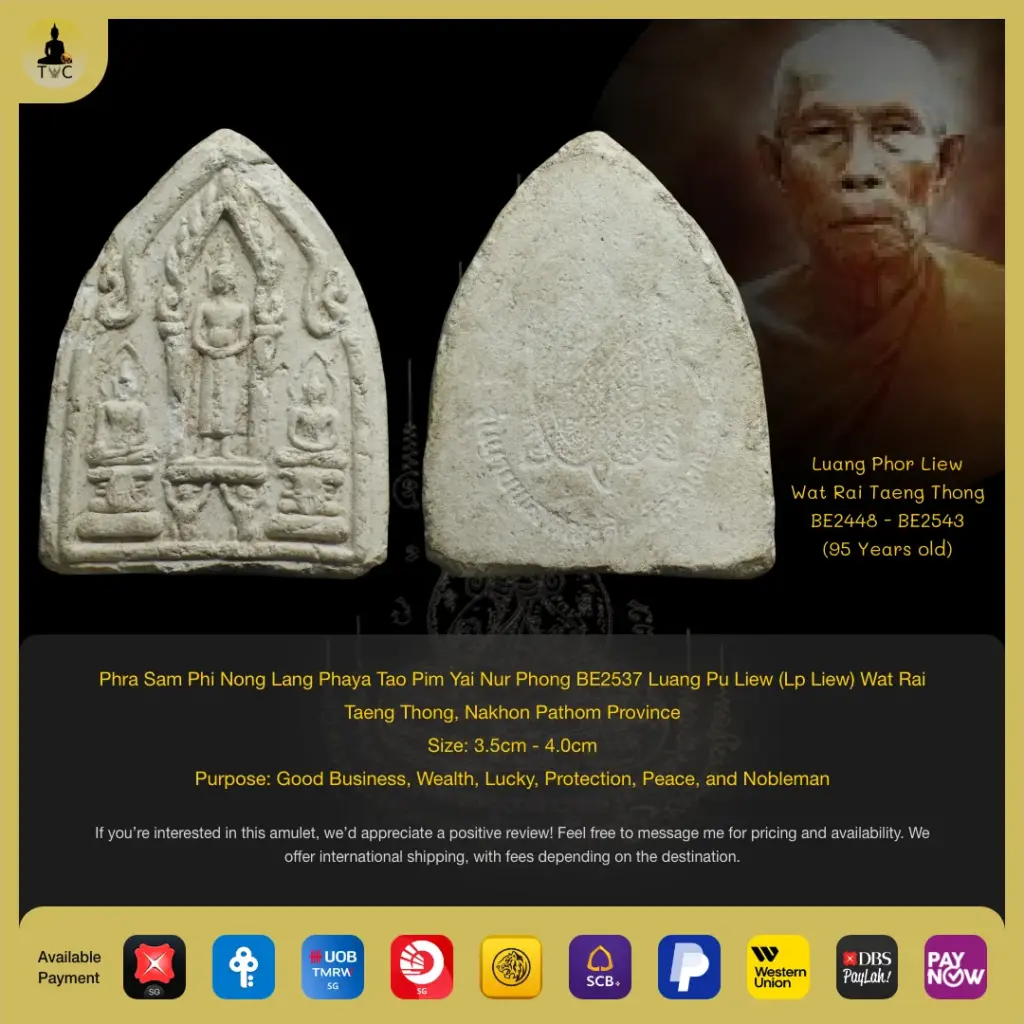
Phra Sam Phi Nong Lang Phaya Tao Pim Yai Nur Phong BE2537 Luang Pu Liew (Lp Liew) Wat Rai Taeng Thong, Nakhon Pathom Province
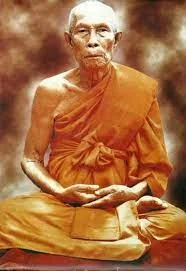
| Monk | Luang Phor Liew (Lp Liew) Wat Rai Taeng Thong |
| Temple | Wat Rai Taeng Thong |
| B.E. Year | 2537 |
| Material | Phong |
| SKU | TAC-0787 |
Authentic Phra Sam Phi Nong Lang Phaya Tao Pim Yai Nur Phong BE2537 Luang Pu Liew (Lp Liew) Wat Rai Taeng Thong, Nakhon Pathom Province by Luang Phor Liew (Lp…
What is the Phra Sam Phi Nong Lang Phaya Tao Pim Yai Nur Phong BE2537 Luang Pu Liew (Lp Liew) Wat Rai Taeng Thong, Nakhon Pathom Province by Luang Phor Liew (Lp Liew) Wat Rai Taeng Thong?
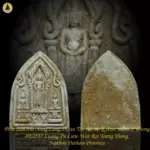
The Phra Sam Phi Nong Lang Phaya Tao Pim Yai Nur Phong BE2537 Luang Pu Liew (Lp Liew) Wat Rai Taeng Thong, Nakhon Pathom Province by Luang Phor Liew (Lp Liew) Wat Rai Taeng Thong is a large-mould sacred powder amulet issued in BE2537 (1994) at Wat Rai Taeng Thong, Nakhon Pathom. The obverse shows three seated Buddha figures; the reverse carries the Phaya Tao Ruean (Turtle King deity) image, a signature of LP Liew’s output.
The monk behind this piece and why Wat Rai Taeng Thong matters
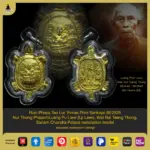
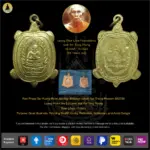
Luang Phor Liew (Lp Liew) Wat Rai Taeng Thong built his reputation largely on his deep knowledge of Phaya Tao Ruean — the Turtle King — and the sacred sciences surrounding it. Among collectors familiar with Nakhon Pathom province, LP Liew is the name most closely tied to turtle-deity amulets in phong (sacred powder blend) form. His pieces in this category are regularly compared with Phaya Tao Ruean coins and statues from the same temple.
Wat Rai Taeng Thong is the anchor for this entire lineage. The BE2537 batch was created partly to support temple construction and charitable education projects, which is common practice for major Thai temple editions. Understanding that context matters to collectors: these were not commercial runs produced offsite. The phutthaphisek (consecration ceremony) was led personally by LP Liew and extended across multiple rounds of chanting and meditation over several months. Senior monks from neighbouring provinces were also invited to co-bless the batch at the temple itself.
For a broader picture of how temple-issued sacred powder amulets fit within Thai devotional culture, the Thai Buddhist amulet tradition provides useful background.
How the phong was composed and the pim was struck
The nuea (material/substance) here is phong — a compressed sacred powder blend rather than metal or resin. For this batch, the muan sarn (the sacred powder blend itself) draws on several components documented in the original temple records. Phong Itthije and Phong Wahn Saan Ya — powders derived from sacred herbs and flowers used in prior major ceremonies — form part of the base. Ground material from old amulets and yant (sacred inscription) scrolls, including some from earlier LP Liew consecrations, was also incorporated.
Beyond those, soil from sacred temple grounds was blended in alongside powders from old votive tablets blessed at both Dhammayut and Mahanikaya temples. Some batches additionally carry traces of Phong Puttakun, the Buddha virtue powder associated with enhanced spiritual potency. The result was pressed into the pim yai (large mould) — the larger of the formats LP Liew issued for this design — making each piece substantial enough for enshrinement as well as wearing.
On the design side, the obverse presents three Buddhas seated in meditative posture, representing the triple refuge: Buddha, Dhamma, Sangha. The name “Sam Phi Nong” translates directly as “Three Brothers,” underscoring the theme of unity. The reverse bears the Phaya Tao Ruean image, stamped with LP Liew’s yant or temple mark. Some pieces from this batch were also gold-leafed or surface-coated after consecration.
What collectors look for when authenticating this piece
No certificate details are currently on file for this piece. Authentication therefore rests on physical examination against known reference examples. The points collectors focus on are listed below.
- Consistency of the phong surface — aged sacred powder develops a specific texture and colour depth that pressed commercial powder does not replicate
- The Phaya Tao Ruean reverse stamp — genuine examples carry LP Liew’s yant or temple mark; the impression should be clean and correctly proportioned against niyom (collector-standard reference pieces)
- Mould sharpness on the pim yai format — the three Buddha figures on the obverse should show clear, fine line definition consistent with the original press
- Where present, the gold-leaf or surface coating should sit flush with the powder body rather than appearing applied over damage or repairs
Among LP Liew’s non-metallic output, this piece is regarded as one of the more iconic in his turtle-themed series. Collectors in Thailand, Singapore, and the Chinese-speaking markets who focus on Nakhon Pathom province amulets treat it alongside Phaya Tao Ruean coins and statues as a reference point for the monk’s work.
This BE2537 phong piece from Wat Rai Taeng Thong is one of LP Liew's more complete designs — the Sam Phi Nong obverse paired with the Phaya Tao Ruean reverse covers both the triple-refuge symbolism and the turtle-deity lineage he is best known for. We at TAC consider this a solid entry point into LP Liew's Nakhon Pathom output for collectors building a focused regional collection.
Attributes reflect Thai Buddhist devotional tradition and are not measurable claims.