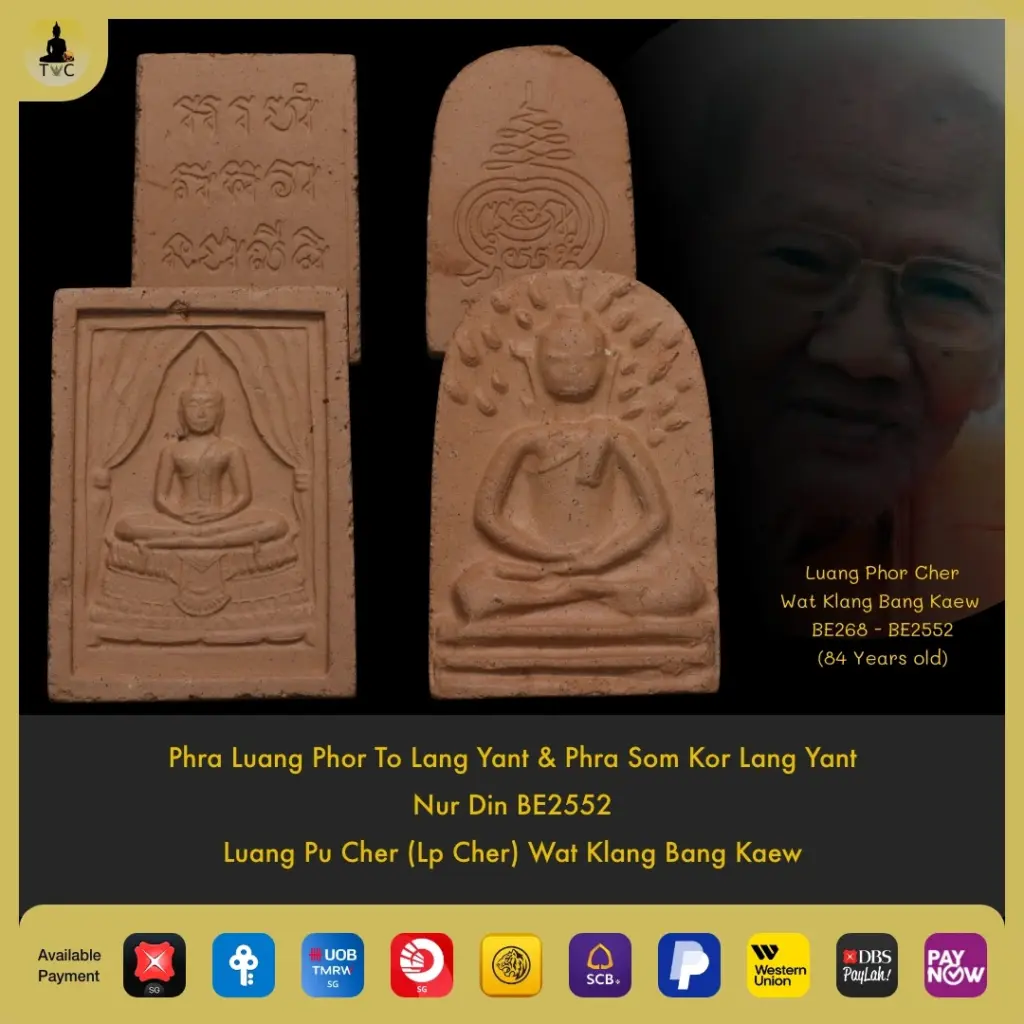
Phra Luang Phor To Lang Yant & Phra Som Kor Lang Yant Nur Din BE2552 Luang Pu Cher (Lp Cher) Wat Klang Bang Kaew
| Monk | Luang Phor Cher (Lp Cher) Wat Klang Bang Kaew |
| Temple | Wat Klang Bang Kaew |
| B.E. Year | 2552 |
| Material | Din |
| SKU | TAC-0785 |
The Phra Luang Phor To Lang Yant & Phra Som Kor Lang Yant Nur Din BE2552 Luang Pu Cher (Lp Cher) Wat Klang Bang Kaew Luang Phor Cher (Lp Cher) Wat Klang…
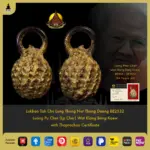
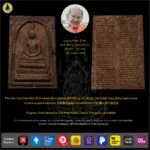
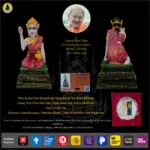
The Phra Luang Phor To Lang Yant & Phra Som Kor Lang Yant Nur Din BE2552 Luang Pu Cher (Lp Cher) Wat Klang Bang Kaew Luang Phor Cher (Lp Cher) Wat Klang Bang Kaew is a sacred clay amulet pair sought by collectors across Singapore, Malaysia, and the wider region for its dual-form identity, reverse yant presentation, and strong temple lineage connection. This BE2552 issue unites two respected sacred forms — Phra Luang Phor To and Phra Som Kor — within a single Wat Klang Bang Kaew release, offering devotees both protective intention and the spiritual benefit of metta, or cultivated kind regard.
This pair was issued in Buddhist Era 2552 at Wat Klang Bang Kaew and presented in two related forms: Phra Luang Phor To Lang Yant and Phra Som Kor Lang Yant. Collectors typically approach this kind of release through lineage, ritual continuity, and the reverse yant design rather than front image presentation alone.
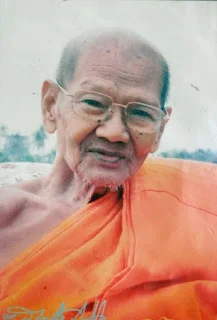
Luang Phor Cher (Lp Cher) Wat Klang Bang Kaew served as the guiding monk for this issue and is regarded as a successor within the Wat Klang Bang Kaew spiritual stream. In collector practice, this lineage positioning is among the first evidence cues used to authenticate and situate a piece historically.
A batch linked to an established temple line with a named presiding monk is generally studied with greater seriousness than unattributed market pieces. The BE2552 Lang Yant pair reflects the broader Klang Bang Kaew current of careful blessing, devotional purpose, and sustained collector recognition.
Phra Luang Phor To Lang Yant & Phra Som Kor Lang Yant Nur Din BE2552 Luang Pu Cher (Lp Cher) Wat Klang Bang Kaew and Wat Klang Bang Kaew Heritage
Wat Klang Bang Kaew is especially well regarded in Thai amulet collecting circles for its longstanding sacred object tradition and its consistent record of producing temple releases that combine devotional sincerity with recognisable design identity. The temple’s reputation provides an important contextual anchor for collectors evaluating any piece attributed to its lineage.
Within that heritage context, a BE2552 Nur Din issue with Lang Yant reverse is naturally read as part of the temple’s broader wicha tradition. The deliberate pairing of two distinct sacred forms — Phra Luang Phor To and Phra Som Kor — within one release reflects a temple approach to batch design that collectors associate with Klang Bang Kaew’s careful curation of sacred object identity.
The Thai Buddhist amulet tradition has long placed significant weight on temple provenance and monastic lineage as primary markers of both devotional authenticity and collector value. Wat Klang Bang Kaew’s position within this tradition lends the BE2552 Lang Yant pair a credibility that extends well beyond its material composition alone.
Din Phra Luang Phor To Lang Yant & Phra Som Kor Lang Yant Nur Din BE2552 Luang Pu Cher (Lp Cher) Wat Klang Bang Kaew — Composition and Craftsmanship
Nur Din, or sacred clay, is the foundational material of this BE2552 pair. In Thai amulet culture, clay-based pieces are appreciated for their organic surface character, the subtle maturity they develop over time, and the way fine mould details settle and sharpen with age. Collectors typically examine Nur Din pieces through texture, compression density, natural dryness, and the condition of protected recesses.
Sacred clay formulations at temples such as Wat Klang Bang Kaew commonly incorporate blessed herbs, powders, and ritual compounds into the Nur Din body prior to pressing. This combination of material and ritual intention means that each piece functions simultaneously as a devotional object and as a material record of the temple’s workmanship and consecration process.
The reverse Lang Yant impressions on this pair serve a dual role: they provide inscription clarity that collectors use to assess mould sharpness and pressing consistency, and they reinforce the ritual identity of the batch by embedding sacred geometric script directly into the amulet body. Surface colour variation across pieces is considered a normal expression of Nur Din character rather than a defect.
Spiritual Benefits of Phra Luang Phor To Lang Yant & Phra Som Kor Lang Yant Nur Din BE2552 Luang Pu Cher (Lp Cher) Wat Klang Bang Kaew by Luang Phor Cher (Lp Cher) Wat Klang Bang Kaew
In Thai amulet devotion, pieces from this type of temple release under an established monk are traditionally associated with a range of protective and auspicious attributes. Devotees and wearers generally frame these qualities within merit-making, respectful conduct, and ongoing faith practice rather than simple object ownership. The following attributions reflect traditional devotional understanding connected to this lineage and material type.
- Metta (เมตตา): Cultivation of kind regard, social goodwill, and supportive relationships, a quality traditionally linked to sacred clay amulets consecrated under respected temple lineages.
- Khumkrong (คุ้มครอง) and Khlaew Khlat (แคล้วคลาด): Protective intention and safe avoidance of harm or danger, often read through the Lang Yant reverse and the ritual context of the blessing ceremony.
- Maha Lap (มหาลาภ): Fortunate gain, good timing, and patron support, traditional aspirations that devotees connect to Wat Klang Bang Kaew’s wider wicha heritage and to Luang Phor Cher’s blessing authority.
Phra Luang Phor To Lang Yant & Phra Som Kor Lang Yant Nur Din BE2552 Luang Pu Cher (Lp Cher) Wat Klang Bang Kaew BE 2552 — Authentication and Collector Value
No third-party certificate is currently associated with this piece in the listing. Collectors evaluating this Phra Luang Phor To Lang Yant & Phra Som Kor Lang Yant Nur Din BE2552 pair are therefore encouraged to rely on material examination, lineage evidence, and comparison with documented Wat Klang Bang Kaew reference pieces from the same period.
Collector interest in this batch arises from the convergence of several significant factors: temple reputation, Luang Phor Cher’s association as presiding monk, the dual-form issue identity, the Nur Din material composition, and the Lang Yant reverse presentation. Batches that unite multiple respected design traditions within a single temple release often attract sustained collector attention because they sit at the intersection of devotion and classification.
Even where a piece is not positioned as ultra-rare, its significance remains grounded in the strength of its lineage, the readability of its details, and its clear placement within a recognised temple tradition. The BE2552 Lang Yant pair’s dual-form structure also offers collectors the comparative study value of examining two distinct front-form identities pressed within the same batch logic.
Attributes reflect Thai Buddhist devotional tradition and are not measurable claims.