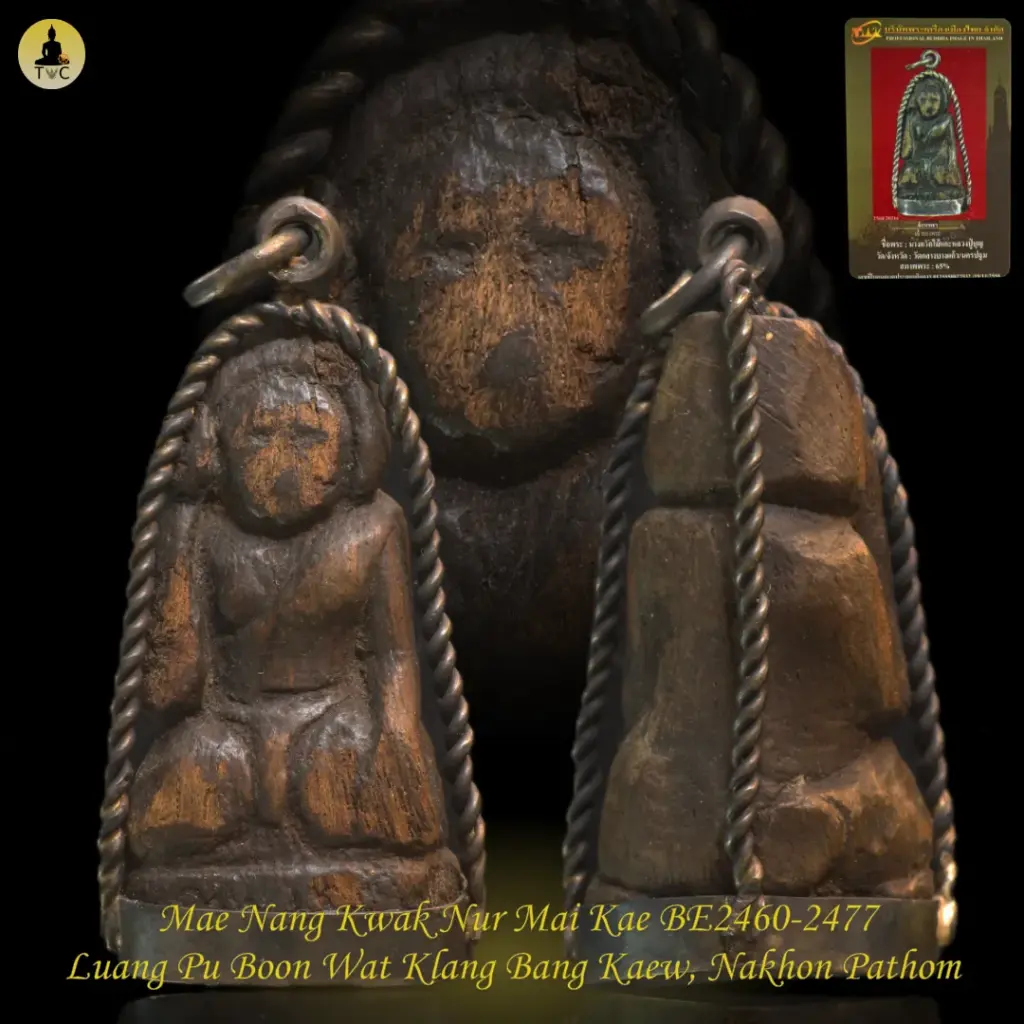
Mae Nang Kwak 招财女神 Nur Mai Kae BE2460-2477 Luang Pu Boon Wat Klang Bang Kaew
| Type | Mae Nang Kwak |
| Monk | Luang Pu Boon Wat Klang Bang Kaew |
| Temple | Wat Klang Bang Kaew |
| B.E. Year | 2460 |
| Material | Mai Kae |
| Condition | Fair |
| Certificate | Others |
| SKU | TAC-0255 |
The Mae Nang Kwak Luang Pu Boon Wat Klang Bang Kaew is a carved aged-wood devotional figure from BE 2460, widely sought by collectors across Singapore, …
The Mae Nang Kwak Luang Pu Boon Wat Klang Bang Kaew is a carved aged-wood devotional figure from BE 2460, widely sought by collectors across Singapore, Malaysia, and the broader Southeast Asian market for its association with steady commerce, metta, and auspicious opportunity flow. This piece belongs to the consecration lineage of Luang Pu Boon Wat Klang Bang Kaew, one of the most respected names in Nakhon Pathom collecting circles, and carries the spiritual intention of drawing customers, smooth negotiations, and protected livelihoods.
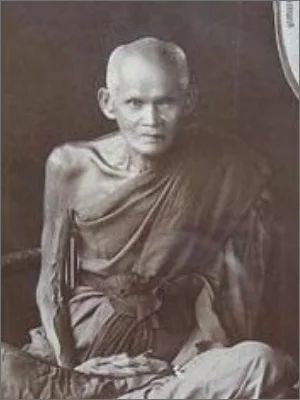
Luang Pu Boon Khanthachoto is recorded as having been born in BE 2391 and appointed abbot of Wat Klang Bang Kaew in BE 2429. He passed away on 4 April BE 2478, leaving behind a lineage consistently described in terms of practical compassion — blessing devotees who sought help with danger, misfortune, and livelihood concerns.
Pieces attributed to Luang Pu Boon’s active period, particularly those falling within the BE 2460–2477 window, sit firmly in the late phase of an already well-established master. For the Mae Nang Kwak form specifically, this lineage context adds a layer of collector weight that goes beyond the icon’s general commerce symbolism.
Mae Nang Kwak is one of Thailand’s most recognizable shop-and-household icons, kept close by merchants, service businesses, and salespeople who value a daily reminder to attract opportunity through disciplined conduct — open the premises on time, speak kindly, keep accounts clean, and let good timing meet good effort.
Mae Nang Kwak and Wat Klang Bang Kaew Heritage
Wat Klang Bang Kaew, situated in Nakhon Pathom province, is not defined by a single famous creation. Its reputation rests on a complete working lineage — spanning protective charms, Buddha images, and devotional figures — underpinned by long-preserved wicha traditions passed across generations of abbots and disciples.
In collector documentation, Wat Klang Bang Kaew is often introduced through its hallmark works before expanding into the broader map of krueang rang and sacred items the temple has produced. Mae Nang Kwak fits naturally within this ecosystem: an icon made for real commerce, daily routines, and the kind of practical spiritual support the temple’s tradition has always emphasized.
The Thai Buddhist amulet tradition places considerable value on lineage continuity, and Wat Klang Bang Kaew’s unbroken wicha transmission is precisely why pieces from this temple — including Mae Nang Kwak carvings attributed to Luang Pu Boon’s era — carry sustained significance among serious collectors in Thailand, Singapore, and the wider Chinese-diaspora market.
Mai Kae Mae Nang Kwak — Composition and Craftsmanship
The material classification for this piece is Mai Kae — aged or seasoned wood — a medium valued in Thai sacred carving traditions for its honest maturation. Unlike metal alloys or powder-based compositions, aged wood does not grow shinier with time; instead, it develops a quieter, drier surface character that experienced collectors recognize immediately as period-consistent.
Authenticating a Mai Kae Mae Nang Kwak requires attention to several physical details. Genuine old examples typically show fine surface dryness lines, naturally softened high points and edges, and tonal variation across the carving face rather than uniform color. Thai collector notes for Luang Pu Boon-era Mae Nang Kwak carvings also reference faint traces of red or powder pigment remaining in recessed areas — a classic indicator of traditional hand-finishing from this period.
Hand-carving character is an equally important consideration. Minor asymmetries are expected and accepted; what matters is the integrity of the overall posture — Mae Nang Kwak’s characteristic seated, composed, beckoning gesture — and whether the carving’s proportions and finishing style are consistent with Wat Klang Bang Kaew-era devotional production.
Spiritual Benefits of Mae Nang Kwak by Luang Pu Boon Wat Klang Bang Kaew
In Thai-Chinese business culture, Mae Nang Kwak functions as a flow symbol rather than a windfall symbol. When attributed to the Wat Klang Bang Kaew lineage, devotees frame its intention across three layers: metta and warm reception in daily interactions, protection during work and travel, and steady wealth momentum built on consistent right conduct.
The Mae Nang Kwak Luang Pu Boon Wat Klang Bang Kaew is kept by those who understand that auspicious timing meets good effort — the icon serves as both a spiritual support and a practical daily reminder of the discipline required to attract opportunity.
- Metta Mahaniyom: warmer reception from customers, smoother negotiation energy, and improved first impressions in commercial and professional contexts.
- Choke Laap / Maha Lap: improved opportunity flow — commonly interpreted as steadier customer traffic, better commercial timing, and fortunate turns in day-to-day business.
- Klaew Klaad (Protection): safety and clarity while traveling for work, attending client meetings, or managing the risks inherent in active commercial life.
Mae Nang Kwak BE 2460 — Authentication and Collector Value
This Mae Nang Kwak Luang Pu Boon Wat Klang Bang Kaew carries a certificate issued under the Others certification category. While seasoned collectors will always prioritize direct physical assessment — evaluating age cues, carving character, and period consistency — the accompanying certificate provides a modern layer of reassurance for buyers entering the Wat Klang Bang Kaew collecting space for the first time.
From a rarity standpoint, the significance here is threefold: the icon type (Mae Nang Kwak in carved wood is less common than powder or metal variants from comparable periods), the material (Mai Kae pieces from this era show increasingly rare natural patina profiles), and the name attached (Luang Pu Boon passed in BE 2478, making BE 2460 pieces late-period works from an already-established master).
For collectors familiar with the Wat Klang Bang Kaew universe, a Mae Nang Kwak in aged wood represents a meaningful branch of the temple’s broader protective and prosperity tradition — a practical commerce icon grounded in the same cultural ecosystem as the temple’s more widely documented creations.
Attributes reflect Thai Buddhist devotional tradition and are not measurable claims.
![[SOLD] Med Prakha Nur Jindamanee BE2444-2478 Luang Pu Boon Wat Klang Bang Kaew](https://tac-media.sgp1.digitaloceanspaces.com/2026/03/med-prakha-nur-jindamanee-be2444-2478-luang-pu-boon-wat-klang-bang-kaew-150x150.webp)