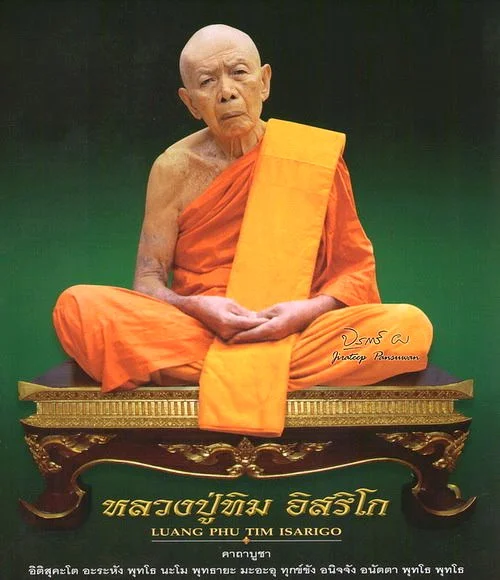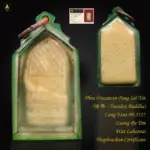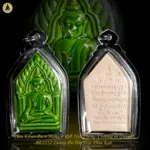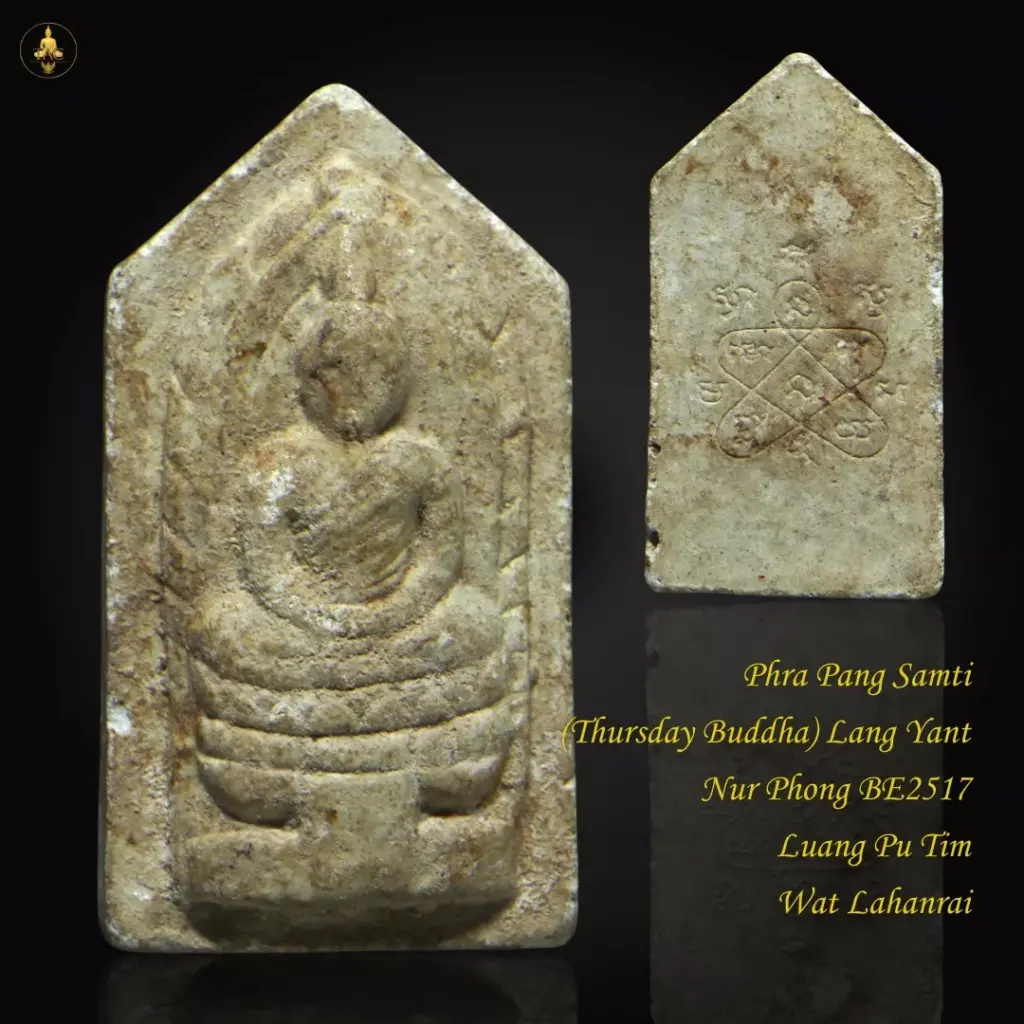
Phra Pang Samti (Thursday Buddha) Lang Yant Nur Phong BE2517 Luang Pu Tim Wat Lahanrai
| Type | Phra Pang Samti |
| Monk | Luang Pu Tim (Lp Tim) Wat Lahanrai Biography |
| Temple | Wat Lahanrai |
| B.E. Year | 2517 |
| Material | Phong |
| SKU | TAC-0164 |
Phra Pang Samti (Thursday Buddha) Lang Yant • Nur Phong BE2517 • Wat Lahanrai • Consecrated by Luang Pu Tim • Thursday Buddha format with reverse yant in the Wat Lahanrai devotional tradition
Phra Pang Samti (Thursday Buddha) Lang Yant • Nur Phong
BE2517 • Wat Lahanrai • Consecrated by Luang Pu Tim • Thursday Buddha format with reverse yant in the Wat Lahanrai devotional tradition
Overview of a Phra Pang Samti (พระปางสมาธิ) or Thursday Buddha amulet with lang yant reverse in nur phong. In Thai amulet culture, devotees often associate this format with calm concentration, devotional steadiness, and protective blessing through a sacred powder body and yantra-backed form.
What This Piece Represents (Collector Lens)
This piece represents a devotional amulet from the Luang Pu Tim sphere that combines a serene meditative Buddha image with a reverse yant design, creating a form collectors usually read through both iconography and ritual intent. The Thursday Buddha identity adds another layer of symbolic meaning, as Pang Samti imagery is often connected with composure, mindfulness, and a collected mind. For collectors, the appeal lies in the clear Wat Lahanrai association, the BE2517 dating, and the balanced pairing of sacred powder body with yantra-backed protection.
Amulet Information
Name: Phra Pang Samti (Thursday Buddha) Lang Yant / พระปางสมาธิ หลังยันต์
Material: Nur Phong / เนื้อผง
Year (BE): 2517
Temple: Wat Lahanrai / วัดละหารไร่
Monk: Luang Pu Tim
Lineage Note: Luang Pu Tim devotional issue from Wat Lahanrai in a Thursday Buddha format with reverse yant, presented in sacred powder composition
SKU: TAC-LuangPuTim-PhraPangSamtiLangYant-001
Price:
SGD 338
History & Lineage Context
The listing identifies this amulet as Phra Pang Samti, also described here as a Thursday Buddha format with reverse lang yant, made in nur phong and dated to BE2517. In collector language, that makes it a mid-period Wat Lahanrai devotional amulet with a clear emphasis on sacred image, ritual backing, and portable everyday worship. The reverse yant is important because it marks the piece as more than a simple portrait or plain powder image; it adds a layer of encoded ritual symbolism that devotees often value highly.
Luang Pu Tim of Wat Lahanrai is one of the most respected monk figures in modern Thai amulet culture. Collectors commonly associate his name with disciplined consecration, strong temple-based devotional practice, and amulets that have retained deep popularity across generations. Because of that reputation, even simpler-format issues tied to him often receive close collector attention, especially when the year, temple, and form are clearly stated.
Wat Lahanrai in Rayong occupies an important place in the amulet world through its association with Luang Pu Tim and the devotional culture that grew around his blessings and temple issues. A BE2517 amulet from this setting is usually read as a practical religious piece intended for wear, blessing, and faith rather than for display alone. That temple context gives the amulet both cultural grounding and devotional relevance.
About the Material
The amulet is described as nur phong, or sacred powder composition. In Thai amulet culture, powder-body amulets are often appreciated for their quiet, devotional feel and the way ritual powders can hold both symbolic and practical religious meaning. Collectors usually study a powder amulet through its density, age tone, mold clarity, and how naturally the front image and rear yant sit within the body of the piece.
- Powder amulets are typically valued for the way sacred ingredients become part of the amulet body itself, not only its surface image.
- Collectors often look for coherent age behavior across edges, recesses, and high points rather than overly sharp or artificial-looking surfaces.
- When paired with a reverse yant, a powder amulet often carries a stronger ritual identity in the eyes of devotees and serious students.
Design / Pim / Variant Notes
The front presents the meditative Buddha in Pang Samti, a posture of collected stillness and inner focus. The reverse lang yant adds a ritual counterbalance to the calm image on the front. In practical collector terms, this makes the amulet visually complete: Buddha image on one side, yantra protection on the other. That duality is part of what gives this type of piece its enduring devotional appeal.
Traditional Spiritual Attributes & Metaphysical Properties
In Thai amulet culture, amulets showing the Buddha in meditative posture are traditionally linked with calm mind, stabilised intention, and spiritual protection. When a reverse yant is present, devotees often understand the piece as joining quiet inner discipline with external safeguarding. These are traditional devotional attributions rather than guarantees, and are usually framed within merit, reverence, and ethical conduct.
- คุ้มครอง (Khum Khrong): Commonly associated with protection and steadier passage through uncertainty.
- สติ (Sati): The meditative Buddha posture is often worn as a reminder of mindfulness, restraint, and inner balance.
- เมตตา (Metta): Devotees may also frame such amulets as supporting a calmer presence and more harmonious interactions.
Rarity Assessment & Collector Significance
Rarity should be described carefully. The listing provides strong identity markers — BE2517 date, Wat Lahanrai temple, Luang Pu Tim attribution, Thursday Buddha format, reverse yant, and powder composition — but does not provide batch quantity or formal scarcity documentation. For that reason, the collector significance of this amulet rests most safely on its clear Luang Pu Tim lineage, coherent devotional design, and the continuing respect attached to Wat Lahanrai issues. In practical terms, that is already enough to make the piece meaningful to both collectors and devotees.
Conclusion
This Phra Pang Samti Lang Yant in nur phong is best appreciated as a balanced Wat Lahanrai devotional amulet: calm meditative Buddha image on the front, yantra-backed ritual structure on the reverse, and the enduring collector pull of Luang Pu Tim’s lineage. It carries the appeal of a wearable sacred object whose value comes from temple context, spiritual symbolism, and coherent traditional form.
Front reference view showing the meditative Buddha form and overall mold composition.
Back reference view highlighting the reverse yant and rear-surface powder character.
Side reference view showing body thickness and profile.
Attributes reflect Thai Buddhist devotional tradition and are not measurable claims.