Phra Khun Paen Pim Haliam Yai Nur Din BE2500 Luang Pu Du Wat Sakae
| Type | Phra Khun Paen |
| Monk | Luang Phor Doo (Lp Du) |
| Temple | Wat Sakae |
| B.E. Year | 2500 |
| Material | Din |
| SKU | TAC-0486 |
Phra Khun Paen • Pim Haliam Yai • BE2500 (Buddhajayanti) Luang Pu Du (LP Du / LP Doo) • Wat Sakae, Ayutthaya • Nur Din (Sacred Clay) • Charisma • Protection • Fortune with Thaprachan certificate
Phra Khun Paen • Pim Haliam Yai • BE2500 (Buddhajayanti)
Luang Pu Du (LP Du / LP Doo) • Wat Sakae, Ayutthaya • Nur Din (Sacred Clay) • Charisma • Protection • Fortune
with Thaprachan certificate
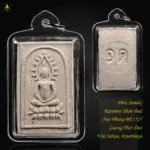
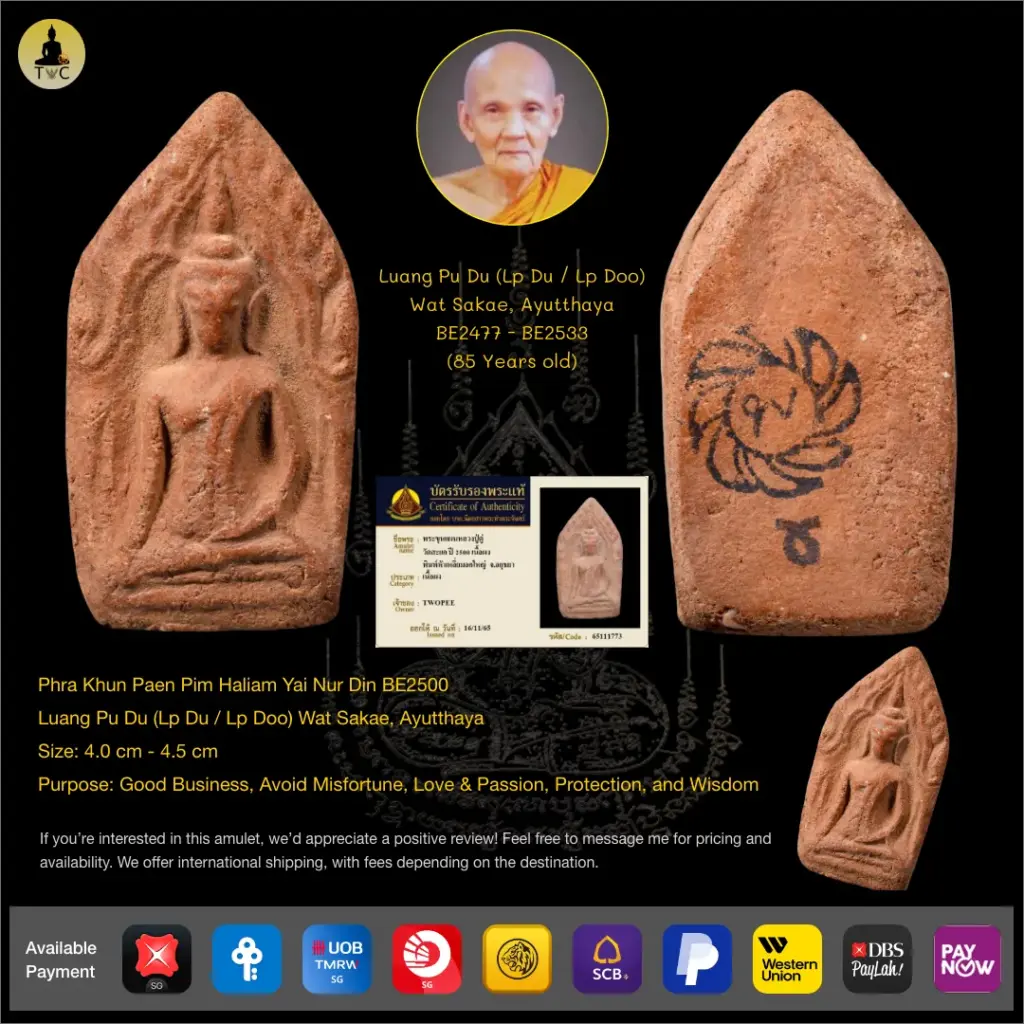
Main obverse — pentagonal Pim Haliam Yai in sacred clay (Nur Din) with Buddhajayanti context.
Amulet Information
Name: Phra Khun Paen • Pim Haliam Yai
Year (BE): 2500 (Buddhajayanti / 2,500 Years of Buddhism)
Master: Luang Pu Du Phrompanyo (LP Du / LP Doo)
Temple: Wat Sakae, Ayutthaya
Material: Nur Din (sacred clay) • traditional powder blends
Certificate: Thaprachan (verified)
Price:
SGD 268
Historical Significance
Issued in BE2500 (1957) at Wat Sakae, Ayutthaya, this Buddhajayanti edition reflects a nationwide wave of merit-making and temple-strengthening during the 2,500th Year of Buddhism commemorations. The consecration followed Putthapisek (Buddha-empowerment rites) led by Luang Pu Du Phrompanyo with Sangha participation, and is remembered by devotees as a batch intended to support community protection, steadiness, and wholesome renewal.
Front view obverse detail — Wat Sakae mold rhythm; crisp canopy and tiered base typical of early casts.
Contextual Insight:
Within the Ayutthaya tradition, Khun Paen wicha is often discussed through three practical outcomes:
metta (a kinder, more supportive aura), klaew klaad (averting danger), and steady fortune.
LP Du’s approach is remembered for discipline — mindful recollection and quiet meditative absorption (samādhi) during prolonged empowerment before the principal Buddha.
Temple of Origin & Master’s Discipline
Wat Sakae is associated with calm, orderly ritual and a straightforward training spirit. Devotees often link LP Du’s guidance to daily recollection — “Buddhaṃ saraṇaṃ gacchāmi” — and living in a way that matches the amulet’s intention. The Putthapisek process here is described as multi-stage chanting followed by silent empowerment, a style collectors feel is reflected in the amulet’s poised proportions and sober, mature surface.
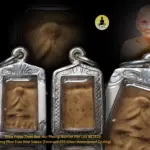
Side profile — beveled Haliam edge; natural air-dry curing lines.
Materials & Craftsmanship
| Material | Nur Din (sacred clay) blended with old Buddha-image powder, relic/ash admixtures, metta powders, and temple herbal/floral powders; Khun Paen wicha recitations impressed pre-press. |
| Mold / Pim | Pim Haliam Yai — tall pentagon; crisp canopy arch; pronounced tiered base; even press rhythm on high points (face/chest/knees). |
| Consecration | Multi-stage Putthapisek at Wat Sakae led by LP Du with Ayutthaya Sangha; chant cycles and extended silent empowerment (samādhi). |
Side/detail — micro-pores and fibrous binder threads indicative of mid-century Ayutthaya clay work.
Spiritual Function & Doctrinal Purpose
According to Thai Buddhist belief, this amulet supports Metta Maha Niyom (likability/support),
Klaew Klaad (averting danger), and Maha Lap (auspicious gains).
Devotees traditionally wear it for calm confidence, social goodwill, and safer journeys — pairing it with daily recollection and wholesome conduct.
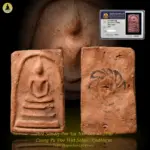
Reverse — compact pressed grain and age-consistent tone; Wat Sakae stamp.
Rarity & Collector Significance
Assessed as collector-grade among LP Du devotees. Desirable traits include an unpainted original surface with natural luster,
an even press on the high points, and a mature clay matrix. Authenticated examples appear with recognised bodies (e.g., Thaprachan);
condition and clarity of key pim features strongly influence collectibility.
Thaprachan verified certificate.
For provenance and availability, contact us on
WhatsApp.
Disclaimer: Ritual and material notes follow temple tradition and collector literature; they support cultural appreciation and are not a substitute for forensic certification.
Attributes reflect Thai Buddhist devotional tradition and are not measurable claims.