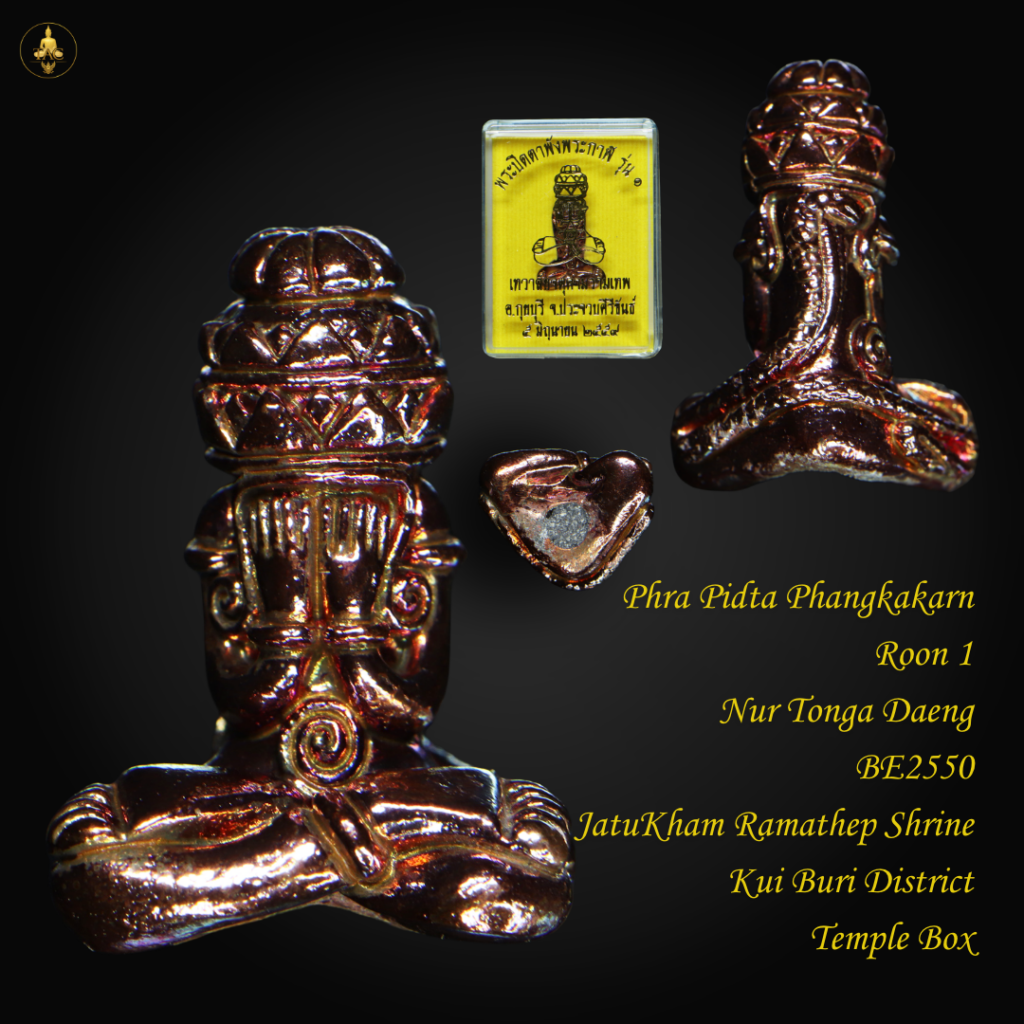
Phra Pidta Phangkakarn Roon 1 Nur Tonga Daeng BE2550 JatuKham Ramathep Shrine Kui Buri District Temple Box
| Type | Phra Pidta Phangkakarn Roon 1 |
| Monk | TEMPLE TAG: JatuKham Ramathep Shrine Kui Buri District |
| Temple | JatuKham Ramathep Shrine Kui Buri District |
| B.E. Year | 2550 |
| Material | Nur Tonga Daeng |
| Condition | Excellent |
| SKU | TAC-PhraPidtaPhangkakarnRoon1--001 |
Authentic Phra Pidta Phangkakarn Roon 1, JatuKham Ramathep Shrine Kui Buri District, BE 2550. Nur Tonga Daeng. Trusted Singapore Thai amulet dealer.
What is the Phra Pidta Phangkakarn Roon 1 from JatuKham Ramathep Shrine Kui Buri District?
The Phra Pidta Phangkakarn Roon 1 is an authentic Thai amulet consecrated in BE 2550 at JatuKham Ramathep Shrine, Kui Buri District. Cast in Nur Tonga Daeng (red copper alloy), this first-edition Phra Pidta is venerated by devotees for its protective qualities and is among the notable sacred releases associated with the JatuKham Ramathep tradition.
The Phra Pidta Phangkakarn Roon 1 belongs to the first batch (Roon 1) of amulets produced under this series, making it a foundational release within the JatuKham Ramathep Shrine’s sacred catalogue. First-edition amulets hold particular significance in Thai amulet collecting tradition, as they represent the inaugural consecration ceremony and are often produced in limited quantities.
This amulet depicts the classic Phra Pidta iconography — a meditating monk with both hands covering the eyes — which is traditionally associated with the turning away of misfortune and the closing off of negative energies. Collectors of authentic Thai amulets from Singapore and across Southeast Asia regard the Roon 1 designation as a mark of priority and collectibility.
Learn more about the sacred lineage behind this release on the monk biography page.
Phra Pidta Phangkakarn Roon 1 and JatuKham Ramathep Shrine Kui Buri District Heritage
The JatuKham Ramathep Shrine Kui Buri District is located in Prachuap Khiri Khan Province, southern Thailand, and is closely tied to the broader JatuKham Ramathep devotional tradition that swept Thailand in the mid-2000s. The shrine serves as a focal point for regional devotees and pilgrims who venerate the twin deities JatuKham and Ramathep, believed to be powerful guardian spirits.
Kui Buri District’s sacred landscape gives the shrine a distinctive regional character, combining the ancient animist traditions of southern Thailand with mainstream Theravada Buddhist practice. Amulets produced at this shrine carry the spiritual energy of both the physical site and the ceremonial intent of its consecration rites.
The JatuKham Ramathep amulet phenomenon is widely documented as one of Thailand’s most significant modern devotional movements. For context on the broader Thai Buddhist amulet tradition, including the cultural and religious foundations that underpin amulets such as the Phra Pidta Phangkakarn Roon 1, the Wikipedia resource on Thai amulets provides a reliable overview.
Nur Tonga Daeng Phra Pidta Phangkakarn Roon 1 — Composition and Craftsmanship
The Nur Tonga Daeng Phra Pidta Phangkakarn Roon 1 is cast in Nur Tonga Daeng, a red copper alloy traditionally prized in Thai amulet production for its conductivity of sacred energy and its warm, lustrous appearance. Red copper has long been used in Buddhist ritual objects across Southeast Asia due to its symbolic association with vitality and protection.
The casting process for this edition follows established Thai amulet-making conventions, in which the metal is typically blessed and consecrated during formal Buddhist ceremonies. Sacred materials, mantras, and ceremonial intent are incorporated into the production process to imbue each piece with spiritual significance recognised by devotees.
The durability of Nur Tonga Daeng ensures that the Phra Pidta Phangkakarn Roon 1 retains its form and detail over decades, making it both a spiritually meaningful object and a physically enduring collector’s piece. Collectors in Singapore and Malaysia particularly value metal-cast amulets for their resilience in tropical climates.
Spiritual Benefits of Phra Pidta Phangkakarn Roon 1 from JatuKham Ramathep Shrine
Devotees and collectors traditionally associate the Phra Pidta Phangkakarn Roon 1 with a range of protective and auspicious qualities rooted in the Phra Pidta iconographic tradition. The image of the meditating figure with covered eyes is regarded by believers as a powerful symbol of shielding oneself from harm, negativity, and misfortune.
This amulet is regarded by devotees as particularly suited for those seeking personal protection and spiritual fortification in daily life. Collectors who venerate this piece often cite its connection to the JatuKham Ramathep tradition, which is itself associated with wealth, protection, and divine guardianship.
- Personal protection: Traditionally venerated for shielding the wearer from physical harm and negative influences.
- Wealth and prosperity: Collectors associate the JatuKham Ramathep tradition with auspicious energy supporting financial wellbeing.
- Spiritual fortification: Regarded by devotees as an aid in cultivating inner strength and mental resilience through devotional practice.
Phra Pidta Phangkakarn Roon 1 BE 2550 — Authentication and Collector Value
The Phra Pidta Phangkakarn Roon 1 BE 2550 was produced during one of Thailand’s most active periods of JatuKham Ramathep amulet creation, when collector demand was at a historic peak. First-edition (Roon 1) releases from this era are consistently regarded as more desirable among serious collectors due to their inaugural consecration status.
Authentication of this amulet relies on careful examination of material characteristics, surface casting detail, and provenance documentation linked to JatuKham Ramathep Shrine Kui Buri District. Collectors seeking an authentic Thai amulet from this series should verify the Nur Tonga Daeng composition and cross-reference physical details against known examples from BE 2550.
As a Thai amulet Singapore specialist, thaiamuletscollection.com sources this piece with full provenance transparency, providing collectors in Singapore, Malaysia, Hong Kong, and Greater China with confidence in their acquisition. The Roon 1 designation, combined with the Nur Tonga Daeng material, positions this amulet as a meaningful addition to any serious Thai amulet collection.
Attributes reflect Thai Buddhist devotional tradition and are not measurable claims.