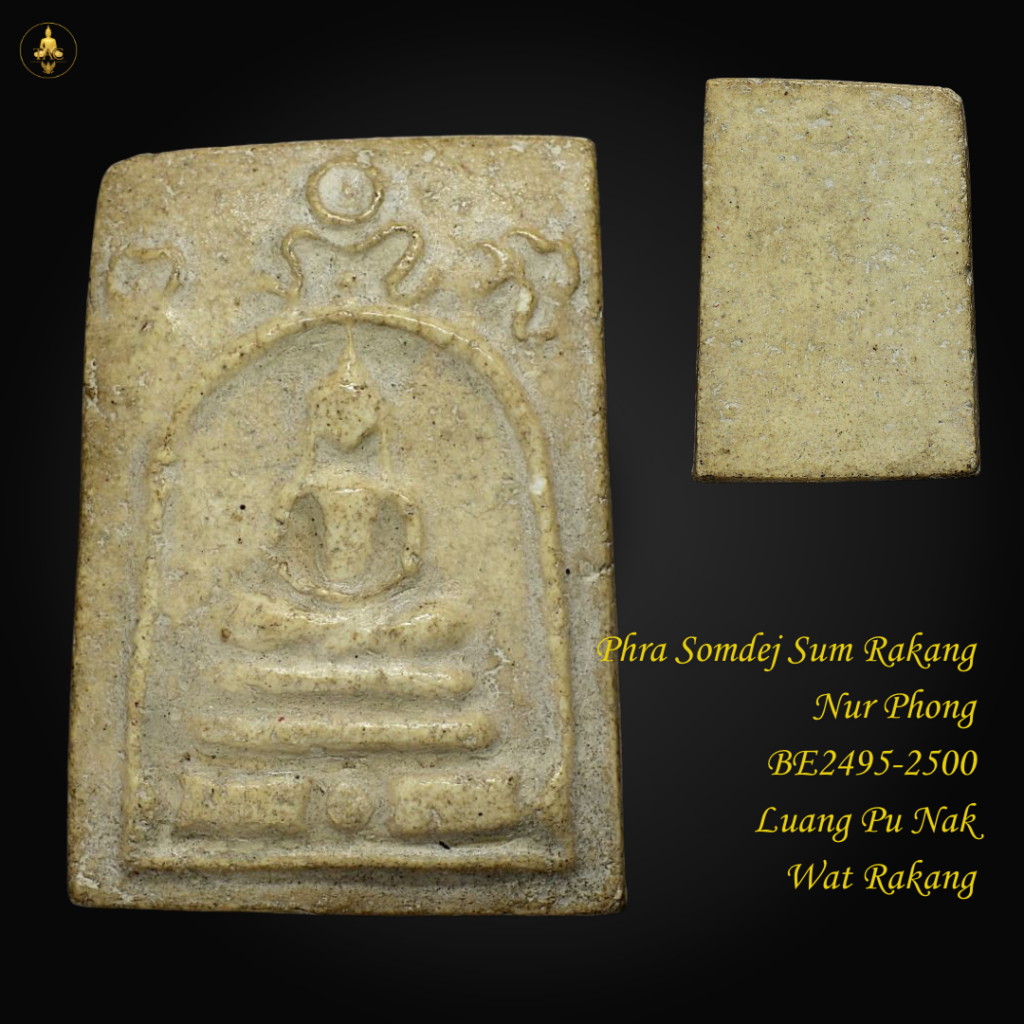
崇笛佛坐在钟里面佛历2495龙婆纳瓦拉康 / Phra Somdej Sum Raking Nur Phong BE2495 Luang Pu Nak (Lp Nak) Wat Rakang Kositaram, Bangkok
| Type | Phra Somdej |
| Monk | Luang Pu Nak Wat Rakang Kositaram |
| Temple | Wat Rakang |
| B.E. Year | 2495 |
| Material | Nur Phong |
| Condition | Good |
| SKU | TAC-0497 |
崇笛佛坐在钟里面佛历2495龙婆纳瓦拉康 Phra Somdej Sum Raking Nur Phong BE2495 Luang Pu Nak (Lp Nak) Wat Rakang Kositaram, BangkokView Biography
The Phra Somdej Luang Pu Nak (Lp Nak) Wat Rakang Kositaram BE 2495 is among the most reverently regarded sacred amulets available to collectors in Singapore and across Southeast Asia, prized for its profound association with merit, protection, and the enhancement of one’s fortune. Created at the storied Wat Rakang Kositaram in Bangkok, this piece carries the spiritual weight of a master monk whose reputation for discipline and meditative attainment was widely respected. It represents a tangible connection to mid-twentieth-century Thai Buddhist devotional practice at one of the tradition’s most celebrated sites.
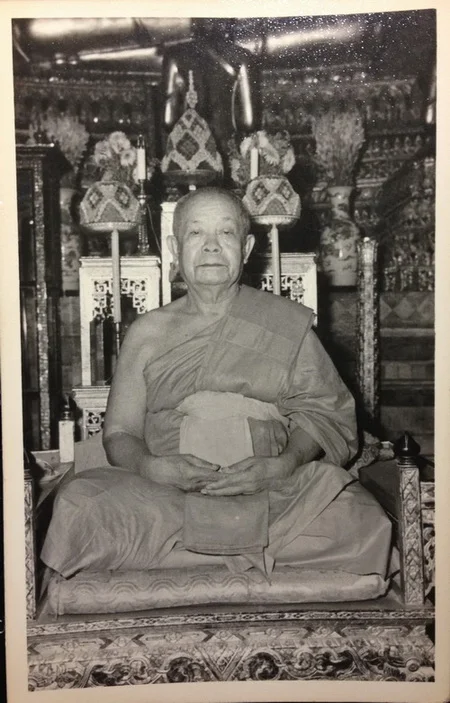
Luang Pu Nak served as a senior monk at Wat Rakang Kositaram during an era when the temple’s amulet-making traditions were at the height of their authority and refinement. His involvement in the consecration of amulets during BE 2495 placed his personal meditative energy and monastic virtue directly into each piece pressed under his supervision. Collectors recognise his name as a mark of authentic lineage within the Wat Rakang tradition.
The year BE 2495, corresponding to 1952 CE, situates this amulet within a period of significant activity at Wat Rakang, when experienced masters collaborated to maintain the temple’s centuries-old standards for sacred material creation. Learn more about the life and practice of Luang Pu Nak (Lp Nak) Wat Rakang Kositaram through the TAC monk biography archive. His legacy endures through the amulets that survive from this consecration.
Phra Somdej and Wat Rakang Heritage
Wat Rakang — formally known as Wat Rakang Kositaram — stands on the west bank of the Chao Phraya River in Bangkok’s Thonburi district, and is widely acknowledged as the spiritual home of the Phra Somdej amulet tradition. The temple’s history with sacred amulet creation stretches back to the nineteenth century, establishing a standard of craftsmanship and consecration that later generations have continued to honour. Its name, meaning “Temple of the Bell,” reflects a history of royal patronage and monastic excellence.
Within the broader landscape of Thai Buddhist devotion, Wat Rakang occupies a position of exceptional prestige, particularly for collectors who seek Phra Somdej amulets with verifiable temple provenance. The temple’s association with revered masters across multiple generations has made its name a benchmark for authenticity among serious collectors throughout Thailand, Singapore, Malaysia, China, Taiwan, and Hong Kong. Each amulet originating from Wat Rakang carries this institutional heritage as part of its intrinsic value.
The Thai Buddhist amulet tradition is one of the most elaborate systems of sacred material culture in Southeast Asia, and Wat Rakang’s contributions to that tradition — particularly through the Phra Somdej form — are considered foundational. The Phra Somdej Luang Pu Nak (Lp Nak) Wat Rakang Kositaram BE 2495 is therefore not merely a devotional object but a historically situated artefact of considerable cultural significance.
Phong Phra Somdej — Composition and Craftsmanship
This amulet is composed of Phong, the sacred powder medium that forms the material basis of the authentic Phra Somdej tradition. Phong in this context refers to a compound of consecrated powders that may include Phong Ittijae, Phong Puttakun, Phong Trisamphan, Phong Maharaj, and Phong Pathamang — each carrying specific vibrational and spiritually activated properties according to Thai Buddhist esoteric teaching. The precise formulation used at Wat Rakang is regarded as one of the most complete and powerful expressions of this medium.
The blending and pressing of Phong amulets at Wat Rakang followed a rigorous ritual protocol overseen by qualified monks, ensuring that each stage of production — from ingredient preparation to the pressing of the mould — was conducted within a framework of continuous chanting, meditation, and consecration. The involvement of Luang Pu Nak (Lp Nak) Wat Rakang Kositaram in the BE 2495 consecration process added his personal meditative energy and accumulated merit to the material. This layering of intention and practice is what distinguishes a consecrated Phong amulet from a purely decorative object.
The resulting pressed tablet displays the characteristic seated Buddha image of the Phra Somdej form — the Buddha enthroned within a tiered arch, rendered in the refined aesthetic for which Wat Rakang is known. The density, surface texture, and mould definition of genuine Phong pieces from this period are key indicators that experienced collectors and expert examiners use to assess authenticity and age.
Spiritual Benefits of Phra Somdej by Luang Pu Nak (Lp Nak) Wat Rakang Kositaram
The Phra Somdej Luang Pu Nak (Lp Nak) Wat Rakang Kositaram is venerated for a range of protective and auspicious qualities deeply rooted in Thai Buddhist belief. Devotees and collectors alike regard this amulet as a source of ongoing spiritual shelter, karmic benefit, and guidance in daily life. Its efficacy is understood to flow from both the sanctity of the Wat Rakang tradition and the personal virtue of the presiding monk.
- Metta Mahaniyom (loving-kindness and personal magnetism): The amulet is believed to cultivate goodwill from others, facilitating harmonious relationships in personal and professional contexts.
- Kong Krapan (physical protection): Devotees traditionally regard Phra Somdej from Wat Rakang as conferring a protective field around the wearer, guarding against physical harm and misfortune.
- Choke Lap (auspicious fortune): Regular veneration of this amulet is associated with the gradual accumulation of merit and the drawing of favourable circumstances in business, health, and family matters.
Phra Somdej BE 2495 — Authentication and Collector Value
No certification authority is specified for this particular piece. As with all pre-certified or uncertified antique amulets, prospective collectors are strongly advised to consult recognised Thai amulet examination bodies — such as the Samakom Phra Khrueang Thai (Thai Amulet Association) or established specialist examiners — before acquiring or attributing significant value to the piece. Documentation of provenance and expert physical examination remain the primary tools of authentication for amulets of this era.
The Phra Somdej Luang Pu Nak (Lp Nak) Wat Rakang Kositaram BE 2495 occupies a desirable position in the collector market by virtue of its temple origin, material composition, and age. Amulets from Wat Rakang dating to the mid-twentieth century are increasingly scarce in well-preserved condition, and collector demand across Singapore, Malaysia, Hong Kong, and Taiwan remains consistent. Rarity, surface preservation, and legibility of the mould impression are the primary factors driving valuation.
For collectors focused on the Wat Rakang lineage, this piece represents a historically grounded acquisition with both devotional and archival significance. Condition, provenance documentation, and the credibility of the seller are all essential considerations when assessing a piece of this age and category.
Attributes reflect Thai Buddhist devotional tradition and are not measurable claims.
![[SOLD] Phra Pidta Lang Yant Nur Phong (Si Khiew) BE2500 Luang Pu Nak Wat Rakang Kositaram](https://tac-media.sgp1.digitaloceanspaces.com/2026/03/Phra-Pidta-Lang-Yant-Nur-Phong-Si-Khiew-BE2500-Luang-Pu-Nak-Wat-Rakang-Kositaram-150x150.png)