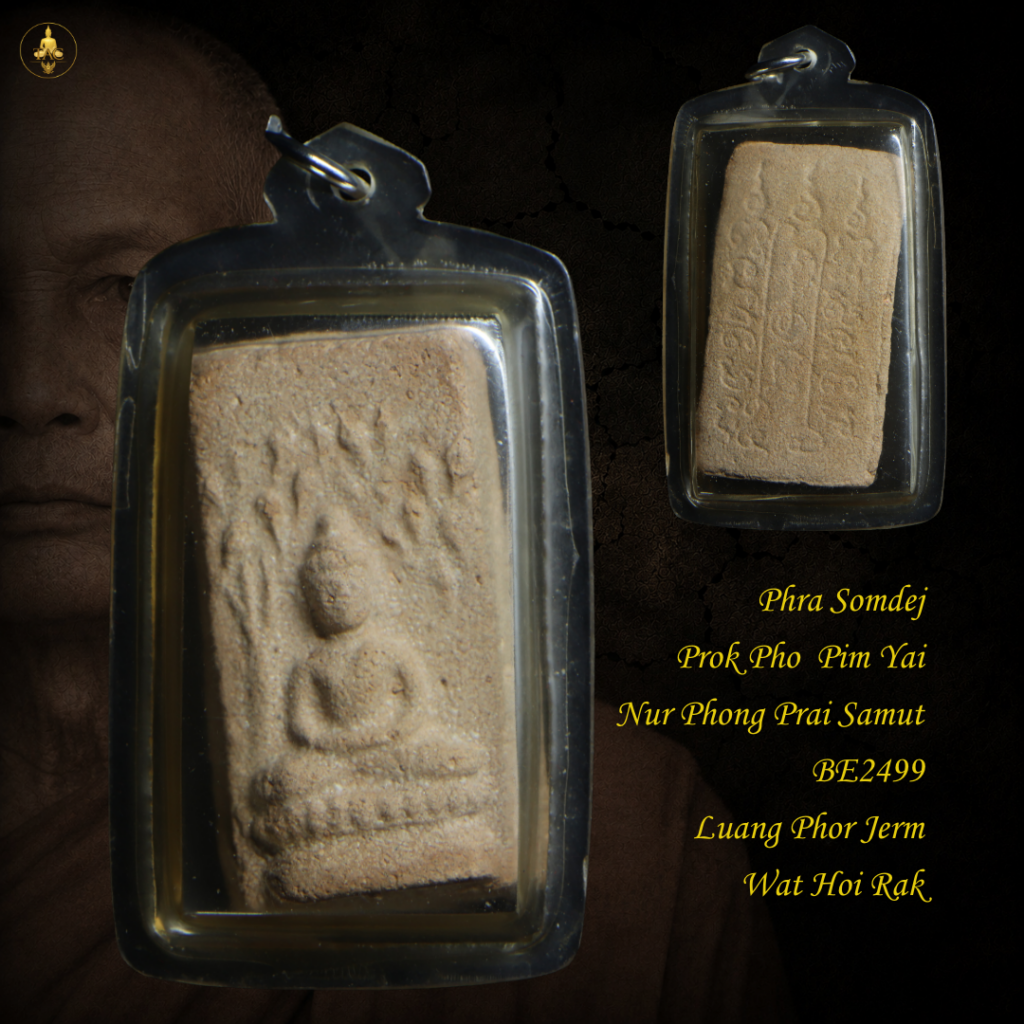
Phra Somdej Prok Pho Pim Yai Nur Phong Prai Samut BE2499 Luang Phor Jerm Wat Hoi Rak
| Type | Phra Somdej Prok Pho Pim Yai |
| Monk | Luang Phor Jerm |
| Temple | Wat Hoi Rak |
| B.E. Year | 2499 |
| Material | Nur Phong Prai Samut |
| Condition | Good |
| SKU | TAC-PhraSomdejProkPhoPimYai-LpJerm-001 |
Authentic Phra Somdej Prok Pho Pim Yai Luang Phor Jerm, Wat Hoi Rak BE 2499. Nur Phong Prai Samut with 700+ sacred materials. Trusted Singapore dealer.
What is the Phra Somdej Prok Pho Pim Yai amulet by Luang Phor Jerm?
The Phra Somdej Prok Pho Pim Yai Luang Phor Jerm is an authentic Thai amulet created at Wat Hoi Rak in Nakhon Si Thammarat Province, pressed in BE 2499 in the large Bodhi tree Buddha posture. It is composed of Nur Phong Prai Samut — a sacred powder mass incorporating over 700 rare spiritual materials, including bone ash from seven cemeteries and deep-sea soil.
Luang Phor Jerm (also known as Phor Jaim or Luang Phor Jaim Achito) was a highly revered monk of Wat Hoi Rak, Nakhon Si Thammarat Province. He began gathering auspicious materials as early as BE 2496 (1953 AD), spending seven to eight years sourcing and consecrating sacred substances before the amulets were formally pressed.
The first pressing of the Phra Phrai Samut Achito amulets — in both the Bodhi tree and closed-eyes postures — took place in BE 2499 (1956 AD). Luang Phor Jerm then consecrated these amulets continuously for three years, reciting the Maha Muen mantra 10,000 times to imbue each piece with concentrated spiritual power.
Although devotees were initially hesitant to keep these amulets in their homes due to their bone-ash composition, their reputation grew rapidly. Following the Laem Talumphuk storm of 1963, many villagers reported that carrying the Phra Somdej Prok Pho Pim Yai Luang Phor Jerm had helped them survive the disaster — a pivotal moment that firmly established the amulet’s sacred standing.
Phra Somdej Prok Pho Pim Yai and Wat Hoi Rak Heritage
Wat Hoi Rak is located in Nakhon Si Thammarat Province, one of Thailand’s most historically significant southern provinces and a major centre of Theravada Buddhist practice. The temple served as the base from which Luang Phor Jerm conducted decades of rigorous material collection and ritual consecration for his sacred amulets.
The Phra Somdej Prok Pho Pim Yai Wat Hoi Rak series is closely tied to this temple’s identity. The consecration ceremonies were held inside the main ordination hall, where Luang Phor Jerm performed auspicious incantations over the pressed amulets across multiple years, beginning in BE 2499.
The Thai Buddhist amulet tradition holds that amulets consecrated by accomplished monks over extended periods carry especially potent blessings. Luang Phor Jerm’s dedication to multi-year consecration — and his meticulous sourcing of materials — places this series firmly within that revered tradition.
Nur Phong Prai Samut Phra Somdej Prok Pho Pim Yai — Composition and Craftsmanship
The Nur Phong Prai Samut Phra Somdej Prok Pho Pim Yai is composed of a remarkably elaborate sacred powder formula, incorporating over 700 distinct materials gathered by Luang Phor Jerm and his trusted associates — including Phra Samuh Phian, Doctor Phian, villagers from Nong Nok, and Doctor Pluem.
Among the primary ingredients are 108 types of herbs, deep-sea soil (108 portions), soil from the Pak Phanang River, soil from the centres of 108 temples, 108 rice paddies, 108 beaches, 108 farms, 108 crab burrows, 108 termite mounds licked by cows, and 108 ponds. These were carefully measured in standardised 108-portion quantities, reflecting the sacred numerology of Thai Buddhist ritual practice.
Additional materials include ash from cremation pyres — specifically from those who died on a Saturday and were cremated on a Tuesday, sourced from seven cemeteries — as well as ash from palm-leaf manuscripts (108 cups), flowers offered to Buddha relics on Makha Bucha Day, and pig’s tail clay. The binding liquid was a mixture of water from the Chai Raj mountain range on the Chumphon–Prachuap Khiri Khan border and rainwater collected from the temple eaves on a Monday of the 10th waxing moon.
Powder from Phra Tha Ruea in Nakhon Si Thammarat and cemetery soil moulded from three temples were also incorporated. This extraordinary formula makes the Phra Somdej Prok Pho Pim Yai Luang Phor Jerm one of the most materially complex Thai amulets ever documented from the mid-20th century.
Spiritual Benefits of Phra Somdej Prok Pho Pim Yai by Luang Phor Jerm
Devotees and collectors traditionally associate the Phra Somdej Prok Pho Pim Yai Luang Phor Jerm with powerful protective and fortune-bringing qualities. The Phra Phrai Samut Achito amulets from BE 2499–2501 are regarded among the top-tier amulets made from bone ash, known in collector circles for their reputed potency and positive outcomes.
Luang Phor Jerm’s amulets are traditionally venerated for bringing good fortune without negative consequences — a quality collectors describe using the Thai phrase meaning they are “beneficial and harmless.” This reputation was powerfully reinforced by survivor accounts from the 1963 Laem Talumphuk storm, which remains a defining moment in the Luang Phor Jerm amulet legacy.
- Protective blessing: Traditionally venerated for shielding devotees from danger and misfortune, as historically associated with the Laem Talumphuk storm survivors of 1963.
- Wealth accumulation: Collectors associate the amulet’s bone-ash and deep-sea soil composition with drawing good fortune and material prosperity.
- Spiritual growth: The Bodhi tree posture is regarded by devotees as a symbol of enlightenment and inner cultivation, supporting spiritual development.
Phra Somdej Prok Pho Pim Yai BE 2499 — Authentication and Collector Value
The Phra Somdej Prok Pho Pim Yai BE 2499 is considered a classical-era Thai amulet of significant rarity. Only two posture variants exist — the Bodhi tree (Prok Pho) and closed-eyes designs — both pressed within the same consecration period of BE 2499 to 2501. Collectors seeking an authentic Thai amulet from this series should be aware that genuine examples are increasingly scarce in the open market.
Authentication focuses on the distinctive surface texture of the Nur Phong Prai Samut material, which carries a characteristic density and aged patina consistent with mid-century sacred powder compositions. The complexity of the 700-ingredient formula means genuine examples often display subtle variations in powder colour and surface granulation that distinguish them from later reproductions.
For collectors based in Singapore, Malaysia, Hong Kong, Taiwan, and Greater China seeking a verified Thai amulet Singapore source, provenance documentation and physical inspection remain the most reliable authentication methods. This is particularly important for the Phra Somdej Prok Pho Pim Yai Luang Phor Jerm, whose growing collector reputation has made it a target for imitation pieces in recent years.
Attributes reflect Thai Buddhist devotional tradition and are not measurable claims.