Chapter 01
Women have always worn Thai amulets
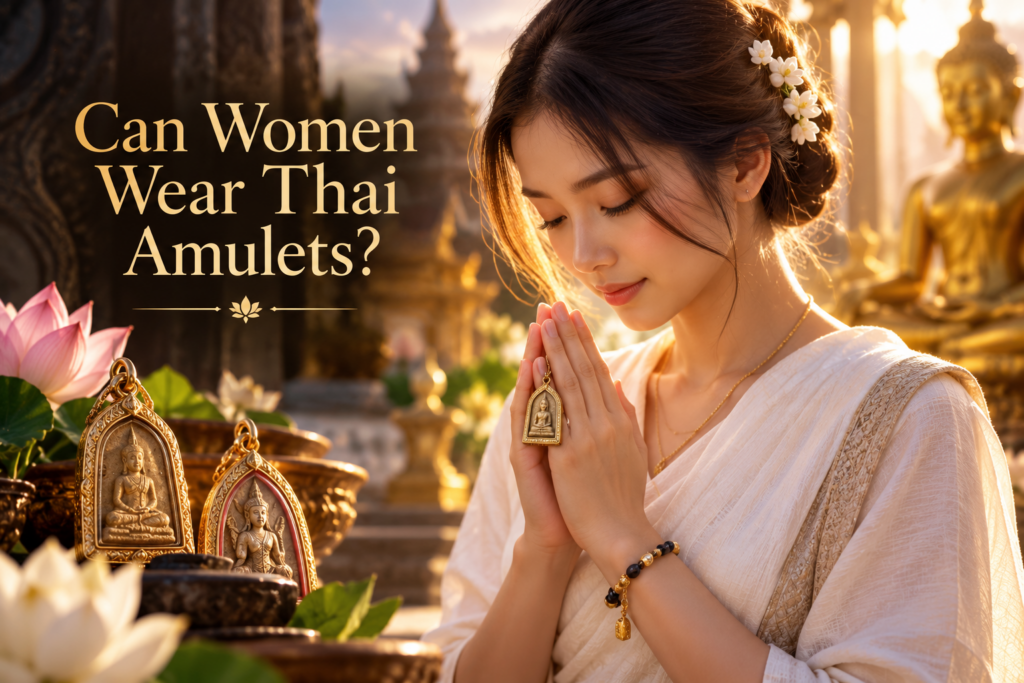
Can women wear Thai amulets? The honest, uncomplicated answer is yes — and they always have. Women have worn, collected, inherited and treasured Thai amulets for as long as the tradition has existed. Walk through any Thai market, temple fair or office and you'll see amulets worn by women of every age and walk of life, from stallholders to executives. The idea that amulets are somehow a men's pursuit is a modern misreading; in Thailand it has never been true. The tradition itself is full of the feminine. One of the most revered classical amulets, Phra Nang Phaya, is known as the "Queen of Amulets" and is tied to a royal lady of Phitsanulok. Some of the most sought-after pieces in the whole field — Nang Kwak, the beckoning lady of fortune, and Mae Nang Kwak — are female figures, venerated by male and female collectors alike. Far from excluding women, the culture of Thai amulets is woven through with them.Chapter 02
Why people ask the question at all
If women have always worn them, where does the doubt come from? It traces back to a small handful of pieces tied to older folk and occult belief — certain prai (spirit) charms and a few extremely potent protective amulets that traditional lore surrounded with specific cautions. Because these pieces are dramatic and often talked about, the cautions attached to them get repeated until they sound like a general rule. They aren't. The overwhelming majority of Thai amulets — Buddha images, monk portraits, metta (loving-kindness) pieces, fortune and wealth amulets — were never covered by any such belief. For these, there is simply nothing to observe: a woman wears them exactly as a man would. It helps to separate the two worlds in your mind: the mainstream Buddhist amulet, which is open to everyone, and a narrow set of high-potency occult charms around which some traditional customs grew.Chapter 03
The menstruation belief, explained honestly
The single belief people most often hear is that a woman should not wear a very powerful protective amulet during menstruation. It deserves a clear, respectful explanation rather than a blunt yes or no. The belief comes from an old idea of ritual purity attached to pieces of very high sak-sit — concentrated sacred or protective power, the strong kong grapan and invulnerability amulets. The traditional thinking was that such potent power and the state of menstruation should be kept apart, so the custom asked that these specific pieces be set aside, or worn higher on the body, during that time. Three things are important to understand about it. First, it applies in traditional lore only to certain high-potency protective pieces — not to Buddha images, monk amulets, metta or fortune pieces, which carry no such caution. Second, it is a cultural custom, not a religious law, and many Thai women today simply do not observe it. Third, and most importantly, it has never meant "women cannot wear amulets" — it is a narrow practice around a narrow category. If you would rather not think about it at all, the simplest path is to choose a classic Buddhist piece, where the question never arises.Chapter 04
Which beliefs apply to which pieces
It's worth being concrete, because the vagueness is what causes worry. The pieces that carry traditional cautions are the strong occult and spirit amulets — potent prai charms and the most powerful protective pieces. These are specialist items, usually collected by experienced enthusiasts, and they come with their own lore for everyone, not only women. Everything else — and that is the vast bulk of what people actually wear — is open and uncomplicated:- Buddha images — the heart of the tradition, worn by anyone.
- Monk amulets (rian, portraits, roop muen) — blessings from a revered master, no restriction.
- Metta pieces — loving-kindness and charm amulets, long popular with women.
- Fortune and wealth amulets — Nang Kwak and the like, female figures themselves.
Chapter 05
The pieces women most often choose
In practice, women wear the full range, but a few directions are especially popular. Metta mahaniyom pieces — associated with warmth, charm and good relationships — are a natural choice for many, and so are the fortune amulets that support a business or a market stall. Protective Buddha and monk amulets are worn every day for the same reasons anyone wears them: a steadying presence in an uncertain world. Many women also wear a piece matched to a wish for family and children, or simply a calm Buddha image for peace of mind. If you'd like the choice guided rather than guessed, our My Destiny Amulet reading suggests a piece that fits your personal chart, and our guide to choosing and authenticating a Thai amulet walks you through judging a genuine piece. If you'd prefer to sidestep anything with old cautions attached, simply ask for a classic Buddhist amulet with clear temple provenance — we'll point you to one.Chapter 06
Wearing with respect
The etiquette for a woman is the same as for anyone, and it's gentle. Wear the piece above the waist — on a chain over the chest is traditional — and keep it in a protective casing if you wear it daily. By custom the number of main amulets (phra) worn together is kept odd: one, three, five. Separate talismans such as takrut or loop om sit outside that count. None of this is onerous; it simply reflects the respect with which a blessed piece is treated. (Our guide to how to wear a Thai amulet covers this in full.)Chapter 07
The bottom line
Women can absolutely wear Thai amulets — the tradition is open to them, full of feminine figures, and has always counted women among its devoted wearers and collectors. The handful of old cautions are narrow, specific to certain potent pieces, and entirely optional; they are not a barrier to anyone who wears a piece with respect. Choose a genuine amulet that matches what you'd wish for yourself, wear it with care, and it becomes a piece you can carry with complete confidence. When you're ready, browse our pieces and ask us anything.Chapter 08
Frequently Asked Questions
Can women wear Thai amulets?
Yes. Women have always worn and collected Thai amulets, and the great majority of pieces carry no restriction at all. A few older customs attach to specific high-potency occult pieces, but they're matters of tradition and personal choice, not a barrier to wearing an amulet.Can women wear Thai amulets during menstruation?
An old belief asked that certain very powerful protective pieces not be worn during menstruation, out of a traditional idea of ritual purity. It applies only to specific high-potency amulets, many women don't observe it today, and it never meant that women can't wear amulets in general — Buddha images, monk, metta and fortune pieces carry no such caution.Are some Thai amulets only for men?
No amulet is strictly men-only. A small number of potent protective or prai (spirit) pieces carry traditional cautions that apply to everyone, but the mainstream — Buddha images, monk amulets, metta and fortune pieces — is worn by anyone.Which Thai amulet is best for a woman?
There's no "women's amulet" as such — it depends on what you want it to support. Metta (loving-kindness) and fortune pieces are especially popular, alongside protective Buddha and monk amulets. A reading such as My Destiny Amulet can match one to your chart.Can a pregnant woman wear a Thai amulet?
Yes — many choose a gentle protective or metta piece during pregnancy as a blessing for mother and child. As always, keep it above the waist and comfortable, and favour a classic Buddhist amulet if you'd rather avoid pieces with old cautions.Dealer's Note — Thai Amulets Collection has served collectors of every background from Singapore since 2015. We're always glad to recommend a respectful, well-provenanced piece for anyone, and to explain the tradition behind it — just message us on WhatsApp.