Luang Phor Sodh Wat Paknam
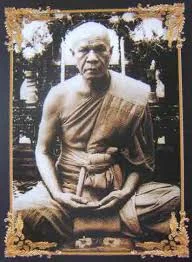
Luang Phor Sodh (Phra Mongkol-Thepmuni) Abbot of Wat Paknam Bhasicharoen • Founder of the Vijja Dhammakaya Tradition • B.E. 2427–2502 (1884–1959) Known nationwide as “Luang Phor Wat Paknam” and affectionately as Luang Phor Yai (“senior father,” “meditation master”), the Venerable Chao Khun Phra Mongkol-Thepmuni stands as the foremost teacher of the Vijja Dhammakaya path. Born ... Read more ↓
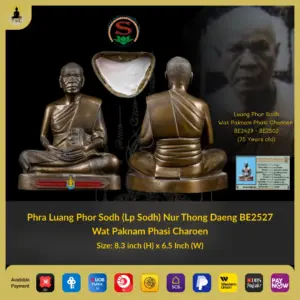
Amulets by Luang Phor Sodh Wat Paknam 6 total · 5 available
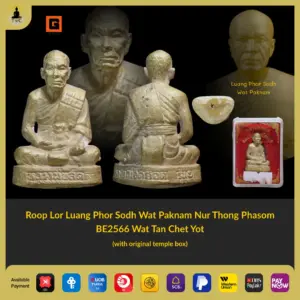
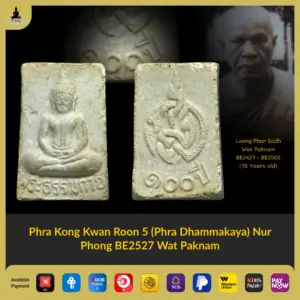
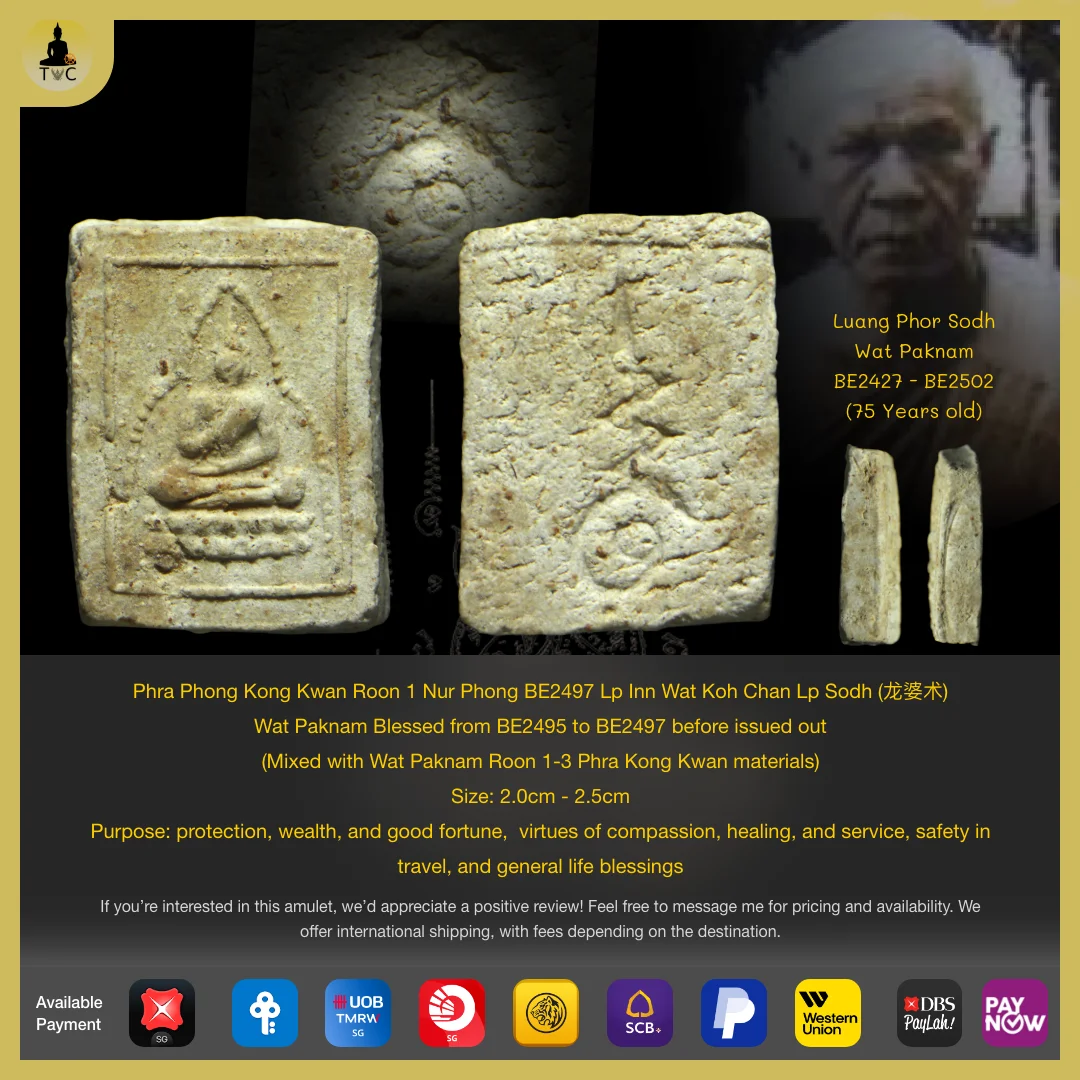
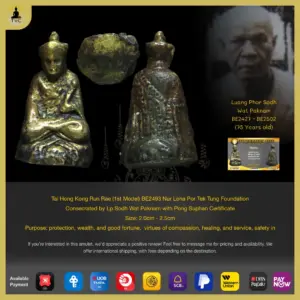
![[SOLD] Phra Phong Kong Kwan Roon 1 Nur Phong BE2497 Lp Inn Wat Koh Chan Lp Sodh Wat Paknam Blessed from BE2495 to BE2497 before issued out (Mixed with Wat Paknam Roon 1-3 Phra Kong Kwan materials) (Rare)](https://tac-media.sgp1.cdn.digitaloceanspaces.com/2026/04/amulet-624-phra-phong-kong-kwan-portrait.webp)
Biography
Luang Phor Sodh (Phra Mongkol-Thepmuni)
Abbot of Wat Paknam Bhasicharoen • Founder of the Vijja Dhammakaya Tradition • B.E. 2427–2502 (1884–1959)
Known nationwide as “Luang Phor Wat Paknam” and affectionately as Luang Phor Yai (“senior father,” “meditation master”), the Venerable Chao Khun Phra Mongkol-Thepmuni stands as the foremost teacher of the Vijja Dhammakaya path. Born on 10 October 1884 (B.E. 2427) in Suphanburi to a modest rice-merchant family, he was given the name Sodh, the second child of Nai Ngern and Nang Sudjai Meekaewnoi. Like many Thai children of his time, his first learning came from the temple schools. When his father passed away, the fourteen-year-old Sodh shouldered the family livelihood and managed rice trading with notable success—yet by nineteen he had resolved to dedicate his life to the robe.
After securing his mother’s well-being, he entered monkhood in July 1906 (B.E. 2449). At age twenty-two he was ordained as Bhikkhu Candasaro at Wat Song Phi Nong near his home; his preceptor was Phra Ajahn Dee of Wat Pratusarn, Suphanburi. The very next day he began earnest meditation alongside Pali study. Seeking broader instruction, he moved to Bangkok—studying and practicing at Wat Bodhi (Wat Phra Chetuphon Vimolmangklararm) and visiting centers devoted to meditation and the Pali canon. His aptitude was quickly recognized by teachers such as Phra Khru Yanavirati (Wat Bodhi) and Phra Ajahn Singha (Wat Lakorn Tham), who regarded him as a gifted meditation instructor.
In the dry seasons he undertook dhutangavatta—austere wanderings for purification—living simply in forests and caves, joining restraint with contemplation. After ten years he set aside formal Pali exams, having reached fluency sufficient to read the Mahāsatipaṭṭhāna Sutta, and turned wholly to meditation.
A decisive turning came in his twelfth vassa at Wat Bang Khu Wiang on the Bangkok Noi canal. On a full-moon night in September, he made a solemn vow before the Buddha image not to rise until he understood the Dhamma as the Buddha had realized it. Centering the mind at the body’s midpoint, he experienced a profound breakthrough: the realization of the Dhamma known as the Dhammakaya. From this awakening flowed the Vijja Dhammakaya—an inner method he would teach for the rest of his life.
He soon began guiding practitioners at Wat Bang Pla; monks and lay devotees alike reported clear insight through his method, and word of his teaching spread widely. Recognizing both his vision and character, Somdet Phra Vanarat, head of the Bhasicharoen Sangha district, invited him to assume the abbacy of Wat Paknam Bhasicharoen—then a deteriorating monastery. Though initially reluctant, he accepted. With patience and firm leadership he rebuilt Wat Paknam into a vigorous center of scriptural learning and contemplative practice. In 1949 (B.E. 2492) he was elevated to Phra Bhavana-Kosolthera, later to Phra Mongkol-Rajmuni, and in 1957 (B.E. 2500) to Chao Khun Phra Mongkol-Thepmuni.
Vijja Dhammakaya became the living heart of his daily work. He spent days and nights meditating with the monastic community, guiding nuns, leading ceremonies, offering public instruction on Thursdays, giving Dhamma talks on holy days, and overseeing the Pali Institute. His disciples numbered in the thousands, and his influence reached far beyond those who met him in person.
Luang Phor Sodh passed away on 3 February 1959 (B.E. 2502), aged seventy-five. His legacy endures in the continued practice of Vijja Dhammakaya and in the rebuilt Wat Paknam—a testament to disciplined compassion, rigorous method, and the promise of the Noble Path.
尊稱「帕蒙空貼布尼」(Phra Mongkol-Thepmuni)的龍波素(Luang Phor Sodh),全泰民眾多以「龍婆瓦拍喃」(Luang Phor Wat Paknam)或「龍婆耶」(Luang Phor Yai,意為德高望重的長者、禪修師)親切稱之,被視為毗舎達摩迦耶(Vijja Dhammakaya)法門之宗師。彼於佛曆2427年10月10日(1884年)生於素攀武里一戶勤儉的稻商之家,名素(Sodh),乃父內銀、母蘇猜之次子。彼如同當時多數孩童,啟蒙於寺院教育。父逝之後,十四歲的素挑起家計,以穩健經營稻米交易而見稱;然十九歲時,他已立志出家為僧。
妥善安頓母親後,彼於佛曆2449年(1906年)七月披剃出家,二十二歲於家鄉近側之Wat Song Phi Nong 受具足,法號「晨達沙羅」(Candasaro),由素攀武里Wat Pratusarn 的阿瞻迪長老為授戒和尚。翌日即起,精勤禪修並研習巴利。為求更深之法與學,他赴曼谷,常駐Wat Bodhi(即臥佛寺一系)修學,往來於諸禪修與巴利學院。其資稟為師長所器重,如Wat Bodhi 的帕庫耶那毗羅提、Wat Lakorn Tham 的阿瞻辛哈等,皆評其為善導禪觀之才。
每逢旱季,彼行持頭陀支(dhutangavatta),雲水僧行履山林、棲止巖穴,以苦行淨化身心。十載之後,他不再逐級應考,但已能通讀《大念處經》,遂專志於禪定。
轉折發生於其第十二個雨安居,在曼谷諾伊運河畔之Wat Bang Khu Wiang。九月望夜,他於佛前立下大願:「不證如來所證之法,誓不起座。」心收攝於身體中道之處,證得深邃之內證——即「法身」(Dhammakaya)之見。自此,毗舎達摩迦耶(Vijja Dhammakaya)之教法啟運,成為其終身弘傳之核心。
其後,他在Wat Bang Pla 開示帶領修行,僧俗多有得法者,名聲遂廣。八四舍利佛萬那叻尊者(Somdet Phra Vanarat)見其德望與遠志,邀其出任巴是喬倫區之Wat Paknam 住持。寺院當時頹敝不振,彼初亦猶豫,終以大願承擔。憑藉長遠的耐心與領導,他使Wat Paknam 復興為巴利與禪修並重之重鎮。彼於佛曆2492年(1949年)陞「帕巴瓦那-寇梭德拉」,復進「帕蒙空-叻摩尼」,至佛曆2500年(1957年)榮封「帕蒙空-貼布尼」。
毗舎達摩迦耶成為其日常之核心。彼晝夜與僧眾共修禪觀、提攜比丘尼、主持諸儀、每週四對大眾授課、逢佛日說法,並統領巴利學院。其弟子成千上萬,不乏未曾謁見而傾心仰慕者。
佛曆2502年(1959年)2月3日,龍波素示寂,享年七十五。其遺澤長存於毗舎達摩迦耶之正修與重振後的Wat Paknam 之中,昭示以嚴謹、慈悲與方法,踐行聖道之可行與可證。
Explore more from Thai Amulets Collection: browse all amulets, monk biographies, or discover katha sacred chants.
For broader context on Thai Buddhist traditions, see Thai amulets on Wikipedia.