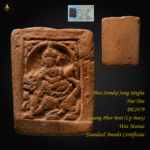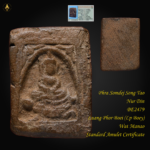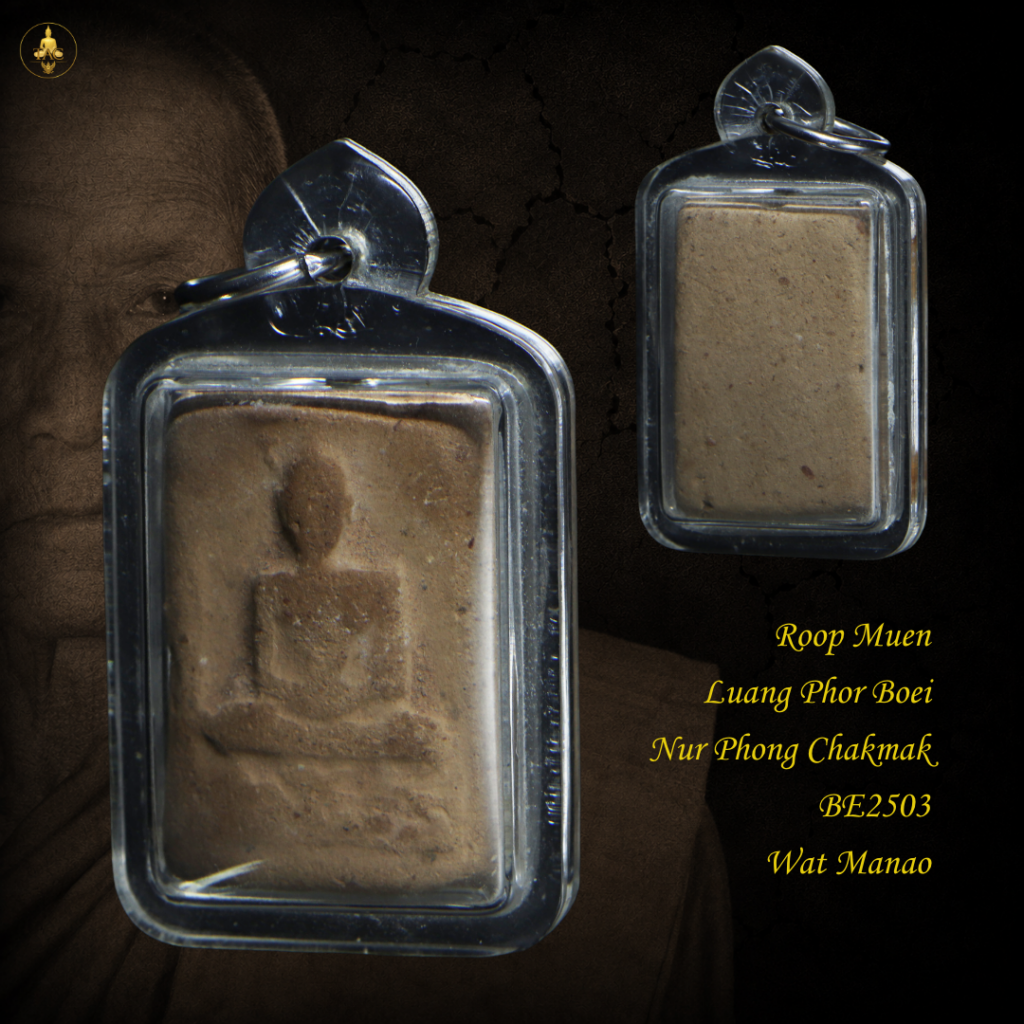
Roop Muen Luang Phor Boei Nur Phong Chakmak BE2503 Wat Manao
| Type | Roop Muen Luang Phor Boei |
| Monk | Luang Phor Boey (Lp Boi) |
| Temple | Wat Manao |
| B.E. Year | 2503 |
| Material | Nur Phong Chakmak |
| Condition | Fair |
| SKU | TAC-RoopMuenLuangPhorBoei-LpBoei(LpBoey)-001 |
Authentic Roop Muen Luang Phor Boei Luang Phor Boei (Lp Boey), Wat Manao BE 2503. Nur Phong Chakmak material. Rare classical-era amulet. Singapore dealer.
What is the Roop Muen Luang Phor Boei amulet by Luang Phor Boei (Lp Boey)?
The Roop Muen Luang Phor Boei Luang Phor Boei (Lp Boey) is a highly regarded portrait-style monk coin amulet consecrated at Wat Manao in BE 2503, crafted from Nur Phong Chakmak — a sacred flint-powder compound revered for its dense spiritual energy. This piece stands as one of the most collectible classical-era amulets associated with Luang Phor Boei (Lp Boey)’s legacy.
Luang Phor Boei (Lp Boey) was a venerated monk whose reputation for rigorous meditation practice and deep mastery of Buddhist consecration rites earned him tremendous devotion across central Thailand. His amulets from the BE 2503 era are regarded by longtime collectors as among the most spiritually potent works from that generation of masters.
The Roop Muen Luang Phor Boei Luang Phor Boei (Lp Boey) was produced during a period when Thailand’s amulet tradition was entering what collectors often call its Golden Era — a time when senior monks poured extraordinary effort into the composition, consecration, and energisation of each batch. Pieces from this period carry a depth of craftsmanship that is rarely replicated in later decades.
For collectors in Singapore, Malaysia, and across Greater China, securing an authentic example of this amulet represents a meaningful connection to mid-twentieth-century Thai Buddhist heritage. The Roop Muen format — depicting a portrait of the monk himself — is traditionally considered one of the most direct conduits between devotee and master.
Roop Muen Luang Phor Boei and Wat Manao Heritage
Wat Manao is the spiritual home of this amulet’s creation, and its association with Luang Phor Boei (Lp Boey) lends the temple an enduring significance among serious Thai amulet collectors. Temples that produce amulets under the direct supervision of a highly accomplished abbot are considered especially auspicious within the Thai Buddhist amulet tradition.
Wat Manao’s consecration ceremonies in BE 2503 were conducted with full adherence to classical Theravada Buddhist ritual protocols. The environment of the temple, its monks, and the presiding master all contribute to what devotees describe as the accumulated spiritual power — or barami — imbued within each amulet produced there.
The temple’s legacy is inseparable from the identity of the Roop Muen Luang Phor Boei Luang Phor Boei (Lp Boey). Collectors who study the provenance of this amulet consistently reference Wat Manao as the authenticating anchor — the physical and spiritual origin point that distinguishes genuine pieces from later reproductions.
Nur Phong Chakmak Roop Muen Luang Phor Boei — Composition and Craftsmanship
Nur Phong Chakmak translates literally as flint-powder mass, and it refers to a sacred material compound made from finely ground flint stone blended with consecrated powders, herbal components, and pollen gatherings accumulated through years of monastic ritual. The Nur Phong Chakmak Roop Muen Luang Phor Boei is prized precisely because this material is known to absorb and retain sacred energy over time with exceptional stability.
The density and texture of Nur Phong Chakmak gives each coin a distinctive tactile quality that experienced collectors can often identify by touch alone. Genuine examples from BE 2503 display a characteristic surface patina that deepens naturally with age, serving as one of the key indicators collectors use when evaluating authenticity.
The craftsmanship behind each Roop Muen Luang Phor Boei Luang Phor Boei (Lp Boey) in this material reflects the meticulous standards of mid-century Thai amulet production. Sacred powders were typically prepared over multiple seasons, with monks performing continuous chanting and meditation to energise the base compounds before pressing began.
Spiritual Benefits of Roop Muen Luang Phor Boei by Luang Phor Boei (Lp Boey)
Devotees and collectors across Southeast Asia traditionally venerate the Roop Muen Luang Phor Boei Luang Phor Boei (Lp Boey) for a range of protective and auspicious qualities attributed to the monk’s accumulated barami. These associations are rooted in decades of collector experience and oral tradition passed through Thai amulet communities in Singapore, Thailand, and beyond.
The following spiritual qualities are commonly associated with this amulet among long-term devotees and collectors:
- Protective Blessing: Collectors regard this amulet as a source of personal protection, traditionally believed to shield the wearer from misfortune and harm.
- Charisma & Influence: The Roop Muen format is widely associated with the projection of the monk’s own personal authority — devotees venerate it for enhancing the wearer’s presence and likability in social and professional settings.
- Spiritual Growth: As a portrait amulet of a deeply meditative monk, it is regarded by practitioners as a support for personal spiritual development and mindfulness in daily life.
Roop Muen Luang Phor Boei BE 2503 — Authentication and Collector Value
The Roop Muen Luang Phor Boei BE 2503 is considered a significant classical-era collectible, and its rarity has only increased as decades have passed since the original consecration. Genuine examples are sought by collectors across Thailand, Singapore, Malaysia, Taiwan, Hong Kong, and mainland China — making provenance verification an essential part of any acquisition.
Authentication of the Roop Muen Luang Phor Boei Luang Phor Boei (Lp Boey) relies primarily on a careful study of the Nur Phong Chakmak surface characteristics, mould details, and age-consistent patina. Experienced collectors recommend consulting established Thai amulet associations and specialist dealers who have documented reference examples for comparison.
As a Thai amulet Singapore collector community staple, this piece is frequently discussed in collector forums and auction houses throughout the region. Its combination of classical material, revered monk, and documented BE year makes it a meaningful addition to any serious collection of Golden Era Thai amulets.
Attributes reflect Thai Buddhist devotional tradition and are not measurable claims.