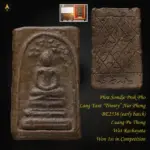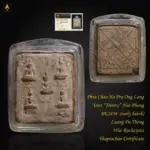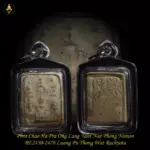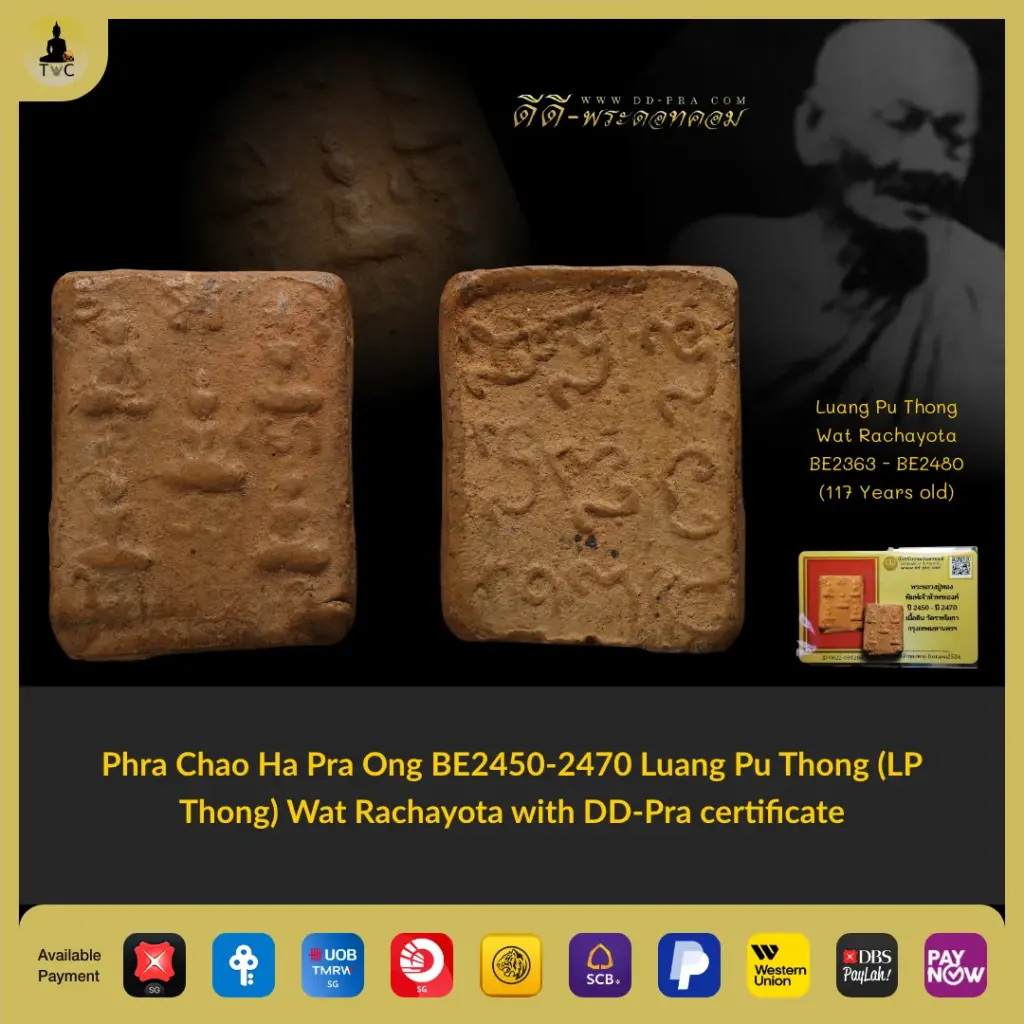
Phra Chao Ha Pra Ong BE2450-2470 Luang Pu Thong Wat Rachayota
| Type | Phra Chao Ha Pra Ong |
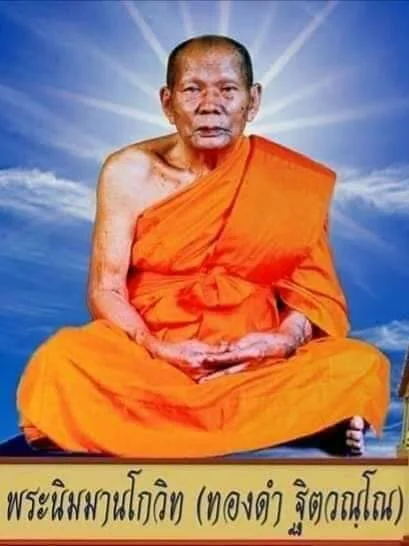
| Monk | Luang Pu Thongdam (Lp Thongdam) Wat Tha Thong, Uttaradit |
| Temple | Wat Rachayota |
| B.E. Year | 2450 |
| Material | Nur Phong Din |
| Condition | Fair |
| Certificate | DD-Phra #0622-091266 |
| SKU | TAC-0311 |
Phra Chao Ha Phra Ong (Five Buddhas) • BE2450–2470 Wat Rachayota, Bangkok • Nur Din (Earthen Composite) • DD-Pra Committee Certified Main obverse — Five Buddhas arrangement; compact early Rattana
Phra Chao Ha Phra Ong (Five Buddhas) • BE2450–2470
Wat Rachayota, Bangkok • Nur Din (Earthen Composite) • DD-Pra Committee Certified
Main obverse — Five Buddhas arrangement; compact early Rattanakosin clay matrix.
Historical Significance
Issued circa BE2450–2470 (1907–1927 CE) at Wat Rachayota under Luang Pu Thong (LP Thong), this early Rattanakosin Phra Chao Ha Phra Ong votive tablet reflects a period when Thailand’s modernization intersected with deep devotional practice. According to temple tradition, these pieces were pressed and blessed to safeguard devotees while supporting the monastery’s communal works through meritorious distribution.
Front obverse — Five Buddhas arrangement; compact early Rattanakosin clay matrix.
Contextual Insight: Five-Buddhas (Ha Phra Ong) imagery symbolizes an unbroken stream of awakened wisdom across eras. Such tablets were often produced as protective tokens (khrueang rang) and as temple fund-raisers, linking communal merit with practical sanctuary in rapidly changing times.
Reverse — aged clay surface showing century-old desiccation and natural wear.
Temple of Origin & Master’s Discipline
Wat Rachayota (Bangkok) maintained a reputation for steady meditative training and compassionate community service. Under Luang Pu Thong, the crafting and blessing of Nur Din tablets followed disciplined ritual: materials prepared with chant cycles, mindfulness cultivation, and Putthapisek empowerment to align form, doctrine, and benefit.
DD-Pra Committee certification — institutional authentication of period, composition, and lineage.
Materials & Craftsmanship
| Material | Nur Din (earthen composite): temple soil, pong wiset (sacred powder), blessed water, herbal resins, mineral pigments. |
| Mold / Pim | Five Buddhas (Ha Phra Ong) configuration; compact rectangular votive tablet. |
| Consecration | Pressed and dried in temple precincts; empowered in Putthapisek rites led by LP Thong; chant cycles emphasizing protection and calm. |
Side/detail — natural clay stratification, crisp press lines, and period wear.
Spiritual Function & Doctrinal Purpose
According to Thai Buddhist belief, this tablet supports Kongkrapan (protection), Klaew Klaad (safe passage), Metta Mahaniyom (kind regard and popularity), Maha Lap (good fortune), and Maha Ut (obstacle-stilling). Devotees wear it for calm confidence and steady protection amidst worldly change.
Rarity & Collector Significance
Assessed as Extremely Rare. Surviving early-20th-century Nur Din tablets from LP Thong show high attrition; authenticated examples with sound surfaces and clear impressions are collector-grade. DD-Pra certification materially strengthens provenance and scholarly value.
Attributes reflect Thai Buddhist devotional tradition and are not measurable claims.