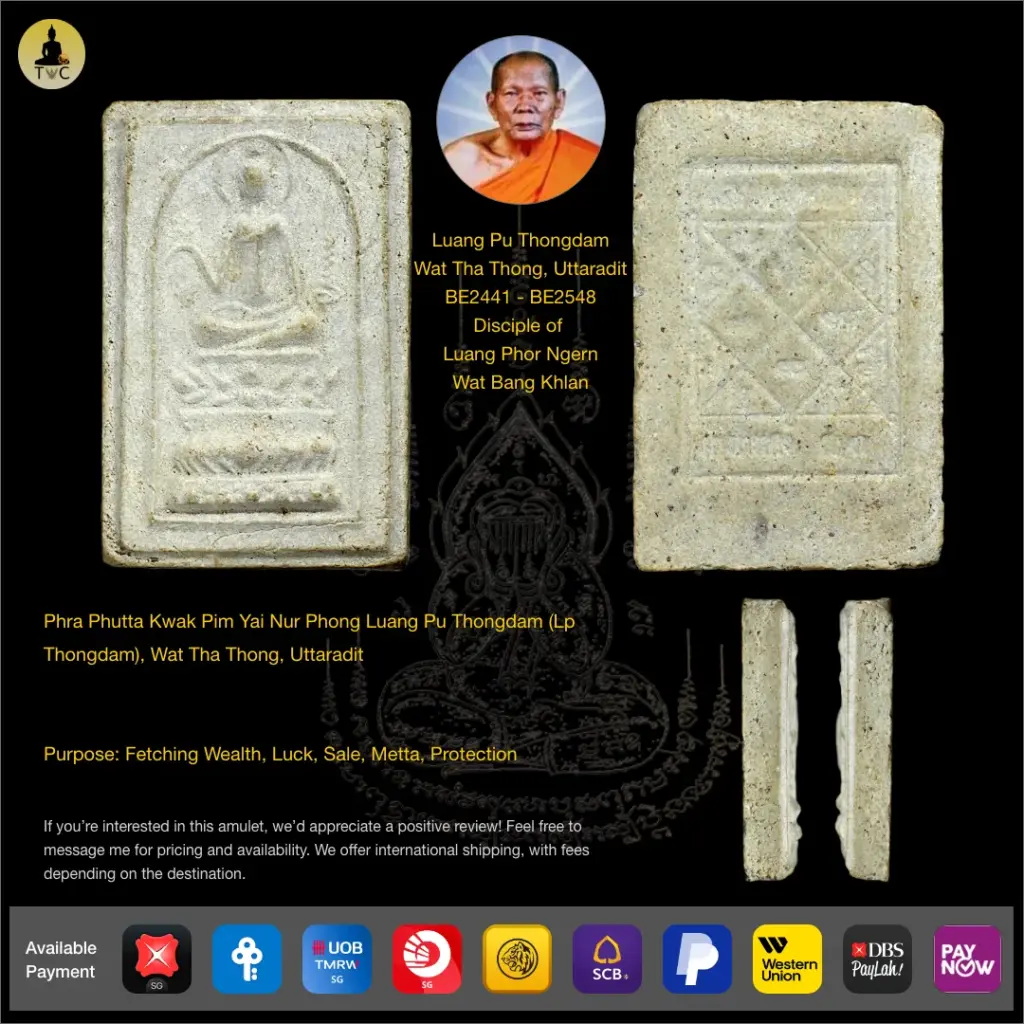
Phra Phutta Kwak Pim Yai Nur Phong Luang Pu Thongdam (Lp Thongdam), Wat Tha Thong, Uttaradit
| Type | Phra Somdej |
| Monk | Luang Pu Thongdam (Lp Thongdam) Wat Tha Thong, Uttaradit |
| Temple | Wat Tha Thong |
| B.E. Year | 2512 |
| Material | Phong |
| Condition | Good |
| SKU | TAC-0476 |
Authentic Phra Somdej by Luang Pu Thongdam (Lp Thongdam) Wat Tha Thong, Uttaradit. BE 2512, phong material. No certificate. Available from TAC, Singapore.
What is the Phra Somdej by Luang Pu Thongdam (Lp Thongdam) Wat Tha Thong, Uttaradit?
The Phra Somdej Luang Pu Thongdam (Lp Thongdam) Wat Tha Thong, Uttaradit is a sacred powder amulet issued in BE 2512 from Wat Tha Thong in Uttaradit province. Pressed from phong (sacred powder blend), it carries the monk attribution of Luang Pu Thongdam (Lp Thongdam) Wat Tha Thong, Uttaradit and holds both devotional and lineage significance for collectors across Southeast Asia.
Luang Pu Thongdam and the Wat Tha Thong Line
Luang Pu Thongdam is remembered as one of the more respected monks of northern Thailand — known for strict discipline, sustained meditation practice, and a reputation that carried well beyond Uttaradit during his lifetime. Thai amulet and temple-history sources also record him under the ecclesiastical title Phra Nimmankovit. His standing among devotees grew through practice rather than publicity, which is exactly the kind of background serious collectors pay attention to.
Wat Tha Thong sits within the northern Thai sacred-object tradition, a regional landscape that has produced pieces studied for their material character and monk lineage rather than mass-market recognition. Amulets from this temple are typically approached through devotional context: who issued them, what materials were used, and how the form reads when examined across front, back, and profile. That framework applies directly here.
For collectors who follow the broader Thai Buddhist amulet tradition, a piece tied to a regionally respected monk at a northern Thai temple — with a documented BE year — gives the attribution real anchoring. That matters more than name recognition on its own.
Phong Material and How This Piece Was Made
The nuea here is phong — compressed sacred powder. Powder amulets are a distinct category from cast metal pieces, and collectors read them differently. Surface density, the way compressed material settles into protected recesses, edge behaviour, and tonal consistency across the body all matter. No single mark or surface point tells the full story; the whole object needs to hold together.
Muan sarn compositions used in phong amulets from established monks typically incorporate materials gathered through merit-making and blessed during consecration — the phutthaphisek ceremony where monks chant over the finished pieces. The BE 2512 date places this piece at a specific moment in Luang Pu Thongdam’s active period, which gives collectors a reference point for evaluating material age and natural maturity.
Natural ageing in powder material shows as a settled softness, slight tonal variation, and details that read clearly without sharp metallic contrast. For pieces of this age — over fifty years from pressing — consistent ageing across front, reverse, and edge is one of the things collectors look for first.
What Collectors Look For and Certification Status
This piece carries no certificate. That is a straightforward fact, and it affects how a collector approaches authentication. Without a committee slip, the burden of study falls on the physical evidence: pim alignment, surface maturity, material consistency, and how confidently the piece fits what is known of the Wat Tha Thong line under Luang Pu Thongdam.
- Examine surface density across the pressed body — consistent compression is a good baseline indicator.
- Check protected recesses for settled powder character and natural tonal depth, not fresh powder or artificial darkening.
- Review edge behaviour: natural phong ageing shows gradual softening at the edges, not sharp breaks or fills.
- Compare front detail, reverse finish, and side profile together — all three need to read coherently as one object.
Experienced collectors who follow this monk-temple combination will typically have reference pieces or study images to compare against. Where no certificate exists, that kind of direct comparison is the practical path.
This BE 2512 phong piece from Luang Pu Thongdam of Wat Tha Thong is one we value for its monk attribution as much as its material — his reputation for discipline and meditation practice gives the lineage real weight among northern Thai collectors. There is no certificate with this piece, so we'd recommend it for collectors already familiar with the Wat Tha Thong line who can study it against reference examples.
Attributes reflect Thai Buddhist devotional tradition and are not measurable claims.