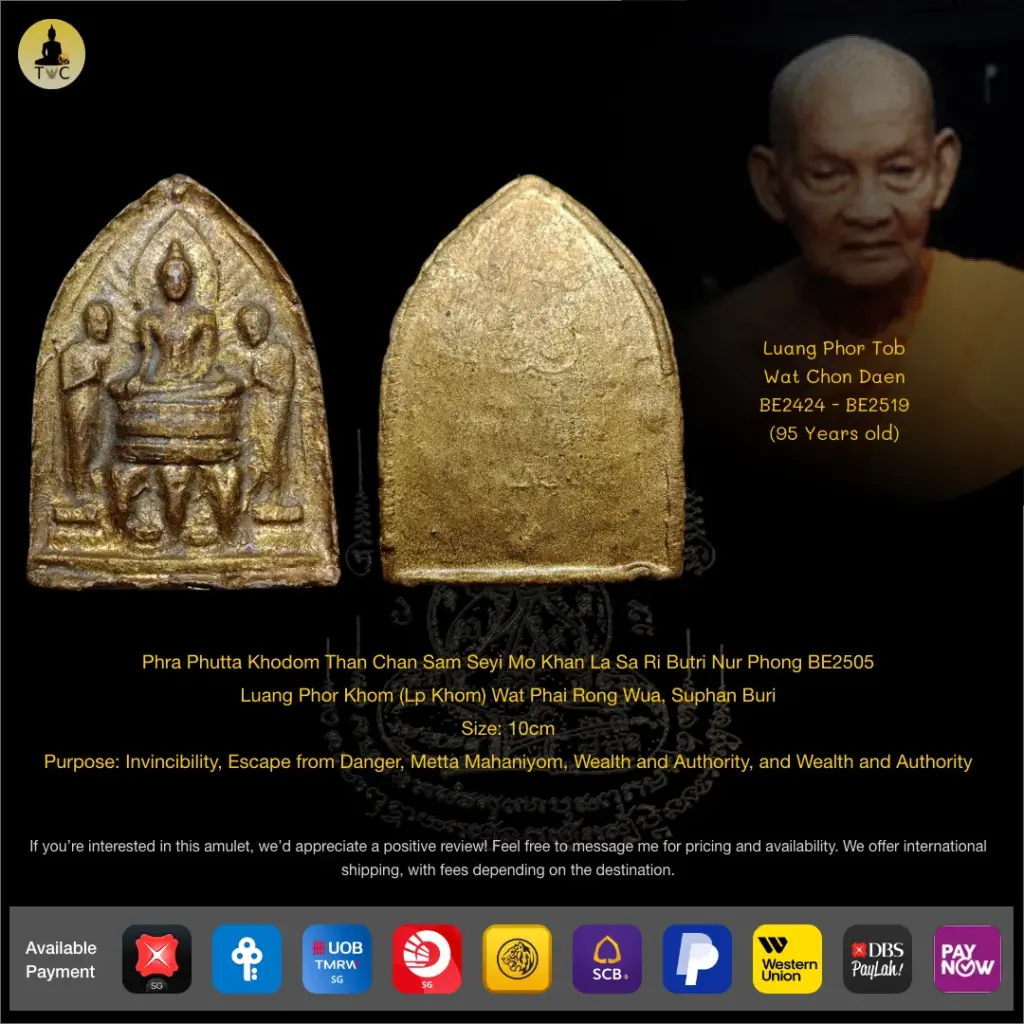
Phra Phutta Khodom Than Chan Sam Seyi Mo Khan La Sa Ri Butri Nur Phong BE2505 Luang Phor Khom (Lp Khom) Wat Phai Rong Wua, Suphan Buri
| Monk | Luang Phor Khom (Lp Khom) Wat Phai Rong Hua |
| Temple | Wat Phai Rong Hua |
| B.E. Year | 2505 |
| Material | Phong |
| SKU | TAC-0498 |
Authentic Phra Phutta Khodom Than Chan Sam Seyi Mo Khan La Sa Ri Butri Nur Phong BE2505 Luang Phor Khom (Lp Khom) Wat Phai Rong Wua, Suphan Buri by Luang Phor…
What is the Phra Phutta Khodom Than Chan Sam Seyi Mo Khan La Sa Ri Butri Nur Phong BE2505 Luang Phor Khom (Lp Khom) Wat Phai Rong Wua, Suphan Buri by Luang Phor Khom (Lp Khom) Wat Phai Rong Hua?
The Phra Phutta Khodom Than Chan Sam Seyi Mo Khan La Sa Ri Butri Nur Phong BE2505 Luang Phor Khom (Lp Khom) Wat Phai Rong Wua, Suphan Buri by Luang Phor Khom (Lp Khom) Wat Phai Rong Hua is a phong (sacred powder) amulet produced at Wat Phai Rong Hua in Suphan Buri Province in BE 2505 (1962). It depicts Buddha Gotama seated in meditation above an Erawan three-headed elephant base, flanked by chief disciples Moggallāna and Sāriputta.
The iconography — and why this composition is unusual
Most phong amulets from this era carry a single Buddha image. This piece presses three figures into one composition. Phra Kodom (พระโคดม) — the historical Siddhartha Gotama — sits in samadhi at the centre. Below him, an Erawan (Airavata) three-headed elephant carries the symbolism of celestial authority drawn from Thai-Buddhist cosmology. To either side stand Venerable Moggallāna and Venerable Sāriputta, the Buddha’s two foremost disciples.
The choice of these two is deliberate. Moggallāna embodies abhiññā — supernatural insight — while Sāriputta represents paññā, discernment and wisdom. Together with the central Buddha figure, collectors see the composition as a complete trinity: power, insight, and wisdom in a single mould. That layered intent is part of what makes this pim (mould type) stand out among Luang Phor Khom’s output from BE 2505.
Luang Phor Khom and the making of this batch
Luang Phor Khom (Lp Khom) Wat Phai Rong Hua directed this batch as part of a broader effort to raise funds for construction at Wat Phai Rong Hua. At the time, the monastery was still a developing site set among Suphan Buri’s rice fields — monumental Buddha statues and learning halls were yet to be built. Amulet production was one way the temple generated merit-based donations.
Luang Phor Khom was known for his deep meditative practice and his command of sacred syllables. He personally oversaw the pluk sek (energy infusion through chanting), conducting sessions over several nights as part of a larger phutthaphisek (Buddha consecration) ritual at the temple. Renowned monks of the era attended. That multi-monk consecration is a point collectors regularly reference when discussing the batch’s standing within the broader Thai Buddhist amulet tradition.
The nuea (material/substance) here is phong — a muan sarn (sacred powder blend) rather than cast metal. The powder composition drew on old Buddha statue remnants, melted coins from donation ceremonies, bronze alloy from temple bells and offerings, and yant (sacred inscription) powders. Pressed into a mould and consecrated, the finished piece carries natural age patina consistent with a 1962 production date.
What collectors look for when authenticating this piece
Pieces from this run are considered rare today. Limited production numbers and the depth of the iconography have kept collector interest steady across Singapore, Malaysia, and Thailand. Authentication centres on a few specific points:
- Phong surface texture: Authentic pieces show the compressed powder grain characteristic of 1960s muan sarn pressing — not a smooth cast surface.
- Age patina: Natural oxidation and tonal shifts consistent with over six decades of aging. Artificially aged pieces tend to show uniform discolouration rather than uneven, organic variation.
- Mould sharpness: The three figures — Buddha, Erawan base, and the two flanking disciples — should be distinct and cleanly defined, consistent with the original pim.
- Yant detail: Sacred inscriptions on the reverse, where present, should correspond to the known format for this batch.
Some examples from this batch have been certified through Thaprachan. No certification accompanies the piece in this listing — buyers should factor that into their assessment. Condition and provenance remain the primary levers for valuation.
We at TAC consider this one of the more iconographically distinctive phong editions from Suphan Buri of that period — the three-headed elephant base combined with the flanking disciple figures is not a composition you see often in LP Khom's catalogue. The connection to the original fundraising campaign at Wat Phai Rong Hua, with LP Khom personally overseeing the pluk sek, is the kind of provenance detail serious collectors in this market ask about.
Attributes reflect Thai Buddhist devotional tradition and are not measurable claims.