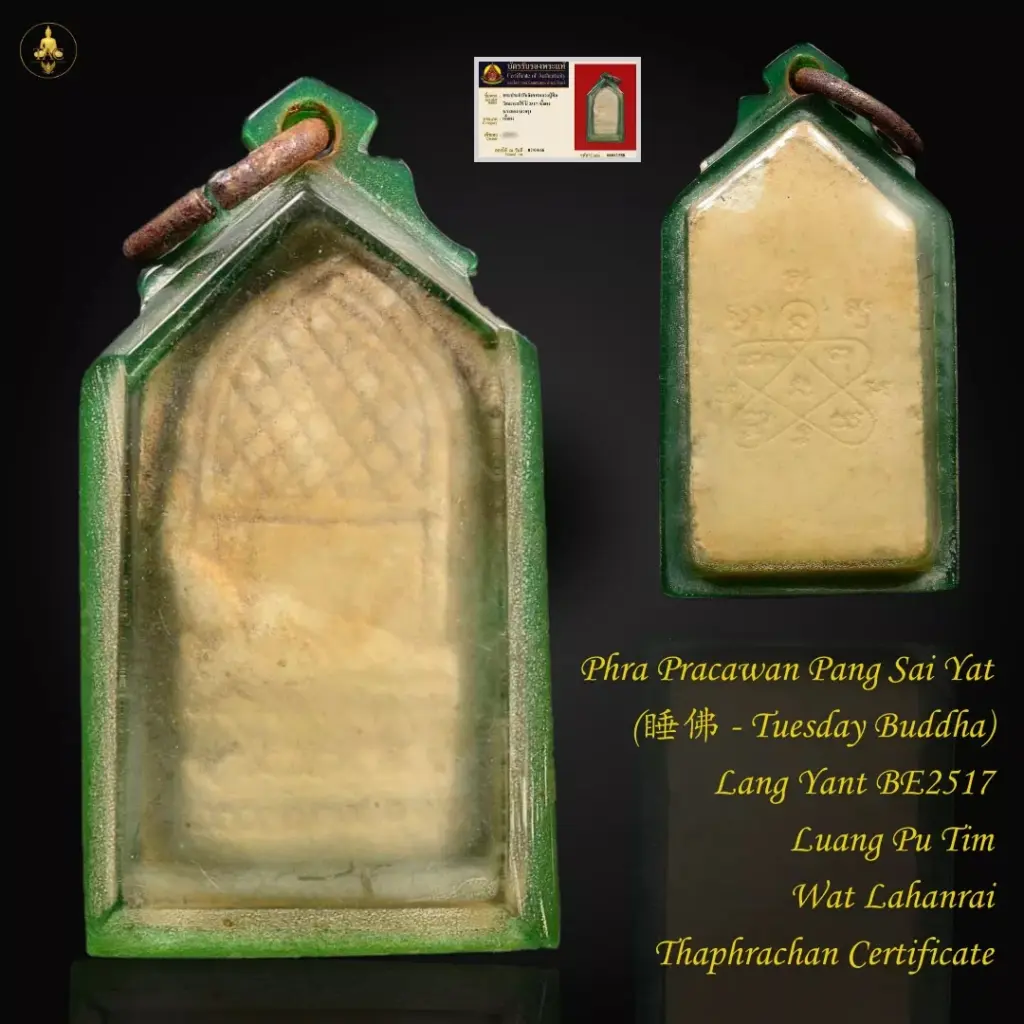
Phra Pracawan Pang Sai Yat (睡佛 – Tuesday Buddha) Lang Yant Nur Phong BE2517 Luang Pu Tim Wat Lahanrai Thaphrachan Certificate
| Type | Phra Pracawan Pang Sai Yat |
| Monk | Luang Pu Tim (Lp Tim) Wat Lahanrai Biography |
| Temple | Wat Lahanrai |
| B.E. Year | 2517 |
| Material | Phong |
| SKU | TAC-0795 |
Phra Pracawan Pang Sai Yat (睡佛 - Tuesday Buddha) • Lang Yant BE2517 • Wat Lahanrai • Thaphrachan certificate • Luang Pu Tim Overview of a reclining Buddha amulet identified in the listing as Phra Pracawan Pang Sa
Phra Pracawan Pang Sai Yat (睡佛 – Tuesday Buddha) • Lang Yant
BE2517 • Wat Lahanrai • Thaphrachan certificate • Luang Pu Tim
Overview of a reclining Buddha amulet identified in the listing as Phra Pracawan Pang Sai Yat (ปางไสยาสน์, reclining posture) for Tuesday, with lang yant (หลังยันต์, reverse yantra) and certificate shown alongside the piece.
What This Piece Represents (Collector Lens)
This piece represents a devotional form that combines the day-of-birth Buddha tradition with the collector appeal of a named Luang Pu Tim association. In Thai amulet culture, Phra Pracawan Pang Sai Yat or reclining Buddha forms linked to Tuesday are appreciated not only for the image itself, but also for how the posture, reverse yant, and temple-linked issue come together as one coherent devotional object.
Amulet Information
Name: Phra Pracawan Pang Sai Yat (睡佛 – Tuesday Buddha)
Material: Lang Yant
Year (BE): 2517
Temple: Wat Lahanrai
Monk: Luang Pu Tim
Lineage Note: Listing identifies this as a BE2517 reclining Tuesday Buddha amulet from Wat Lahanrai with Luang Pu Tim lineage reference and Thaphrachan certificate.
SKU: TAC-LuangPuTim-PhraPracawanPangSaiYat-001
Price:
SGD 388
History & Lineage Context
In Thai amulet culture, day-of-birth Buddha images hold a distinct place because each weekday is paired with a specific Buddha posture. The Tuesday image is commonly shown in the reclining posture, and collectors often encounter it in compact amulet form as part of devotional sets or temple-linked distributions meant for personal wearing and remembrance.
Luang Pu Tim of Wat Lahanrai remains one of the most studied monastic names in Thai amulet collecting, especially where BE2510s issues are concerned. When a listing identifies a day-Buddha piece with his lineage, collectors typically read it through a combined lens of temple association, period context, form, and accompanying evidence rather than relying on title alone.
Exact batch records, issue-purpose notes, and full release documentation for this specific reclining Tuesday Buddha example are not available in the material provided here. The careful collector approach is therefore to stay close to what is supported by the listing itself: BE2517 dating, Wat Lahanrai attribution, Luang Pu Tim lineage reference, reverse yant, and included certificate image.
About the Material
The listing identifies this piece through its lang yant reverse rather than a separately stated metal or powder category. In collector terms, that makes the reverse sacred diagram an important part of the amulet’s identity. For pieces of this kind, collectors usually study both the front devotional image and the reverse structure together, since the yantra side often serves as a key evidence point for variant recognition and overall reading.
- Collectors typically examine the reverse yant layout for placement, clarity, and period-consistent balance.
- Surface maturity, edge character, and how the back relates to the front image are often read together rather than separately.
- When the exact material category is not stated in the listing, the most careful approach is to describe only visible evidence and keep stronger material claims open.
Design / Pim / Variant Notes
The design centres on the reclining Buddha image associated with Tuesday, a form that differs visually from seated or standing weekday Buddhas by its horizontal flow and calm resting posture. In collector practice, this creates a different reading rhythm: attention goes to body proportion, head support, robe contour, border shape, and then to the reverse lang yant that completes the variant identity.
Traditional Spiritual Attributes & Metaphysical Properties
In Thai amulet culture, weekday Buddha amulets are often worn as devotional companions tied to personal remembrance, merit, and orderly spiritual identity. A reclining Tuesday Buddha may be approached through qualities such as khumkhrong (คุ้มครอง, protection), calm bearing, and inward steadiness. These are traditional belief framings rather than guarantees, and devotees often place them within bun (บุญ, merit) and respectful daily practice.
- คุ้มครอง (Khumkhrong): Traditionally associated with general protection and guarded well-being.
- เมตตา (Metta): Some devotees relate such pieces to gentler human interaction and composed presence.
- แคล้วคลาด (Klaew Khlat): In Thai amulet language, sometimes used for safe avoidance and smooth passage.
Rarity Assessment & Collector Significance
Exact production numbers for this specific BE2517 Tuesday Buddha reclining variant are not available in the material provided here, so rarity should not be overstated numerically. Its collector significance instead comes from the combination of Luang Pu Tim association, Wat Lahanrai attribution, weekday-Buddha identity, reverse yant feature, and certificate support shown in the listing. For many collectors, that combination is enough to make it a meaningful representative piece within a broader Luang Pu Tim collection.
Conclusion
This is a collector-friendly devotional amulet that stands out through its reclining Tuesday Buddha form, Wat Lahanrai connection, and Luang Pu Tim lineage reference. It is best appreciated as a compact period piece where image, reverse yant, and supporting certificate together shape the overall reading.
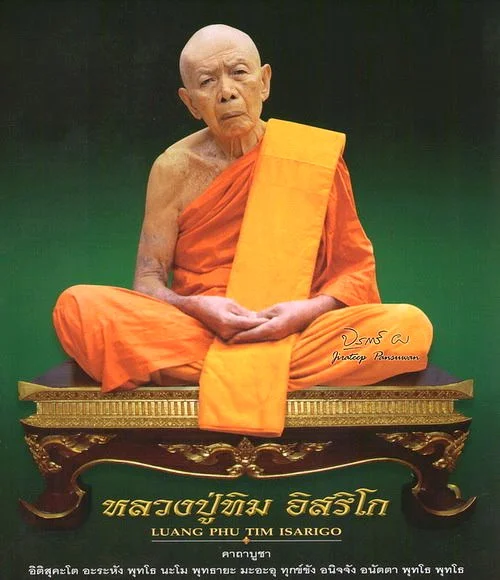
Front view showing the reclining Buddha form and overall shape of the amulet.
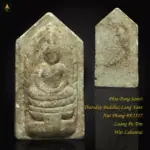
Reverse view for studying the lang yant layout and surface condition.
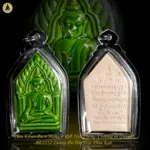
Thaprachan Certificate.
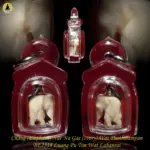
Reference image retained with the listing for comparative viewing context.
Attributes reflect Thai Buddhist devotional tradition and are not measurable claims.