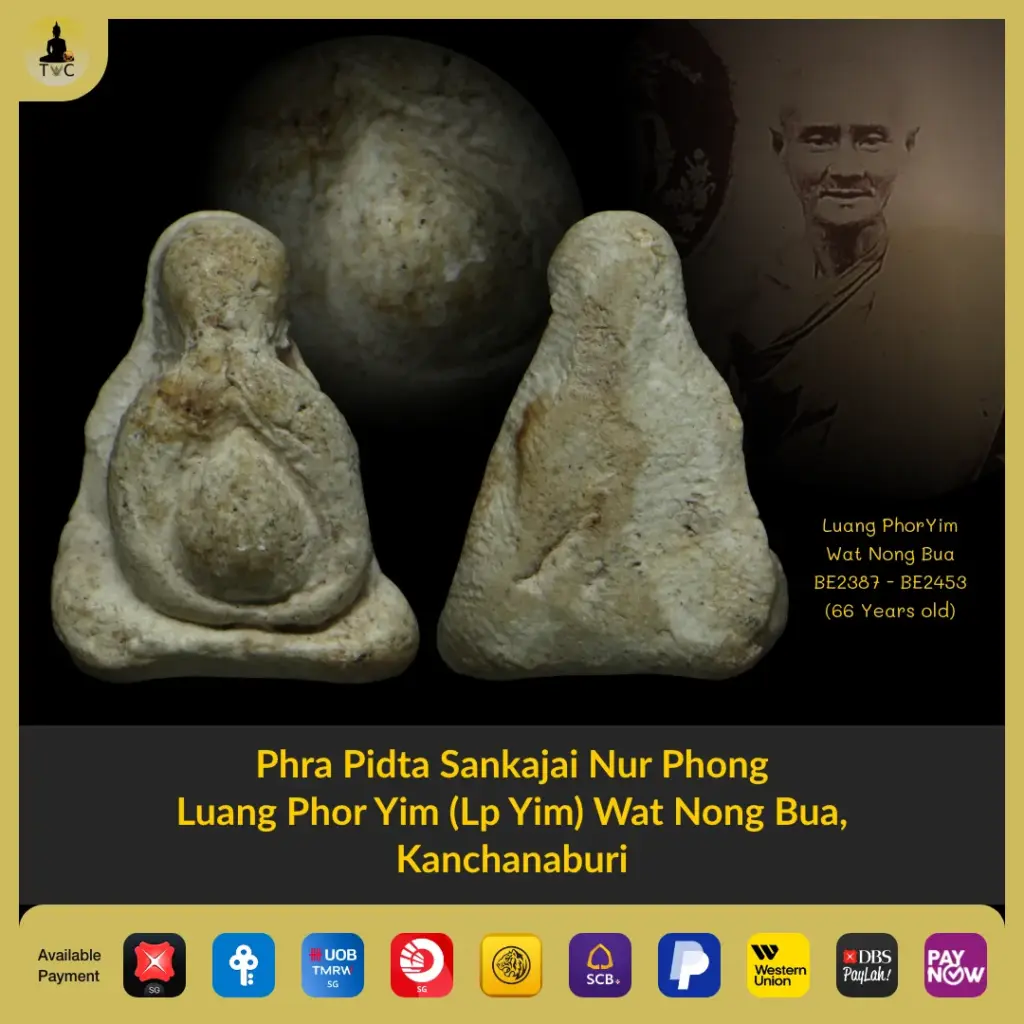
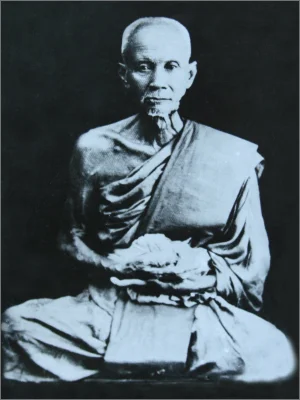
Phra Pidta Sankajai BE 2400–2453 Luang Phor Yim Wat Nong Bua
| Type | Phra Pidta |
| Monk | Luang Phor Yim (Lp Yim), Wat Hua Khao |
| Temple | Wat Nong Bua |
| B.E. Year | 2400 |
| SKU | TAC-0133 |
Phra Pidta Sankajai Nur Phong • BE 2400–2453 Wat Nong Bua (Upalaram), Kanchanaburi • Sacred Herbal Powder Composition Main obverse — depicts Phra Pidta merged with Phra Sangkachai in classic K
Phra Pidta Sankajai Nur Phong • BE 2400–2453
Wat Nong Bua (Upalaram), Kanchanaburi • Sacred Herbal Powder Composition
Main obverse — depicts Phra Pidta merged with Phra Sangkachai in classic Kanchanaburi form.
Historical Significance
Created between BE 2400s–2453 (1857–1910 CE) at Wat Nong Bua (Upalaram), this early series was personally blessed by Luang Phor Yim Chantachoti.
Produced during a time of rural revival and forest practice expansion, it served both as a protective talisman and as an expression of the temple’s ascetic tradition.
Each piece was empowered through Putthapisek (ritual consecration) ceremonies with prolonged chanting for metta and invulnerability (Klaew Klaad).
Front view — reveals fine powder grain and meditative gesture of the Sankajai form.
Contextual Insight:
The dual imagery of Phra Pidta and Phra Sangkachai embodies concealment from evil and attraction of fortune. Luang Phor Yim was renowned for his wicha Metta Maha Niyom (spells of loving-kindness and popularity), often performed with chanting of the Metta Sutta and Buddha Katha during empowerment.
Side profile — shows layering of Phong Bailan and traces of hand-press molding.
Temple of Origin & Master’s Discipline
Wat Nong Bua (Upalaram) is a historic temple in Kanchanaburi associated with forest-dwelling monks and the lineage of Luang Pu Suk and Luang Phor Ngern.
Luang Phor Yim was a master of Wicha Klaew Klaad (warding off danger) and Wicha Metta (spiritual charm).
His discipline combined intense meditation with devotional service to lay followers and royalty alike.
Back view — powder stratification and natural aging consistent with 19th–early 20th century casting.
Materials & Craftsmanship
| Material | Sacred Nur Phong Bailan — powder of scripture ash, incense soot, temple flowers, and blessed earth. |
| Mold / Pim | Classic Sankajai-Pidta fusion type; seated posture with closed palms and rounded torso. |
| Consecration | Multiple Putthapisek sessions led by Luang Phor Yim with extended Metta and protective chants. |
Base view — reveals aged surface pitting and powder density typical of 19th-century pressing.
Spiritual Function & Doctrinal Purpose
According to Thai Buddhist belief, this amulet bestows Klaew Klaad (safe passage and protection from harm), Metta Mahaniyom (charm and popularity), and Maha Lap (prosperity and good fortune).
It is often worn by devotees seeking calm mindfulness and protection during travel or business endeavours.
Base view — reveals aged surface pitting and powder density typical of 19th-century pressing.
Rarity & Collector Significance
Classified as collector-grade rare. Authentic examples exhibit aged powder textures and subtle press lines unique to Luang Phor Yim’s handwork.
They are highly sought among devotees and collectors of the Kanchanaburi lineage, often documented in Samakom and Thaprachan archives.
Related Articles
Thai Amulet Inquiries
For provenance and acquisition details, contact us via
WhatsApp.
Disclaimer: The information here supports cultural and academic appreciation of Thai Buddhist material heritage.
Details on authentication and provenance aid study and personal appreciation, and are not legal or forensic certification.
Attributes reflect Thai Buddhist devotional tradition and are not measurable claims.
![[SOLD] Phaya Tao Ruen Nur Thong Phasom BE2470 Luang Phor Yim (Lp Yim) Wat Hua Khao](https://tac-media.sgp1.digitaloceanspaces.com/2026/03/sold-phaya-tao-ruen-nur-thong-phasom-be2470-luang-phor-yim-lp-yim-wat-hua-khao-150x150.webp)