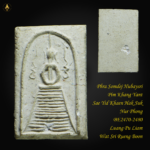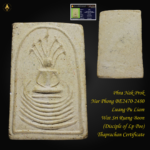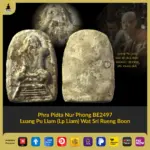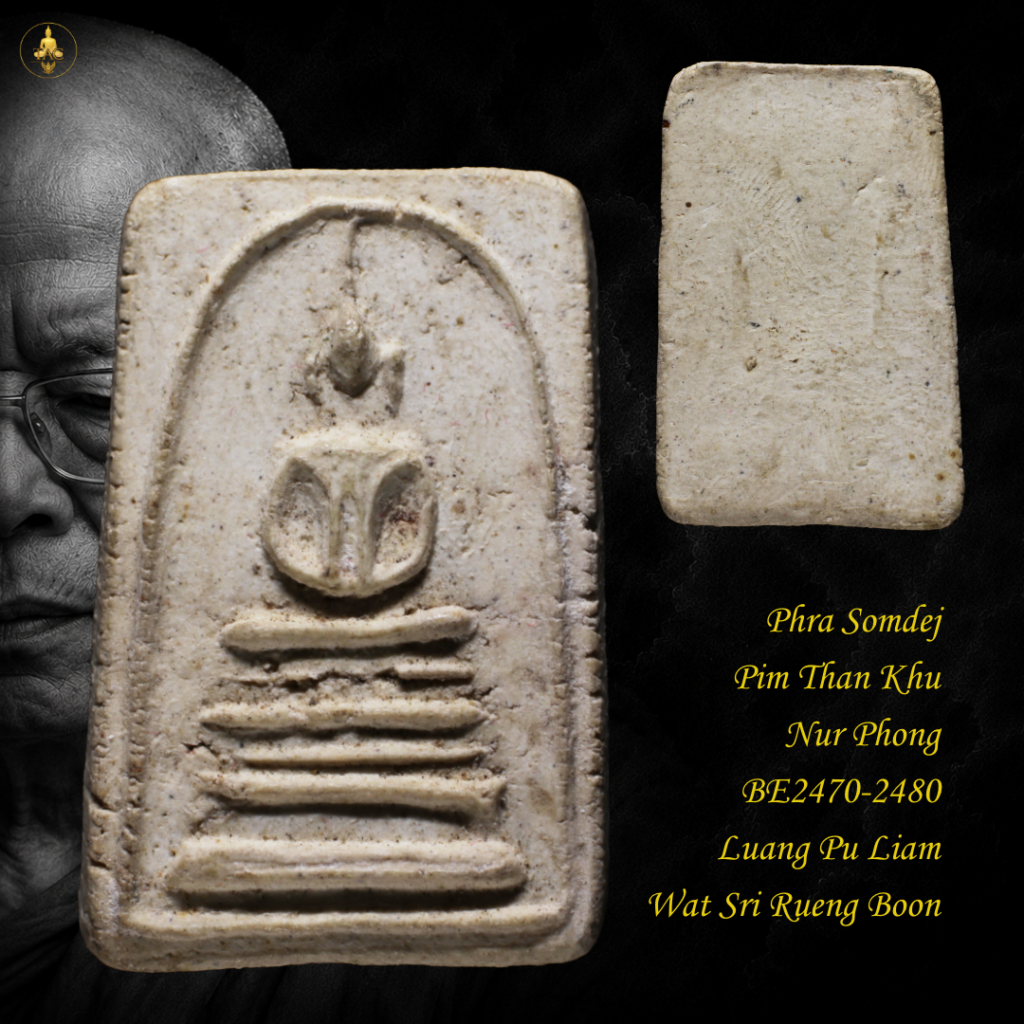
Phra Somdej Pim Than Khu Nur Phong BE2470-2480 Luang Pu Liam Wat Sri Rueng Boon
| Type | Phra Somdej Pim Than Khu |
| Monk | Luang Pu Liam (Lp Liam) Wat Sri Rueng Boon |
| Temple | Wat Sri Rueng Boon |
| B.E. Year | 2470-2480 |
| Material | Nur Phong |
| Condition | Very Good |
| SKU | TAC-PhraSomdejPimThanKhu-LpLiam-001 |
Authentic Phra Somdej Pim Than Khu Luang Pu Liam, Wat Sri Rueng Boon BE 2470-2480. Nur Phong, 10-year consecration. Trusted Thai amulet Singapore dealer.
What is the Phra Somdej Pim Than Khu Luang Pu Liam from Wat Sri Rueng Boon?
The Phra Somdej Pim Than Khu Luang Pu Liam is an authentic Thai amulet produced at Wat Sri Rueng Boon, Nonthaburi province, continuously from BE 2470 and consecrated over a full decade until BE 2480. Pressed in Nur Phong — a sacred powder compound mixed with crushed seashells and banana pulp — it was created by the revered abbot Luang Pu Liam as an act of gratitude to his lay supporters.
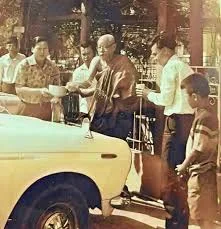
Luang Pu Liam served as abbot of Wat Sri Rueng Boon from BE 2457 to BE 2480 (1914–1937 AD) and passed away in BE 2488 (1945 AD) at the age of 82. Originally from the eastern part of Thailand, he spent many decades on pilgrimage before settling near Wat Sri Rueng Boon, where he established his meditation hut.
At the time of his arrival, the temple was without an abbot and had fallen into disrepair. The local villagers unanimously invited him to become abbot when he was around 55 years old — a testament to the profound respect and faith they placed in him.
Luang Pu Liam’s decision to create amulets was born from a sense of moral debt. When he undertook the renovation of the temple’s monastic buildings, the community rallied to help him — and feeling unable to repay them in any other way, he dedicated himself to producing amulets of powdered materials to distribute as a gift of merit.
Phra Somdej Pim Than Khu and the Heritage of Wat Sri Rueng Boon
Wat Sri Rueng Boon is a small, peaceful temple surrounded by gardens in Nonthaburi province, regarded by devotees as an environment particularly suited to meditative practice and spiritual cultivation. Its tranquil setting was one of the reasons Luang Pu Liam ultimately accepted the abbotship after years of wandering.
The temple’s significance in Thai amulet collecting circles is inseparable from Luang Pu Liam’s legacy. His expertise in traditional medicine — particularly his renowned holy water, which is recorded as having cured even severe cases of rabies — gave him an extraordinary reputation among local villagers and beyond. This sacred power is widely regarded as having infused the amulets he produced.
The molds used to press these amulets were carved by Luang Pu Liam’s skilled disciples, drawing inspiration from the Somdej amulets of Luang Pu Phu of Wat Intharam and those of Wat Chalerm Phra Kiat, as well as the style of Luang Phor Khram of Wat Phra Ngern — while certain molds were uniquely their own designs. This careful attention to craftsmanship reflects a deep reverence for the broader Thai Buddhist amulet tradition that these monks were proud to uphold.
Nur Phong Phra Somdej Pim Than Khu — Composition and Craftsmanship
The Nur Phong Phra Somdej Pim Than Khu produced by Luang Pu Liam is distinguished by its carefully prepared powder base. He mixed a special powder known for its benevolent properties with crushed seashells, ground the compound in a mortar and pestle, and combined it with banana pulp before pressing the mixture into over 20 different molds.
So meticulous was Luang Pu Liam during the production process that he closed his kuti — the monk’s dwelling — while grinding and pressing, specifically to prevent the sacred powder from blowing away and causing any harm. This level of care reflects both his technical precision and his compassionate character.
The amulets were produced continuously from BE 2470 and consecrated over a period of ten years. Because Luang Pu Liam distributed far fewer pieces than he actually produced, a significant portion of the remaining stock was stored carefully in tin containers rather than buried in a vault. As a result, these amulets are notably clean and largely free of the staining that collectors often associate with vault-stored pieces. Those that have seen some use display a richer, more vibrant colour — entirely befitting an amulet of this era and age.
Spiritual Benefits of Phra Somdej Pim Than Khu by Luang Pu Liam
Collectors and devotees across Singapore, Malaysia, and Greater China widely associate the Phra Somdej Pim Than Khu Luang Pu Liam with powerful protective and merit-generating qualities. The amulet is traditionally venerated as an object of deep spiritual sincerity, reflecting the pure intention with which Luang Pu Liam created it — not for commercial gain, but as an expression of gratitude to those who helped restore his temple.
Devotees regard this piece as especially meaningful because of the monk’s documented compassion and expertise in healing. The same sacred power attributed to his holy water — capable, according to local records, of curing even those in a delirious state from rabies — is believed by followers to have been channelled into each amulet he pressed.
- Protection and safety: Collectors traditionally associate this amulet with personal protection from harm and misfortune, rooted in Luang Pu Liam’s reputation as a powerful and compassionate monk.
- Merit and spiritual advancement: The amulet is regarded by devotees as a vessel of accumulated merit, consecrated continuously over ten years with pure intent.
- Wealth and good fortune: The Phra Somdej form is traditionally venerated across Thai Buddhist culture for its association with auspiciousness, prosperity, and the removal of obstacles.
Phra Somdej Pim Than Khu BE 2470-2480 — Authentication and Collector Value
The Phra Somdej Pim Than Khu BE 2470-2480 is estimated to be approximately 80 years old, placing it firmly in the same era as other highly prized early-twentieth-century Thai amulets. Collectors note that in terms of age, the material richness of the Nur Phong compound is comparable to any respected school of the period, and the beauty and meticulous craftsmanship of the over-20 mold variants are considered excellent.
Because these amulets were stored in tin containers and not buried in a vault, surface condition tends to be superior to many contemporaries. Pieces that have been lightly worn display the characteristic deepened tone and vibrancy that experienced collectors regard as confirmation of genuine age and authentic material composition.
Collectors seeking a Luang Pu Liam amulet from this era should examine the powder texture, the sharpness of the mold impression, and the characteristic colour development of aged Nur Phong material. As with all authentic Thai amulet acquisitions, buyers in Singapore and across Southeast Asia are advised to consult with reputable dealers and reference established collector documentation when assessing pieces from this batch.
Attributes reflect Thai Buddhist devotional tradition and are not measurable claims.