Chapter 01
Choose for what you want, not just the look
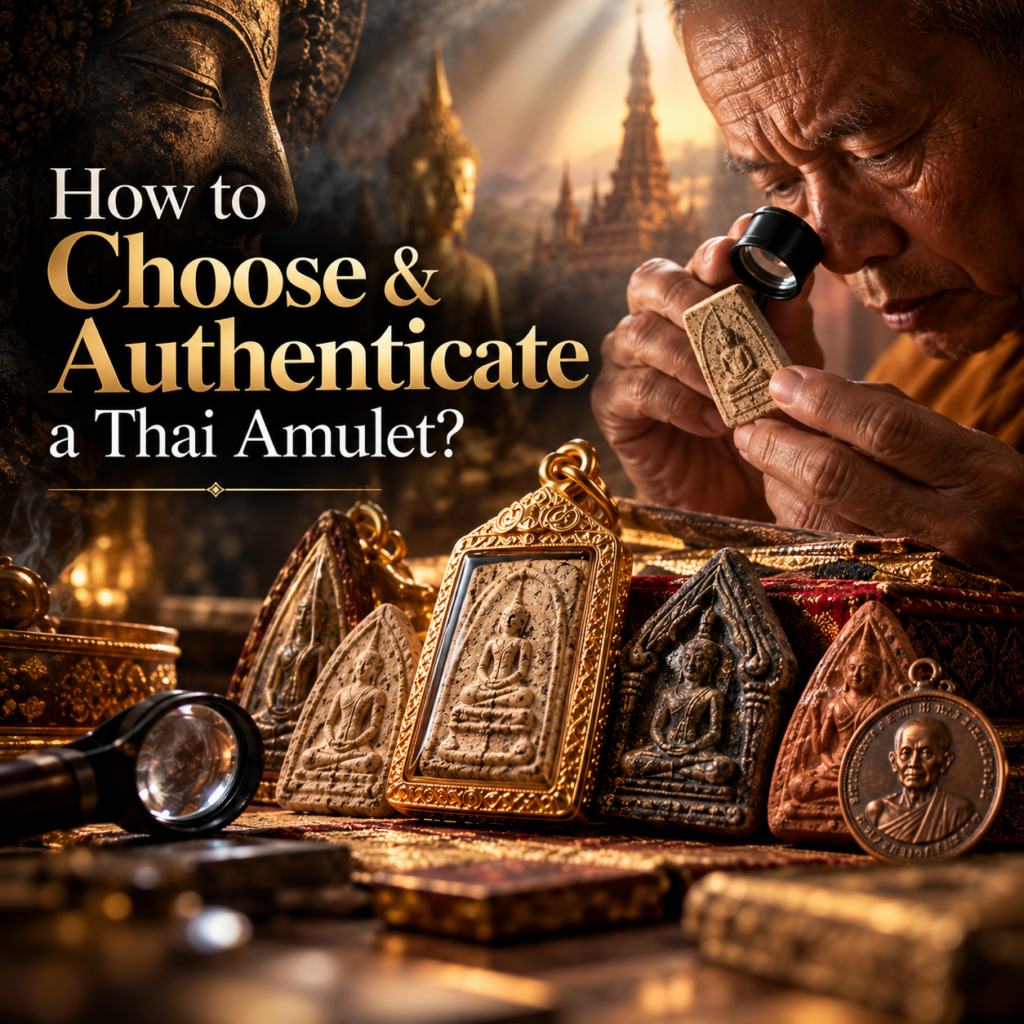
How to Choose & Authenticate a Thai Amulet? It's easy to fall for a beautiful piece. But the best first question isn't "is it nice?" — it's "what do I want it to support?" Protection, warmer relationships, a lift in business, or simply a calmer daily reminder. Starting from purpose narrows the field fast and keeps you from buying on impulse (if you're new to the categories, our guide to the main types of Thai amulets is a good map). Some collectors go a step further and match a piece to their personal chart — our My Destiny Amulet reading uses BaZi to suggest the one that best fits you.Chapter 02
Set an honest budget
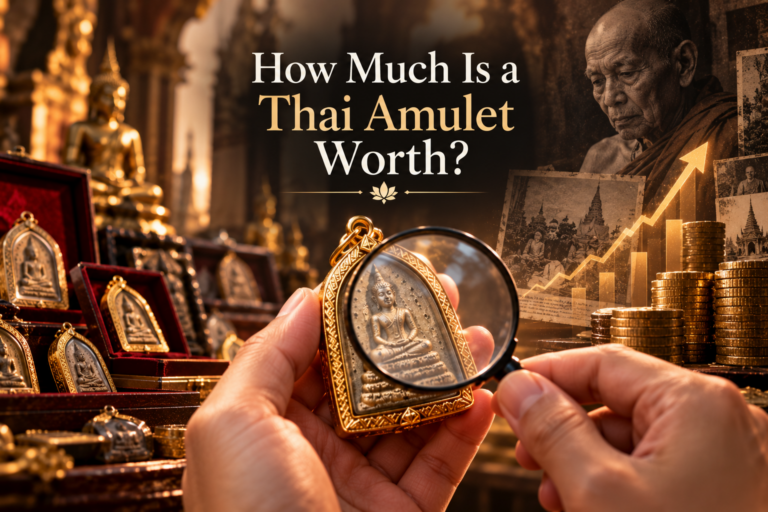
Thai amulets run from affordable everyday pieces to rare museum-grade finds. Decide your range before you look, and remember the rule that never changes: if a price looks too good to be true, it is. A genuine, sought-after piece has a market value; a seller offering it for a fraction of that is telling you something. Budget also sets your expectations — an original of a famous BE2411 piece and a respectful later edition are very different things at very different prices.Chapter 03
The four things collectors check
Experienced collectors don't rely on a single clue. They read four things together, and let them agree:- The mould (pim) — the exact shape and fine detail.
- The material — the right texture, colour and ageing for its claimed era.
- The provenance — the temple, the master, the year.
- The certification — a recognised grading, where one exists.
Chapter 04
The mould (pim)
Every genuine batch was pressed from specific master moulds, so authentic pieces of the same pim share precise, repeatable details — the set of the face, the lines of the robe, the proportions, the way the edges finish. Fakes tend to be almost right: lines a little soft or blurry, proportions slightly off, details that don't match a known reference. The way to learn a pim is to study many genuine examples of it until the correct one looks obvious and the wrong one feels off.Chapter 05
The material and its age
A real piece wears its age honestly. Pressed-powder amulets develop a characteristic surface over decades — fine cracks, a settled patina, the slow shrinkage of old material. Metal pieces grow a natural patina that's hard to fake convincingly. Be cautious of a piece that looks suspiciously fresh for the age it claims, or that shows artificial "ageing" that sits on the surface rather than belonging to it. The material should feel of its time.Chapter 06
Provenance — temple, monk and era
A Thai amulet's story matters: which temple made it, which master (e.g. Somdej Phra Buddhacarya — Somdej Toh) consecrated it, and when (its BE year). A clear, consistent history supports a piece; a vague or shifting one is a warning. Good provenance also explains value — a piece from a renowned master and a famous ceremony sits far above an anonymous later copy, even when they look similar.Chapter 07
What certification does and doesn't tell you
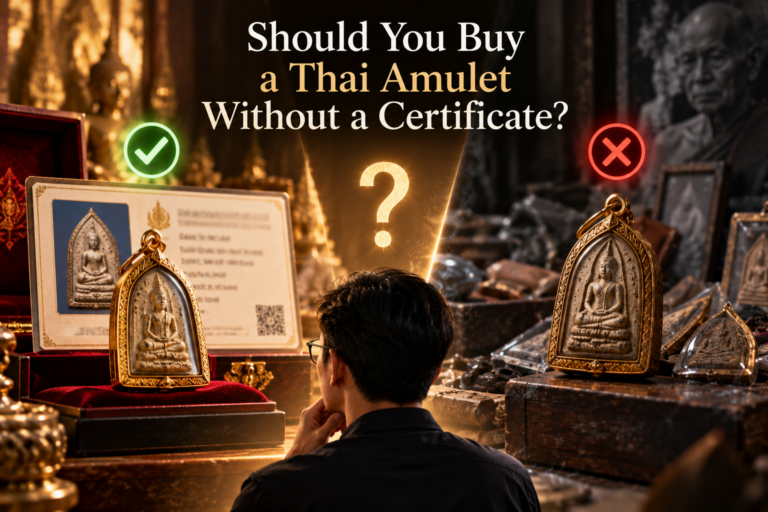
For well-known pieces you'll see competition gradings and society certificates — you'll hear the names Samakom / Thaprachan. A certificate from a respected body genuinely raises confidence, and competition placings are a strong signal. But hold two truths together: a cert supports a piece, it doesn't guarantee it on its own — and certificates themselves can be forged. Treat certification as one strong voice in the chorus, not the final word.Chapter 08
Common fakes and red flags
Most problem pieces give themselves away if you slow down. Watch for:- A price well below the known market for that piece.
- A seller who won't let you inspect it properly, or rushes you.
- No guarantee of authenticity and no returns.
- Vague or inconsistent provenance.
- Condition too perfect for the claimed age, or surface "ageing" that looks applied.
- Modern materials turning up in a supposedly old piece.
Chapter 09
The honest shortcut
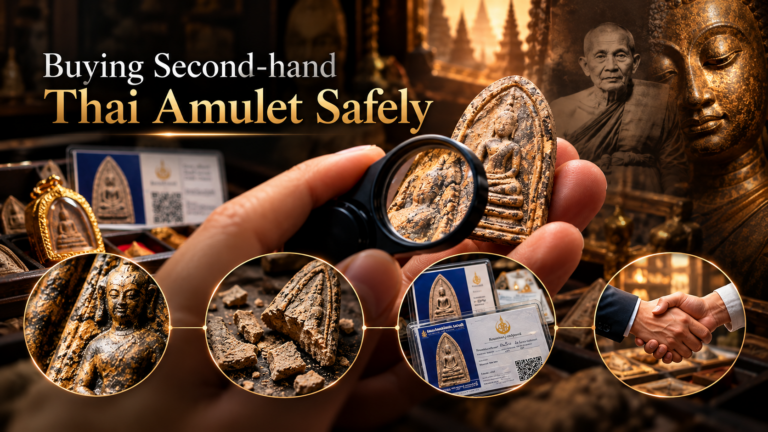
Here's the part most guides won't say plainly: real authentication takes years of handling genuine pieces, and even seasoned experts sometimes disagree. You're not expected to master it before your first purchase. The honest shortcut is simple — buy from someone who stands behind the piece. A dealer who inspects every amulet, describes it in plain terms, notes its certification where it exists, and will talk you through any piece is worth far more than a bargain from a stranger. That's exactly how we've worked, from Singapore, since 2015.Chapter 10
In closing
Choosing well comes down to a short, honest checklist: know what you want it for, set a real budget, and let the mould, material, provenance and certification agree before you commit. Learn a little, take your time, and buy from someone you trust — and a Thai amulet becomes a piece you can wear with complete confidence. When you're ready, browse our pieces and ask us anything.Chapter 11
Frequently Asked Questions
How can I tell if a Thai amulet is real or fake?
Check four things together — the mould (pim), the material and its ageing, the provenance (temple, monk, year), and any recognised certification. A genuine piece has all four agree; fakes are usually "almost right" in the mould or look too new for their age.How do I choose the right Thai amulet for me?
Start with what you want it to support — protection, relationships, business or a calmer mind — then your budget, then authenticity. If you'd like a guided choice, our My Destiny Amulet reading matches a piece to your BaZi chart.Does a certificate mean a Thai amulet is genuine?
A certificate from a respected body (you'll see Samakom / Thaprachan named) raises confidence and competition placings are a strong sign — but a cert supports a piece rather than guaranteeing it, and certificates can be forged. Read it as one strong signal among several.Why are some Thai amulets so expensive?
Value comes from rarity, the renown of the master and temple, the ceremony, the era and condition. An original from a famous master and a respectful later edition can look alike but sit at very different prices.Is it safe to buy Thai amulets online?
Yes — if you buy from a dealer who guarantees authenticity, describes each piece honestly, notes certification, and will answer questions. The seller's willingness to stand behind the piece matters more than any single visual check.Dealer's Note — Thai Amulets Collection has inspected, authenticated and sold Thai amulets from Singapore since 2015. Every piece we list is checked and described in plain language, with certification noted where it exists, and we're always happy to talk a piece through over WhatsApp before you decide.