History of Luang Phor Sothorn Wat Sothorn Wararam Worawihan
Discover the History of Luang Phor Sothorn Wat Sothorn Wararam Worawihan — sacred origins, miraculous arrival, and collector significance. Singapore's trusted Thai amulet resource.
History of Luang Phor Sothorn Wat Sothorn Wararam Worawihan — History and Significance
The History of Luang Phor Sothorn Wat Sothorn Wararam Worawihan is one of the most compelling chapters in Thai Buddhist tradition, tracing the miraculous origins of a sacred Buddha image that has drawn devoted pilgrims for centuries. For collectors in Singapore, Malaysia, and across Greater China, understanding this history deepens appreciation for the spiritual authority that Luang Phor Sothorn commands. This revered image — formally titled Phra Phuttha Sothorn — remains among Thailand’s most venerated sacred objects and a cornerstone of Thai amulet history.
Luang Phor Sothorn is enshrined at Wat Sothorn Wararam Worawihan, situated on the banks of the Bang Pakong River in Chachoengsao Province, eastern Thailand. The temple, once known simply as “Wat Hong,” dates to the late Ayutthaya period — a time of political upheaval, shifting power, and deep communal faith. Its story is not merely a record of bricks and bronze; it is a living testament to the enduring relationship between sacred images and the communities that protect them.
Today, Wat Sothorn Wararam Worawihan stands as a Royal Temple of the Third Class, attracting millions of pilgrims annually from Thailand and abroad. Its significance resonates far beyond its riverside home, shaping the broader landscape of Thai Buddhist tradition and the collector communities who revere objects connected to this sacred site.
Origins and Historical Context of the History of Luang Phor Sothorn Wat Sothorn Wararam Worawihan
The founding narrative at the heart of the History of Luang Phor Sothorn Wat Sothorn Wararam Worawihan centres on a miraculous event that occurred during a season of turmoil in the late Ayutthaya era. Villagers along the Bang Pakong River spotted a large Buddha image floating upstream — against the current — an occurrence they immediately recognised as extraordinary. Ropes were cast and boats pushed out, yet no human effort could bring the image ashore.
It was only after the abbot of Wat Hong led a solemn riverside rite — comprising sacred chants, offerings, and a humble request for the image to take refuge at the temple — that the current finally slackened. The image drifted gently to the bank as though choosing its own resting place, and from that moment it was enthroned at what would become Wat Sothorn Wararam Worawihan. This act of spiritual surrender, rather than physical force, defines the image’s relationship with its devotees to this day.
Within Thai cultural memory, Luang Phor Sothorn belongs to a celebrated family of “floating Buddhas” — sacred images that appeared on waterways during periods of upheaval and came ashore where communities were spiritually prepared to receive them. These include Luang Phor Ban Laem of Samut Songkhram, Luang Phor To of Bang Phli in Samut Prakan, Luang Phor Wat Rai Khing of Nakhon Pathom, and Luang Phor Thong of Phetchaburi. Each image left behind a documented trail of answered vows and confirmed miracles.
Key Events and Sacred Significance in the History of Luang Phor Sothorn Wat Sothorn Wararam Worawihan
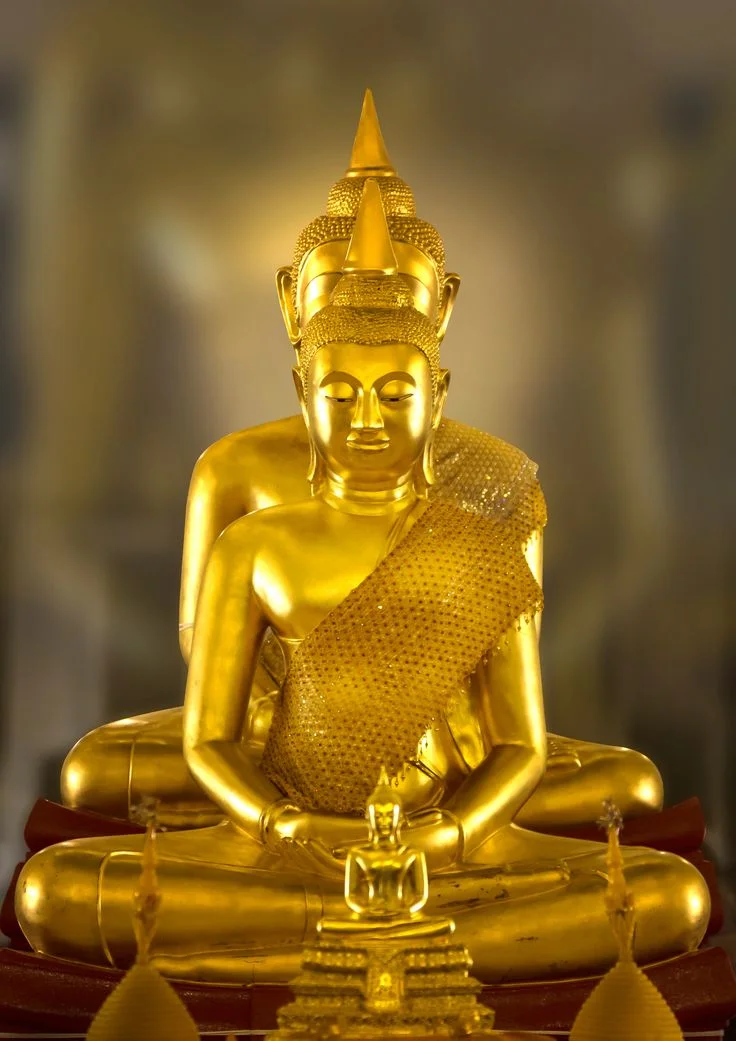
The physical form of Luang Phor Sothorn reflects centuries of devotion layered upon the original structure. The image measures approximately 1.65 metres across the lap and 1.48 metres in height, seated in the dhyāna mudrā — the meditation posture — projecting profound stillness and contemplative authority. The core is cast in bronze, but during periods of unrest, devotees encased the image in cement to protect it from thieves and invaders who might seek to carry it away or damage it.
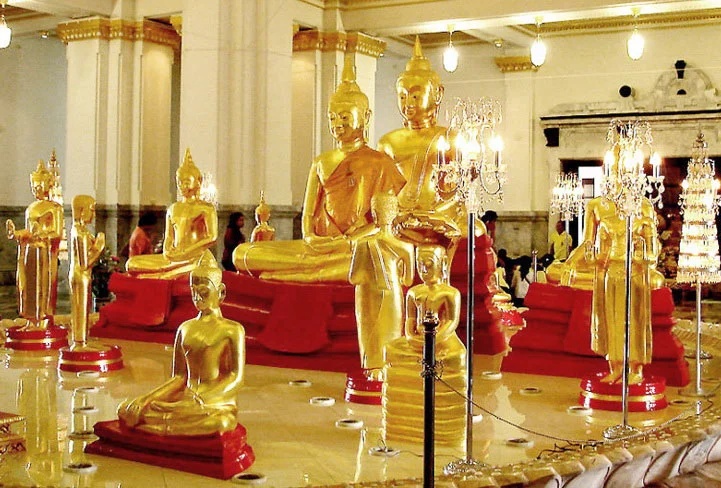
Over generations, the faithful applied gold leaf to the cemented surface as acts of merit-making and gratitude, until the image became radiant with an accumulated golden skin that now glows under temple light. This layering of protection — both physical and spiritual — is itself a form of living history, each application of gold leaf a recorded prayer. The practice continues to this day, ensuring that the image grows ever more luminous with collective devotion.
Pilgrimage peaks during the fifth lunar month, when a river procession and large-scale merit-making events recall the image’s miraculous arrival by water. Devotees who have had wishes fulfilled return to offer boiled eggs, bright flower garlands, and sponsor ram thon dance troupes to perform joyfully before the shrine — fulfilling vows in the same spirit in which they were made. The present ubosot (ordination hall) anchors the site architecturally: an 84-metre spire in traditional Thai lines, clad in pale Italian marble that catches the late afternoon light in a way pilgrims consistently describe as otherworldly.
Impact on Thai Amulet Tradition and Collector Value
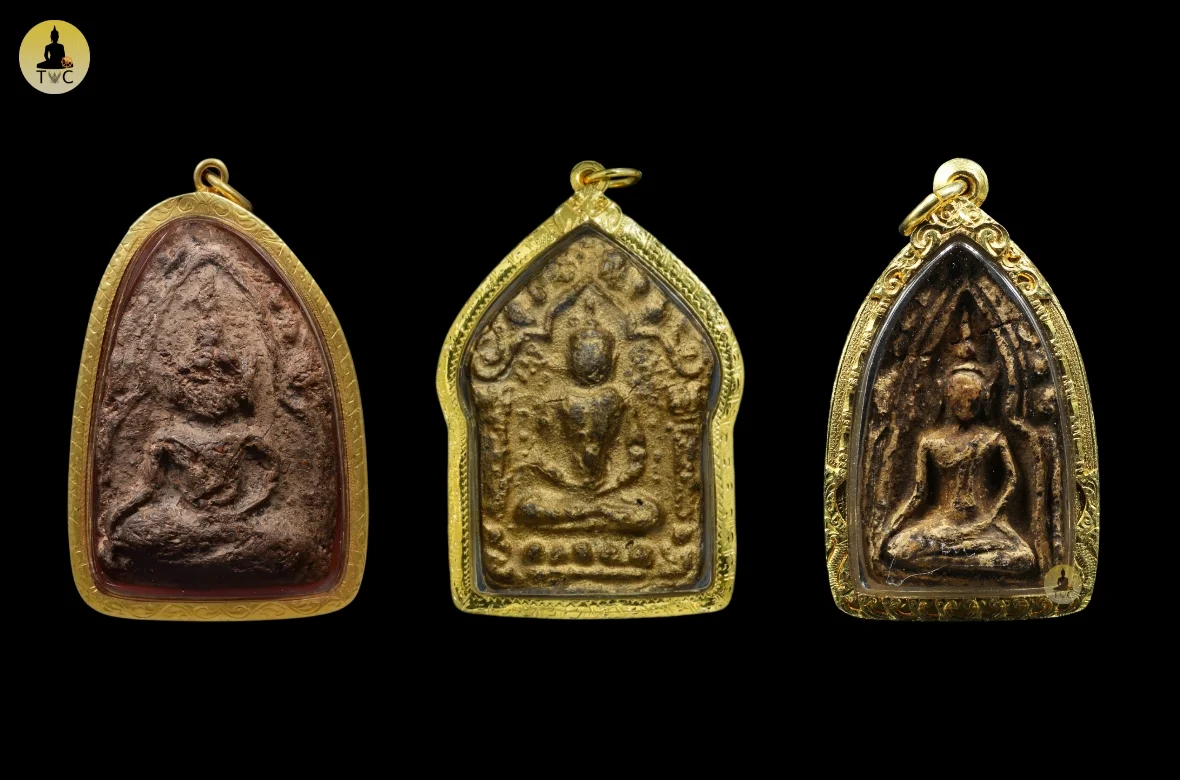
The History of Luang Phor Sothorn Wat Sothorn Wararam Worawihan holds direct relevance to the world of sacred objects and amulet collecting across Southeast Asia and Greater China. Amulets, takrut, and blessed items associated with Wat Sothorn Wararam Worawihan carry the spiritual weight of one of Thailand’s most miraculously authenticated sacred sites. Collectors who understand this history recognise that provenance tied to Luang Phor Sothorn represents a lineage of verified spiritual authority, not merely decorative tradition.
The image’s documented miracles — healing in sickness, protection in danger, and prosperity in trade — map directly onto the aspirations that drive authentic Thai amulet collecting. Devotees across Thailand and internationally have recorded fulfilled wishes across centuries, establishing a body of testimony that authenticates the site’s power within the framework of Thai Buddhist amulet tradition. For the collector, this depth of history translates into both spiritual confidence and long-term collector value.
Items consecrated within the precincts of Wat Sothorn Wararam Worawihan are sought after precisely because the temple’s sacred reputation is unimpeachable. The site’s status as a Royal Temple of the Third Class, combined with its extraordinary founding narrative, means that associated amulets and sacred objects occupy a prestigious position in any serious collection. This is especially significant for the growing community of Thai amulet Singapore collectors who prize verifiable temple provenance above all.
History of Luang Phor Sothorn Wat Sothorn Wararam Worawihan — Collector Guide for Singapore and Southeast Asia
For collectors in Singapore, Malaysia, Taiwan, Hong Kong, and mainland China, engaging with the History of Luang Phor Sothorn Wat Sothorn Wararam Worawihan provides an essential foundation for informed acquisition. Amulets and sacred items associated with this temple should be authenticated by tracing their blessing ceremonies to specific abbots, consecration events, or temple-issued documentation. The most sought-after pieces are those blessed during the fifth lunar month pilgrimage season, when the temple’s spiritual energy is considered to be at its annual peak.
Collectors should prioritise items that carry clear temple markings, documented batch records, and can be verified against established references in the collector community. Engaging with trusted, specialist dealers — particularly those with direct relationships with Thai temples — is the most reliable path to acquiring authentic Thai amulet pieces with genuine Wat Sothorn provenance. At Thai Amulets Collection, we maintain rigorous sourcing standards to ensure that every piece we offer reflects the true heritage of this extraordinary sacred tradition.
Frequently asked questions
History of Luang Phor Sothorn Wat Sothorn Wararam Worawihan is an important chapter in Thai Buddhist amulet tradition. This article explores its historical context, key figures, and lasting influence on the collector community.
Understanding the history behind Thai amulets deepens appreciation for their spiritual and cultural value. This knowledge helps collectors make more informed decisions.
Thai Amulets Collection offers an extensive knowledge base including monk biographies, temple guides, and historical articles. Visit our Learn section for more.