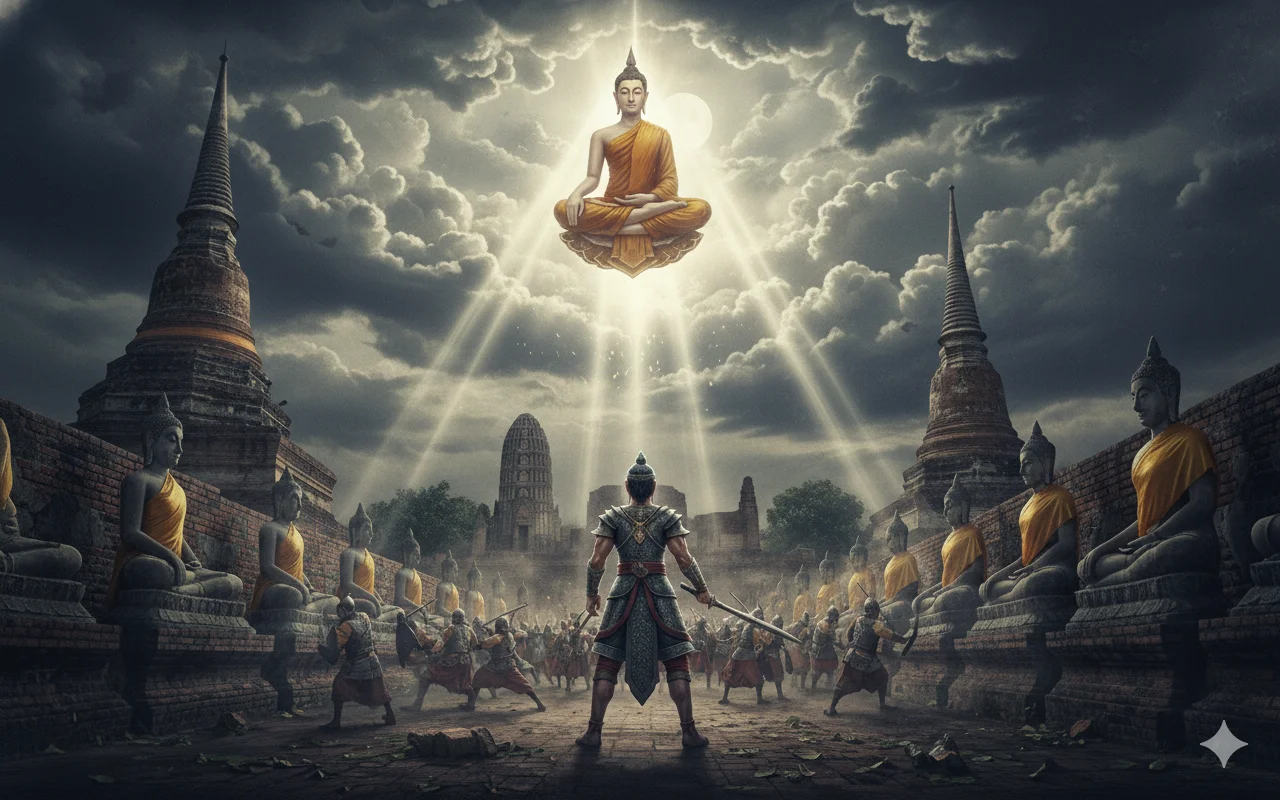
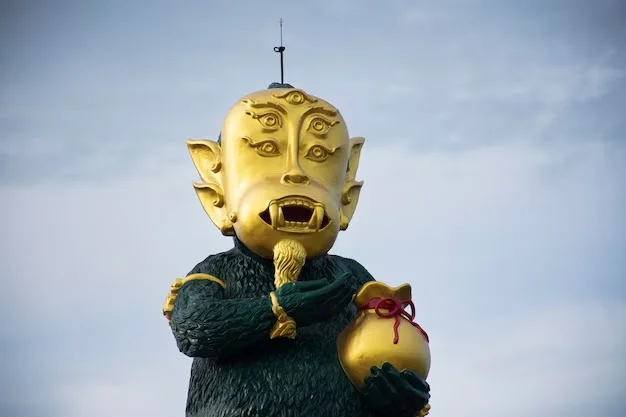
Epilogue – Legacy of Passion, Karma, and Folklore
Discover the Epilogue - Legacy of Passion, Karma, and Folklore — the enduring story of Khun Chang, Khun Phaen & Wanthong that shaped Thai culture and amulet tradition.
Epilogue – Legacy of Passion, Karma, and Folklore — History and Significance
The Epilogue – Legacy of Passion, Karma, and Folklore marks the final, luminous chapter of one of Thailand’s most treasured epic narratives — the tale of Khun Chang, Khun Phaen, and Wanthong — a story that continues to captivate collectors in Singapore, Malaysia, China, and across Southeast Asia. Rooted in the royal court culture of Ayutthaya and carried forward through centuries of oral tradition, this epilogue distils the enduring human themes of love, karmic consequence, and the weight of judgment. For collectors of authentic Thai amulets, understanding this cultural foundation is inseparable from appreciating the sacred objects it inspired.
Years passed after the storms that shook Ayutthaya, and the grand palaces fell into silence. Yet the names of Khun Phaen, Khun Chang, and Wanthong refused to fade — retold by monks, minstrels, and court poets who sought to make sense of the fragile balance between love and law, duty and desire.
In Suphanburi, the river continued to flow past the ruins of their homes. Villagers spoke of how, on certain nights, a soft fragrance of jasmine would drift from the water — a reminder that Wanthong’s spirit had, at last, been set free.
Children asked their elders why good people suffer and bad ones prosper, and the elders would answer with quiet certainty: “Because karma is not quick, but it never forgets.” This single truth became the moral heartbeat of the entire chronicle.
Origins and Historical Context of Epilogue – Legacy of Passion, Karma, and Folklore
The Epilogue – Legacy of Passion, Karma, and Folklore emerges from the legendary Thai poem Khun Chang Khun Phaen, considered one of the greatest works in the Thai literary canon and a cornerstone of Thai Buddhist tradition. The narrative is set primarily during the Ayutthaya period and was later codified and refined under the patronage of King Rama II of the early Rattanakosin era, whose court poets systematised the sprawling verses into the form known today.
The story originates in Suphanburi province — a city with deep historical significance as a political and cultural centre during the Ayutthaya kingdom. The lives of Khun Phaen, Khun Chang, and Wanthong were shaped by royal decrees, battlefield honour, and the unyielding expectations of court society.
Khun Phaen’s legend, in particular, grew far beyond the boundaries of literature. He became associated with the sacred arts — the mastery of protective spells, battlefield invincibility, and spiritual knowledge passed through lineages of monks and Khun Phaen Amulet traditions that persist to this day. His story is not merely folklore; it is a living framework for understanding karma, power, and devotion within Thai Buddhist cosmology.
Key Events and Sacred Significance of the Epilogue – Legacy of Passion, Karma, and Folklore
The epilogue’s most profound moment arrives with the transformation of each character into a cultural archetype. Khun Phaen, once a warrior and lover, became a figure of mystic courage. Some verses hold that he renounced worldly life and wandered as a monk; others that he became a revered teacher of sacred arts. Shrines rose in his name — honouring not his sword, but his heart.
Khun Chang’s story became a solemn warning. Storytellers sang of his wealth and jealousy as mirrors of human weakness — proof that possession is not love, and that envy corrupts even victory. Yet the poets treated him not with hatred, but with pity, for in his greed lay the same longing for affection that lives within every soul.
Wanthong — whose name was once spoken as a curse — was ultimately redeemed by the poets who called her the “Lotus of Suphanburi.” Her image was woven into sermons, court dramas, and sacred songs. She became the question that Thai culture never stopped asking: can a heart belong to love and still obey the world? Her story endures as one of the most nuanced portrayals of a woman’s fate in all of Southeast Asian literature.
Impact on Thai Amulet Tradition and Collector Value
The cultural legacy of the Epilogue – Legacy of Passion, Karma, and Folklore had a direct and measurable impact on Thai amulet history. Khun Phaen’s likeness appeared in murals and sacred amulets across the kingdom — not as a symbol of war, but as an emblem of courage, mystic protection, and the power to attract love and loyalty. These amulets became among the most sought-after in the entire Thai amulet tradition.
For a broader understanding of how narrative and belief systems shape sacred objects across Thai Buddhism, the Thai Buddhist amulet tradition on Wikipedia provides authoritative context on how literature, monasticism, and material culture intertwine in the creation of collectible sacred items.
Today, Khun Phaen amulets command serious attention in collector markets from Bangkok to Singapore, Taipei, and Hong Kong. Their value is rooted not only in the materials and consecration methods used, but in the centuries-deep cultural narrative they embody — a narrative crystallised in the epilogue itself.
Epilogue – Legacy of Passion, Karma, and Folklore — Collector Guide for Singapore and Southeast Asia
For collectors based in Thai amulet Singapore communities and across Greater China, the epilogue’s themes provide an essential interpretive lens. An authentic Thai amulet connected to the Khun Phaen tradition carries layered significance: it is simultaneously a sacred object of protection, a cultural artefact of Ayutthaya-era folklore, and a testament to the karmic wisdom embedded in Thai Buddhist narrative art.
When assessing authenticity, collectors should look for documentation of lineage, the monk or temple of consecration, and regional provenance — particularly items traced to Suphanburi, where the historical figures of this legend are most deeply rooted. The Epilogue – Legacy of Passion, Karma, and Folklore reminds us that the greatest Thai amulets are never merely objects — they are stories made sacred.
Frequently asked questions
Epilogue – Legacy of Passion, Karma, and Folklore is an important chapter in Thai Buddhist amulet tradition. This article explores its historical context, key figures, and lasting influence on the collector community.
Understanding the history behind Thai amulets deepens appreciation for their spiritual and cultural value. This knowledge helps collectors make more informed decisions.
Thai Amulets Collection offers an extensive knowledge base including monk biographies, temple guides, and historical articles. Visit our Learn section for more.