Chapter 5 – The Fall of Wanthong
Discover Chapter 5 - The Fall of Wanthong — the tragic climax of Ayutthaya's greatest love epic, its cultural meaning, and significance for Singapore collectors.
Chapter 5 – The Fall of Wanthong — History and Significance
Chapter 5 – The Fall of Wanthong recounts the devastating climax of the Khun Chang Khun Phaen epic, in which the beloved Wanthong is condemned to death by royal decree in the ancient Ayutthaya kingdom — a moment that continues to resonate deeply with collectors and scholars across Singapore, Malaysia, and Greater China. This chapter stands as one of the most emotionally charged passages in classical Thai literature, exploring the collision between human love, societal law, and the unyielding power of fate. For those who study Thai Buddhist tradition and its reflection in cultural artefacts, The Fall of Wanthong is an essential reference point.
The story unfolds within the gilded but tense corridors of the Ayutthaya royal court, where Wanthong — a woman beloved by two powerful men — is ultimately destroyed not by hatred, but by the impossibility of her love. Her inability to choose between Khun Chang and Khun Phaen is judged not as human vulnerability, but as moral failure. The king’s verdict transforms a private tragedy into a public lesson about desire, loyalty, and the cost of a divided heart.
Ayutthaya, at the height of its civilisation, was a kingdom where royal authority was absolute and public order was maintained through visible, symbolic acts of justice. Wanthong’s execution served precisely that function — a reminder that even beauty and devotion could not shield a person from the demands of law and hierarchy. Her story endures not as a cautionary tale of sin, but as a timeless meditation on what happens when human emotion exceeds the boundaries a society is willing to accommodate.
Origins and Historical Context of Chapter 5 – The Fall of Wanthong
The Khun Chang Khun Phaen epic — of which Chapter 5 – The Fall of Wanthong is the tragic pinnacle — is rooted in the oral traditions and court poetry of the Ayutthaya period, later formalised into written verse during the early Rattanakosin era. The tale is set in Suphanburi, a province historically associated with warrior nobility and deep Buddhist piety. Its characters — Wanthong, Khun Phaen, and Khun Chang — are believed by many scholars to have been inspired by real historical figures whose lives intersected at the Ayutthaya royal court.
The political and religious landscape of Ayutthaya is crucial to understanding this chapter. The king’s court was not merely a seat of government; it was also a moral arbiter, expected to uphold Dharmic order and cosmic balance. When Wanthong declares she cannot choose between the two men, she is perceived as undermining that order. The court’s response — execution — reflects a system in which personal loyalty to the crown and social propriety were inseparable from spiritual conduct.
Monks and temple communities played a significant role in the cultural transmission of this story. The Wat Palelai in Suphanburi, closely associated with the broader Khun Chang Khun Phaen tradition, remains a site where the memory of these legendary figures is honoured through ceremony and local devotion. The interweaving of royal drama, monastic life, and folk belief gives this chapter its enduring power in Thai cultural memory.
Key Events and Sacred Significance of Chapter 5 – The Fall of Wanthong
The dramatic centrepiece of Chapter 5 – The Fall of Wanthong is the royal audience in which all three principals — Khun Chang, Khun Phaen, and Wanthong herself — appear before the king. Khun Chang, dressed in fine robes, presents himself as a loyal subject wronged by betrayal. Khun Phaen, bearing the scars of military service, argues that love is not theft and that justice without mercy is hollow.
Wanthong enters the hall wearing simple white silk, her bearing calm despite sleepless nights in royal custody. When the king asks her to choose, she confesses that she cannot — that each man holds half her heart. This moment, in which her honesty becomes her sentence, is one of the most debated passages in all of classical Thai literature. The king’s declaration — “A heart divided is a heart that deceives” — encapsulates the Ayutthaya court’s conflation of emotional indecision with moral guilt.
At dawn the following day, Wanthong is led beyond the palace gates beneath a crimson sky. Khun Phaen stands among the soldiers, whispering his apology into the air. When the drums ceased, witnesses later recalled that a jasmine-scented breeze passed through Ayutthaya — interpreted by the people as her final gift to the world she was forced to leave. In the aftermath, Khun Chang shut himself in his home, tormented by the emptiness of his victory, while Khun Phaen retreated to the wilderness, seeking solace in monastic chant and mountain silence. The king, heavy with regret, ordered Wanthong’s name recorded in the royal chronicles as: “Wanthong, whose beauty brought both honour and sorrow.”
Impact on Thai Amulet Tradition and Collector Value
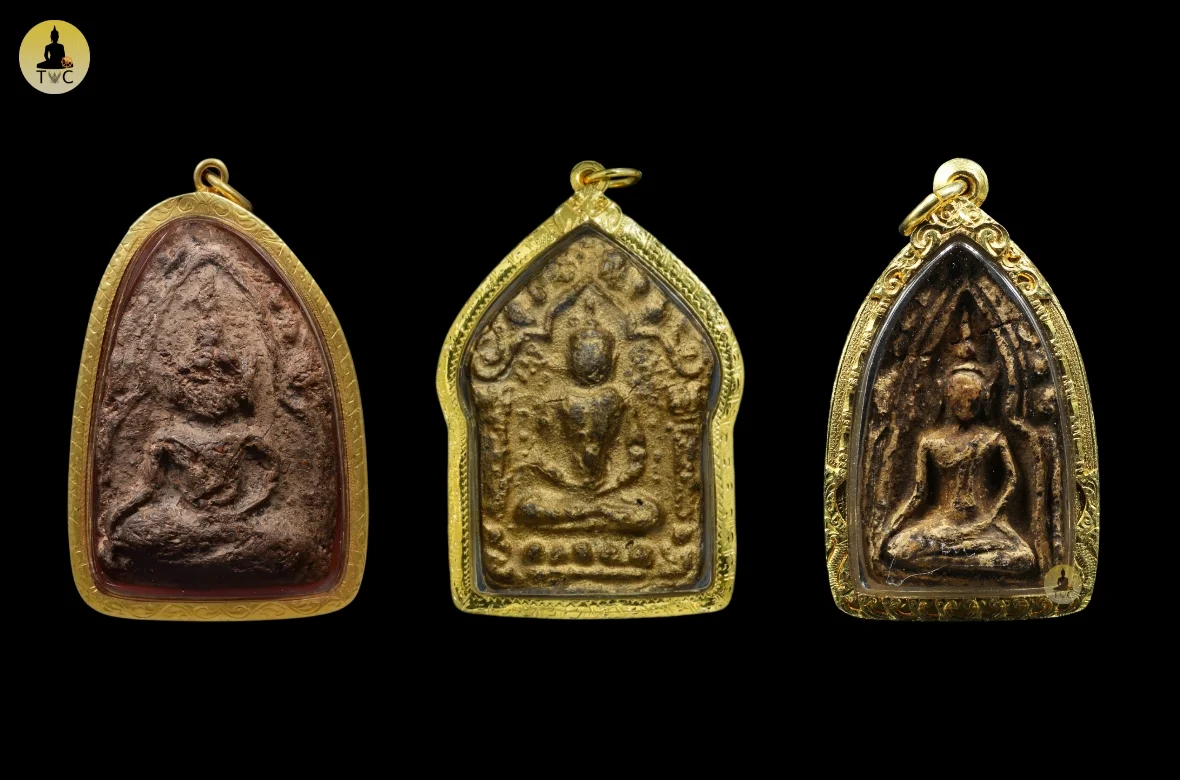
The themes embedded in Chapter 5 – The Fall of Wanthong — love, loss, spiritual consequence, and karmic justice — are directly reflected in the broader world of Thai amulet history. Amulets associated with the Khun Phaen tradition, particularly those invoking the power of love, protection, and military courage, draw their spiritual lineage from exactly the kind of narrative energy this chapter embodies. Collectors who understand this literary and cultural background are better equipped to appreciate the depth of meaning carried by these sacred objects.
The story’s enduring presence in Thai folk belief has made Wanthong a figure of spiritual significance in her own right. In certain regional traditions, her spirit is invoked for protection and empathy — qualities that align with the compassionate energy sought by devotees of authentic Thai amulet traditions. Understanding her story enriches a collector’s relationship with amulets connected to the Suphanburi and Ayutthaya lineages. For a broader scholarly foundation on the role of sacred objects in Thai culture, the Khun Chang Khun Phaen article on Wikipedia provides well-researched historical context.
In contemporary collector circles across Singapore, Malaysia, Taiwan, and Hong Kong, knowledge of classical Thai literary traditions is increasingly recognised as a mark of serious connoisseurship. The karmic narratives embedded in texts like Khun Chang Khun Phaen inform how experienced collectors interpret the symbolic language of amulet design, inscription, and ritual purpose.
Chapter 5 – The Fall of Wanthong — Collector Guide for Singapore and Southeast Asia
For collectors based in Thai amulet Singapore markets and across Southeast Asia, Chapter 5 – The Fall of Wanthong offers an invaluable cultural lens through which to evaluate amulets connected to the Khun Phaen and Ayutthaya traditions. Authentic pieces in this lineage carry layered meanings — protection, love, courage, and karmic awareness — that only become fully legible when the collector understands the literary heritage behind them. Authentication of such amulets should always involve verification of temple origin, monk lineage, and ceremonial consecration records.
Serious collectors are encouraged to study both the literary sources and the regional temple traditions associated with Suphanburi and Ayutthaya when assessing pieces connected to this narrative tradition. The combination of historical literacy and spiritual sensitivity is what distinguishes a meaningful collection from a merely decorative one.
Frequently asked questions
Chapter 5 – The Fall of Wanthong is an important chapter in Thai Buddhist amulet tradition. This article explores its historical context, key figures, and lasting influence on the collector community.
Understanding the history behind Thai amulets deepens appreciation for their spiritual and cultural value. This knowledge helps collectors make more informed decisions.
Thai Amulets Collection offers an extensive knowledge base including monk biographies, temple guides, and historical articles. Visit our Learn section for more.