Legend of Phra Khun Paen Wat Amphawan
Discover the Legend of Phra Khun Paen Wat Amphawan — the 2013 crypt discovery, sacred history, and collector value. Singapore's trusted Thai amulet resource.
Legend of Phra Khun Paen Wat Amphawan — History and Significance
The Legend of Phra Khun Paen Wat Amphawan is one of the most compelling crypt discoveries in modern Thai amulet history, captivating collectors across Singapore, Malaysia, and Greater China who seek authentic pieces with documented provenance. On February 13, 2013, workers at Wat Amphawan in Nonthaburi unearthed sealed pottery jars containing more than a hundred Phra Khun Paen amulets — a find that instantly entered the canon of Thai amulet history. For the collector community, this discovery represents a rare intersection of archaeological evidence, sacred tradition, and tangible Thai Buddhist tradition.
Wat Amphawan, historically known as Wat Bang Muang, stands along the Mae Nam Om canal — an ancient former course of the Chao Phraya River — in Tambon Bang Duan, Amphoe Bang Yai, Nonthaburi. Its roots reach back to the late Ayutthaya period, approximately B.E. 2175, during the reign of King Prasat Thong. The temple’s name, “Amphawan,” evokes the mango orchards that once surrounded the compound, connecting the site to the classical Pali lore of Amphawan Garden — the healing grove of Dr. Jivaka Komarabhacca in Rājagaha.
In that classical story, Jivaka treated the Buddha and offered fine cloth from the Sivi kingdom, thereafter attaining the state of Sotāpanna. The resonance of medicine, merit, and refuge is woven into Wat Amphawan’s very identity — lending deeper spiritual weight to the Legend of Phra Khun Paen Wat Amphawan and the amulets recovered from its soil.
Origins and Historical Context of the Legend of Phra Khun Paen Wat Amphawan
Wat Amphawan’s architectural heritage reflects its Ayutthaya-era origins with remarkable clarity. The temple’s wooden library, the Ho Trai Klang Nam, appears to float above a pond — its open lower level allowing water to breathe beneath the structure, while two upper rooms preserve palm-leaf manuscripts and ceremonial objects. Embossed carved panels, turned balusters, crisp doorhead reliefs, and a terracotta bird-wing roofline speak to the refined craftsmanship of the period.
Within the ubosot stands the principal image, Phra Phuttha Mongkhon Sukhothai, while the abbot’s quarters shelter a hat-crowned Buddha subduing Māra — an Ayutthaya-period survivor of considerable poise and weight. Nearby, a waterside pavilion houses a metal replica of the Buddha’s footprint, set on a modest cement base, completing the devotional landscape of the compound.
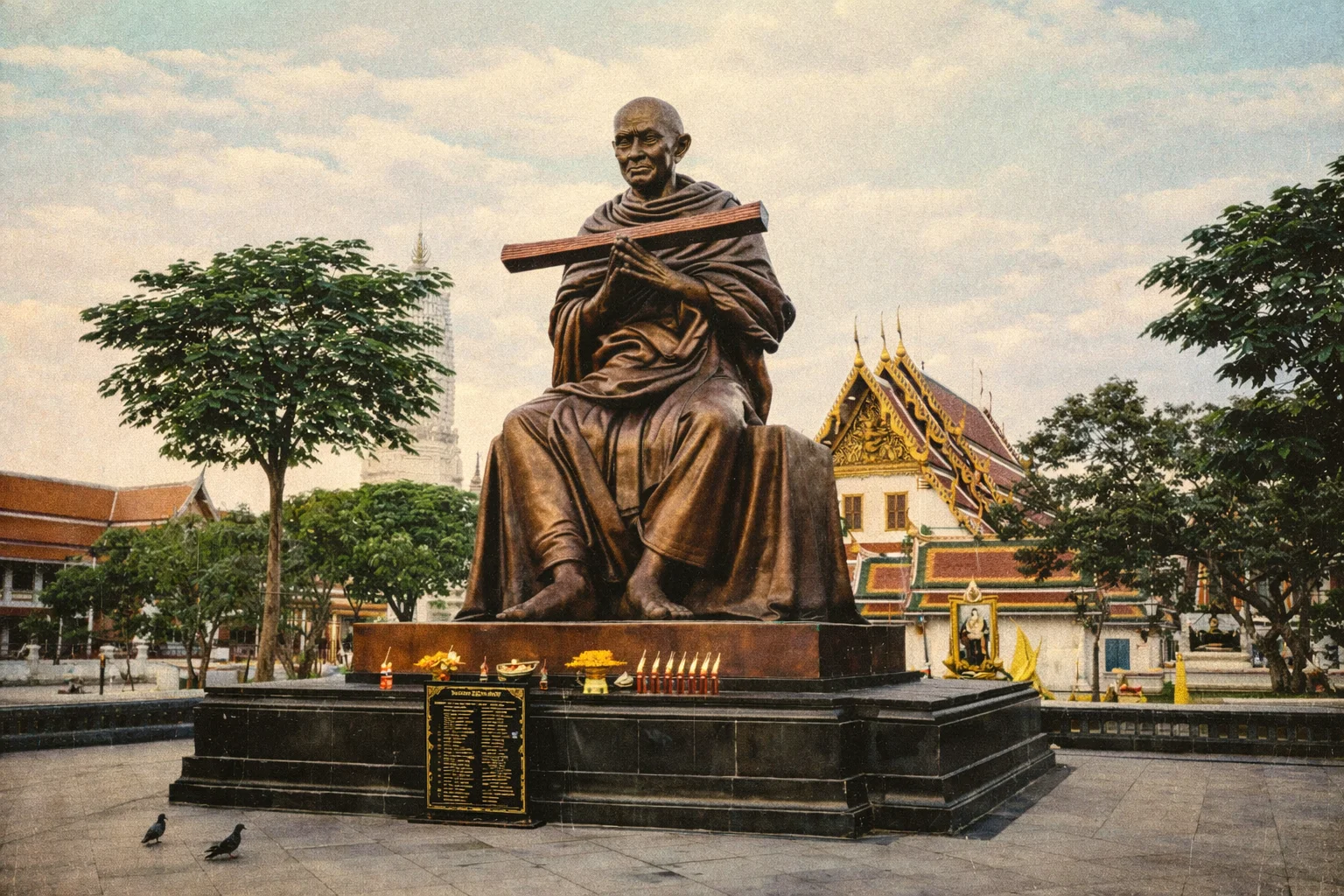
The temple’s broader historical neighbourhood adds further context. Downstream on Khlong Bangkok Noi lies Wat Prang Luang, founded around B.E. 1890 in the reign of King Ramathibodi I (U Thong) and originally called Wat Luang. It gained the name “Prang Luang” from the imposing tower that defines its skyline — an early Ayutthaya landmark later associated with reformers such as Somdet Phra Maha Samana Chao Krom Phraya Vajirananavarorasa, the 10th Supreme Patriarch of the Rattanakosin era.
Key Events and Sacred Significance in the Legend of Phra Khun Paen Wat Amphawan
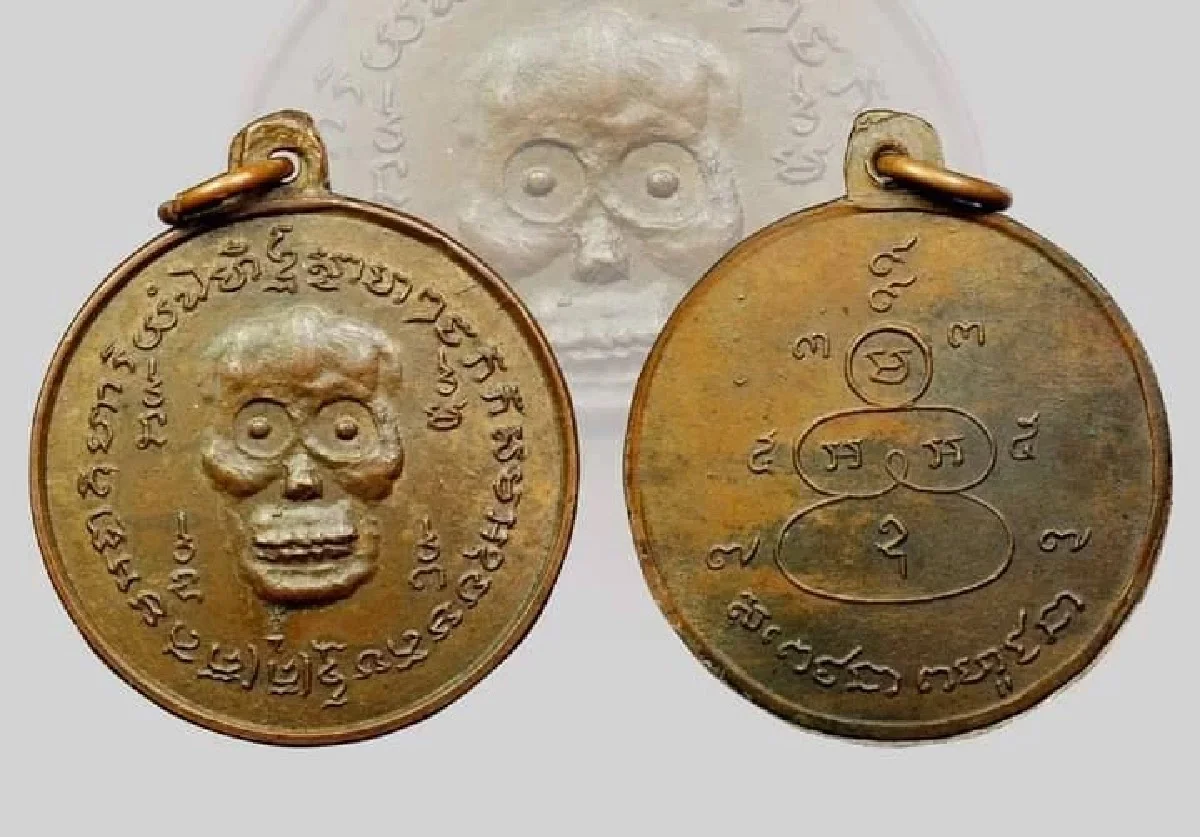
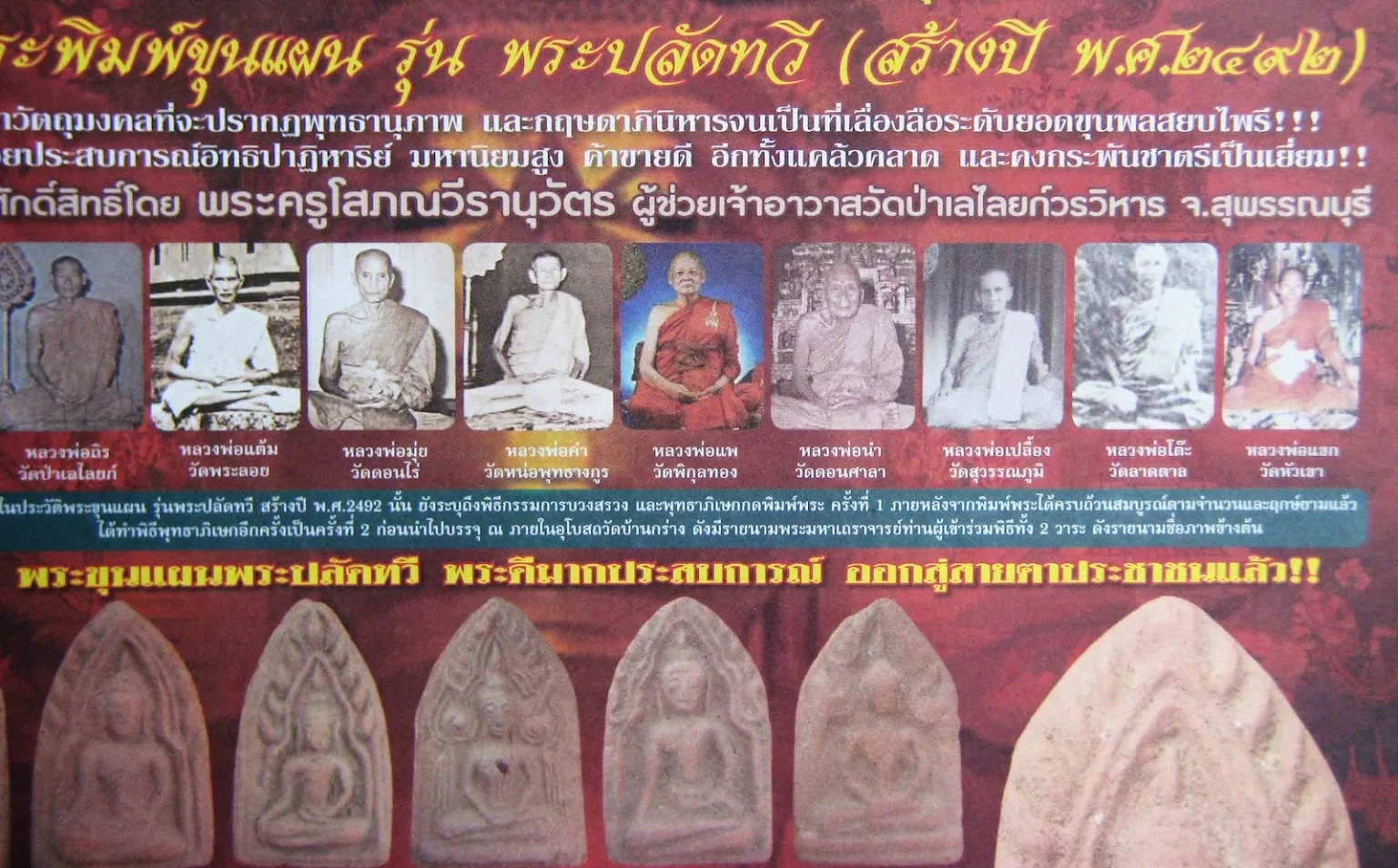
The human story of Wat Amphawan centres on Phra Khru Nonthaphat Pradit, popularly known as Luang Pho Dit, who gained renown during World War II for combining magical sciences with Thai herbal medicine. He studied under a distinguished circle of teachers: Luang Pho Koet of Wat Bang Due, disciples of Luang Pu Chan of Wat Moli, and Luang Pho To of Wat Tha It. From local ore gathered in Bang Muang, he cast Phra Pidta amulets that have been quietly distributed since the Indochina War era.
Those “Bang Muang Pidta” are recognised today as Nonthaburi’s third great metal Pidta, ranked alongside the celebrated Ore Bang Phai and Bang Due editions. Their careful provenance and Luang Pho Dit’s lineage of learning give them enduring status among serious collectors of authentic Thai amulet pieces from this region.
The defining moment of the Legend of Phra Khun Paen Wat Amphawan arrived on February 13, 2013, when a work crew struck pottery in the earth — a sealed jar holding over a hundred amulets. Phra Kasem San, secretary to Phra Khru Mongkhonkitjat (Luang Pu Thongyoi Mangkhalo), formally documented the discovery. A second jar soon surfaced, and the total count climbed from approximately 200 to approximately 400 pieces as tallying continued. Experts who examined the amulets confirmed their identity: these were Phra Khun Paen — Kru Wat Amphawan.
Impact on Thai Amulet Tradition and Collector Value
The scale of the find prompted serious scholarly debate. On May 22, 2013, a dedicated seminar titled “In-depth look at the Khun Paen amulets from the Wat Amphawan crypt” convened at the Richmond Hotel. Among those present were Mr. Phayap Khamphan, President of the Thai Amulet Enthusiasts Association, and archaeologist Prof. Phuchong Chantawich — figures whose presence affirmed the discovery’s standing within Thai amulet history.
Antiques specialist Chaow River proposed that the eventual total could approach 3,000 pieces. Rumours circulated that divers had spotted two to three additional jars near a submerged pagoda base, and some accounts alleged that individual jars were being “rented” for 9 million baht each. Sceptics, however, noted that dredging operations following the 2011 floods had uncovered no pagoda remains in the area — a reminder that documentation anchors the facts while speculation belongs to river talk.
For collectors who value the intersection of history and devotion, the Legend of Phra Khun Paen Wat Amphawan exemplifies why crypt-origin amulets command sustained attention. The Thai Buddhist amulet tradition has long held that pieces emerging from sealed earth — undisturbed for generations — carry an amplified sacred charge, a belief that continues to drive collector interest in documented kru finds across the region.
Legend of Phra Khun Paen Wat Amphawan — Collector Guide for Singapore and Southeast Asia
For collectors based in Singapore, Malaysia, Taiwan, Hong Kong, and mainland China, the Legend of Phra Khun Paen Wat Amphawan offers a well-documented entry point into Nonthaburi-region amulets with verifiable discovery records. The February 2013 excavation, the May 2013 seminar proceedings, and the named experts on record — including Prof. Phuchong Chantawich — provide the paper trail that underpins authentication of any authentic Thai amulet from this kru. Collectors seeking Thai amulet Singapore market opportunities should prioritise pieces accompanied by credible provenance documentation referencing these events.
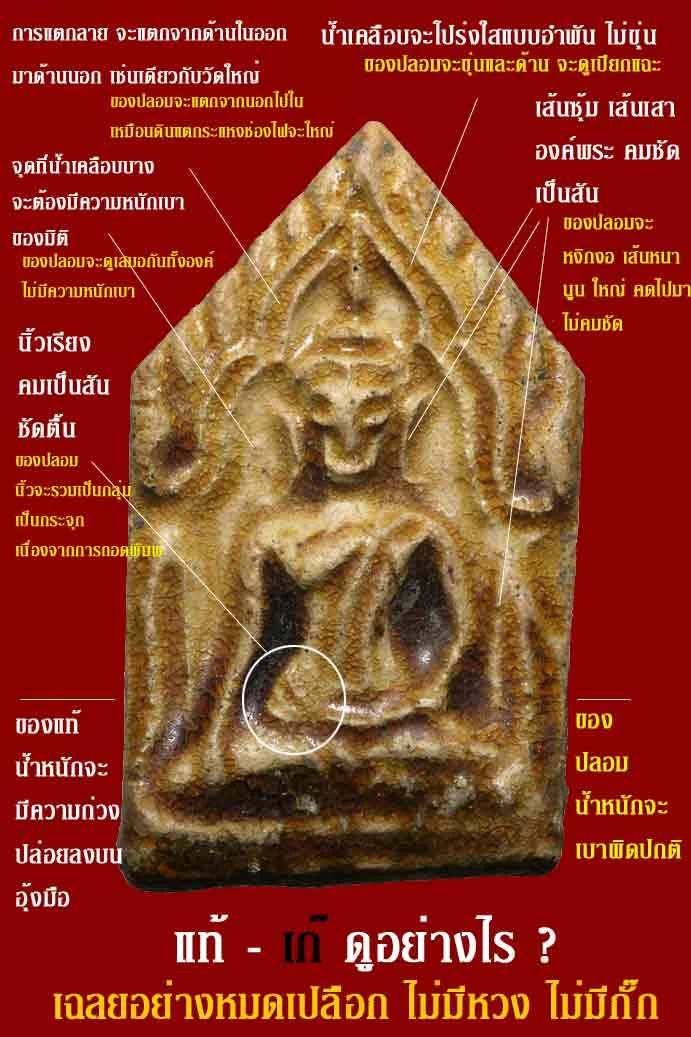
When evaluating a Kru Wat Amphawan Khun Paen, attention should be paid to the clay composition, surface patina consistent with long burial, and iconographic details that align with expert descriptions from the 2013 seminar. The broader lineage of Wat Amphawan — from its Ayutthaya-era founding to Luang Pho Dit’s Pidta and the 2013 crypt — reflects a continuous stream of sacred activity that gives these pieces their distinctive standing within Thai Buddhist tradition.
Frequently asked questions
Legend of Phra Khun Paen Wat Amphawan is an important chapter in Thai Buddhist amulet tradition. This article explores its historical context, key figures, and lasting influence on the collector community.
Understanding the history behind Thai amulets deepens appreciation for their spiritual and cultural value. This knowledge helps collectors make more informed decisions.
Thai Amulets Collection offers an extensive knowledge base including monk biographies, temple guides, and historical articles. Visit our Learn section for more.