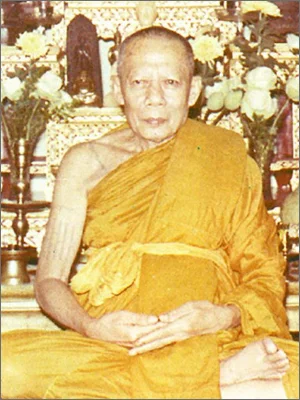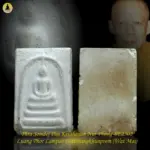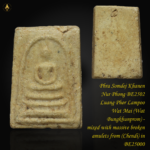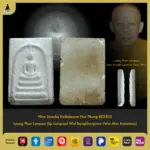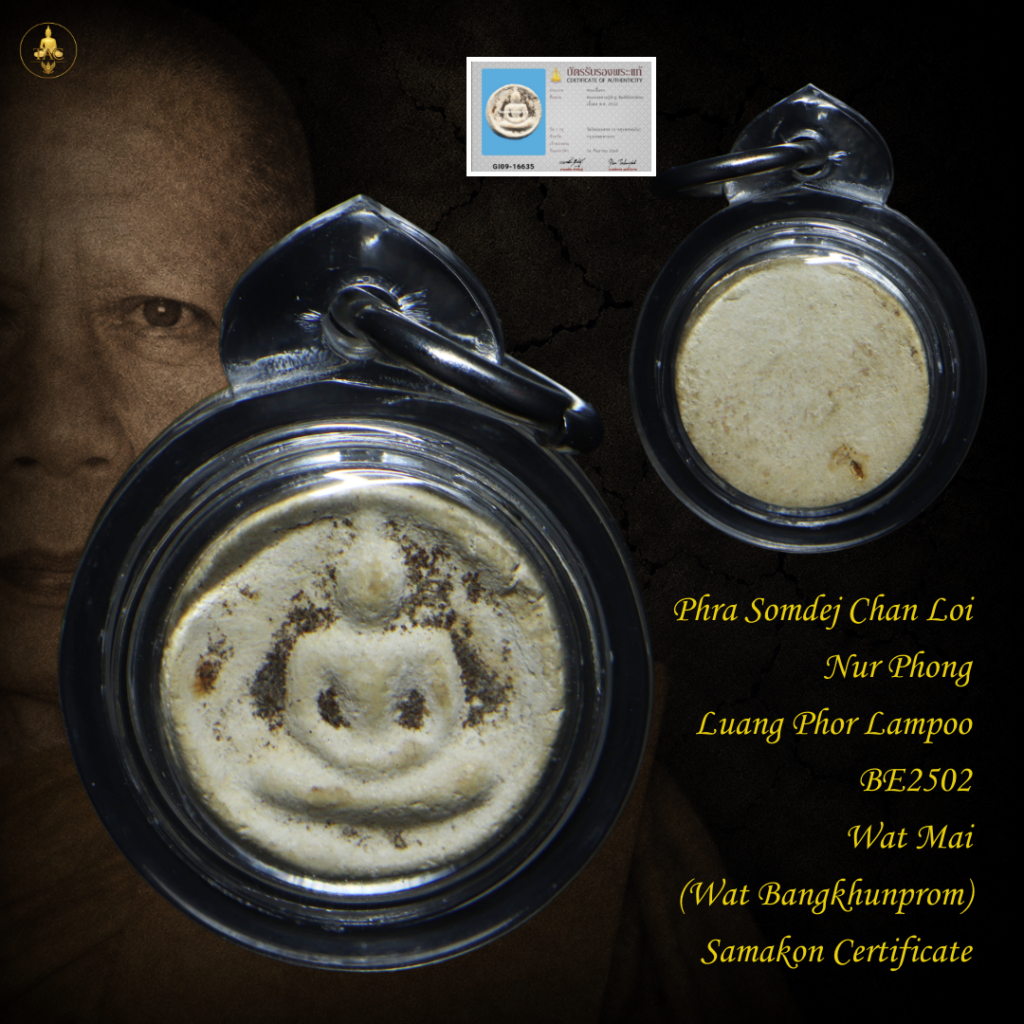
Phra Phong Chan Loi Nur Phong BE2502 Luang Phor Lampoo Wat Mai (Wat Bangkhunprom)
| Type | Phra Phong Chan Loi |
| Monk | Luang Phor Lampoo Wat Mai Amataros (Wat Bangkhunprom) |
| Temple | Wat Bangkhunprom (Wat Mai) |
| B.E. Year | 2502 |
| Material | Phong |
| Condition | Very Good |
| Certificate | Samakom |
| SKU | TAC-0049 |
The Phra Phong Chan Loi Luang Phor Lampoo Wat Mai Amataros (Wat Bangkhunprom), issued in BE 2502, is among the most respected mid-century powder amulets…
The Phra Phong Chan Loi Luang Phor Lampoo Wat Mai Amataros (Wat Bangkhunprom), issued in BE 2502, is among the most respected mid-century powder amulets sought by collectors in Singapore and across Southeast Asia for its association with protection from misfortune and the cultivation of social grace. Consecrated at Wat Bangkhunprom through disciplined Putthapisek ritual empowerment, this piece embodies the refined nur phong craft tradition of the Bangkhunprom lineage.
Luang Phor Lampoo Wat Mai Amataros (Wat Bangkhunprom) was a highly regarded master whose practice centred on meticulous preparation and sustained chant cycles. His approach to powder amulet creation reflected both scholarly precision and deep meditative discipline.
The Phra Phong Chan Loi bearing his consecration is characterised by even tonality, mature field porosity, and confident devotional lines — qualities that trained collectors recognise as hallmarks of the Bangkhunprom school’s BE 2500–2510 production period. Period examples from this master remain comparatively scarce in the open market.
The “Chan Loi” designation refers specifically to the poured and pressed matrix technique, in which the nur phong compound is set into prepared round molds and stabilised through successive kan sek blessing cycles. This method yields a calm, settled surface texture that distinguishes these pieces from later or lesser-prepared works.
Phra Phong Chan Loi and Wat Bangkhunprom (Wat Mai) Heritage
Wat Bangkhunprom (Wat Mai) is a historic Bangkok temple associated with contemplative practice, measured casting discipline, and a long tradition of refined amulet production. The temple’s workshops were known for applying principles of samrit (measured proportion) and sati (attentive care) at every stage of mold preparation and curing.
The Bangkhunprom lineage’s powder formulae — combining scripture ash, incense residues, herbals, and consecrated temple soil — reflect a systematic approach to sacred material that is well documented within the broader Thai Buddhist amulet tradition. This multi-ingredient blending practice was central to the temple’s reputation for producing amulets of enduring spiritual and material integrity.
Works issued from Wat Bangkhunprom during the BE 2500–2510 period are now considered significant examples of metropolitan Bangkok powder craft. Their calm surfaces and crisp profiles under raking light continue to serve as reliable reference points for authentication study.
Phong — Phra Phong Chan Loi Composition and Craftsmanship
The material foundation of the Phra Phong Chan Loi is nur phong — a sanctified powder compound blended from scripture ash, incense residues, dried herbals, and consecrated temple soil. Each constituent ingredient carries ritual significance and is prepared in accordance with established Dhamma-based formulae.
The “Chan Loi” form is produced through a poured and pressed technique: the phong mixture is introduced into round molds where it is compressed and allowed to cure, with micro-porosity and hand-press traces along the edges remaining as natural evidence of the period production method. Stabilisation occurs across multiple kan sek chant cycles performed by Luang Phor Lampoo Wat Mai Amataros (Wat Bangkhunprom) himself.
The resulting amulet presents a balanced shoulder and arch profile, fine field porosity, and natural powder matrix settling on the reverse — characteristics consistent with disciplined mid-century Bangkok workshop practice. These surface qualities are among the primary reference points used in authentication review.
Spiritual Benefits of Phra Phong Chan Loi by Luang Phor Lampoo Wat Mai Amataros (Wat Bangkhunprom)
Within Thai Buddhist devotional practice, the Phra Phong Chan Loi Luang Phor Lampoo Wat Mai Amataros (Wat Bangkhunprom) is venerated for its association with three principal spiritual functions: protection, social harmony, and the attraction of good fortune. Devotees wear the amulet as a support for calm, mindful conduct and as a protective presence in daily life.
- Klaew Klaad — protection from misfortune, accidents, and harmful circumstances through the amulet’s consecrated field
- Metta Mahaniyom — the cultivation of goodwill and social grace, supporting harmonious relationships in personal and professional contexts
- Maha Lap — the drawing of auspicious fortune and favourable conditions into the devotee’s sphere of activity
Phra Phong Chan Loi BE 2502 — Authentication and Collector Value
This example of the Phra Phong Chan Loi BE 2502 carries certification from the Samakom — the recognised Thai amulet association responsible for evaluating provenance, material authenticity, and period consistency. Samakom certification provides collectors with a structured basis for confidence in both spiritual and curatorial terms.
Authenticated examples of the Phra Phong Chan Loi Luang Phor Lampoo Wat Mai Amataros (Wat Bangkhunprom) are assessed as collector-grade within mid-century Bangkok powder works. Key authentication indicators include even tonality across the field, confident surface transitions, edges consistent with period round-form molds, and natural micro-porosity characteristic of genuine nur phong curing.
As documented BE 2502 powder amulets from this lineage become progressively scarcer in the open market, collector and curatorial interest has remained steady. Long-term value is supported by the combination of Samakom certification, master provenance, and the temple’s established standing within the Bangkok amulet tradition.
Attributes reflect Thai Buddhist devotional tradition and are not measurable claims.