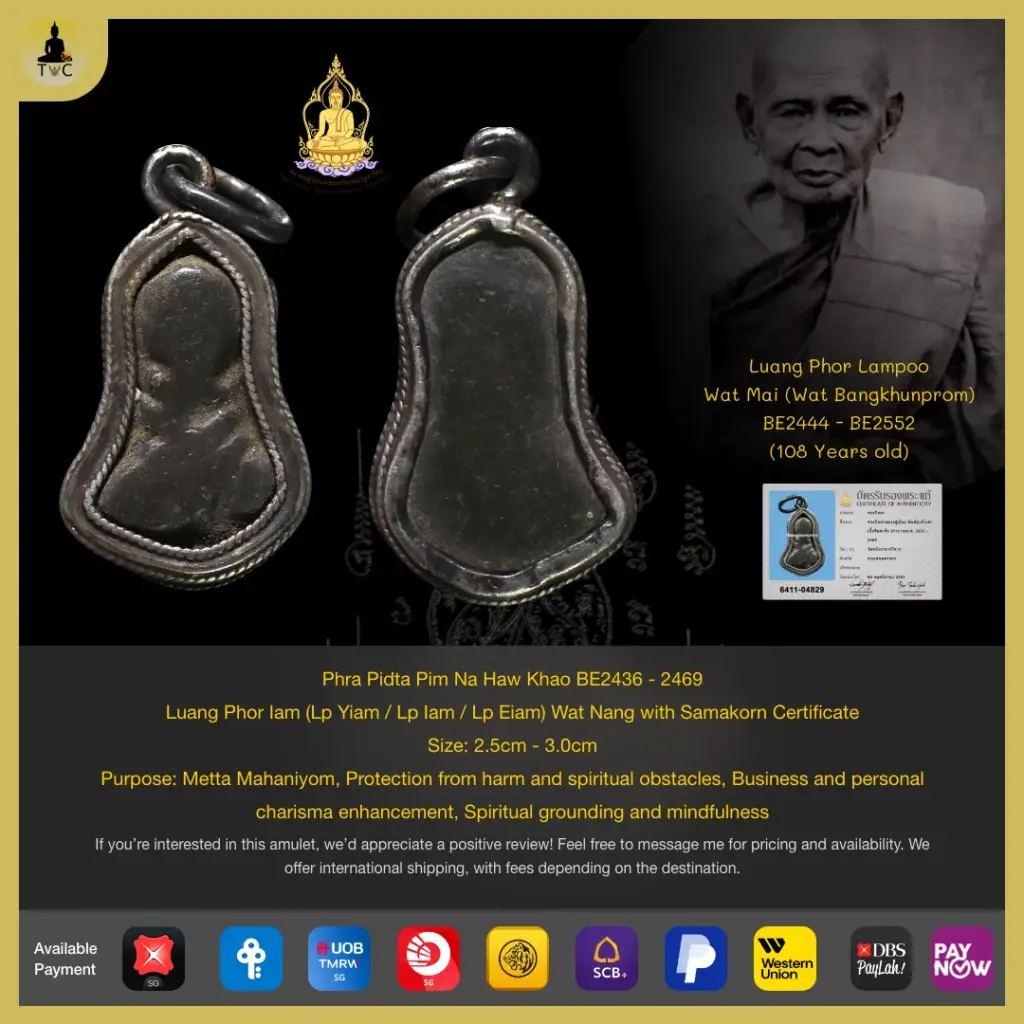
Phra Pidta Pim Na Haw Khao BE2436 – 2469 Luang Pu Eiam Wat Nang Ratchawihan
| Type | Phra Pidta |
| Monk | Luang Pu Iam (Phra Kru Kasem Kitkoson) Wat Nang Ratchawihan |
| Temple | Wat Nang Ratchawihan |
| B.E. Year | 2436 |
| Condition | Fair |
| Certificate | Samakom |
| SKU | TAC-0590 |
Phra Pidta Pim Na Haw Khao BE2436 - 2469 Luang Pu Iam (Lp Iam / Lp Yiam) Wat Nang Ratchawihan with Samakorn Certificate (Top 5 Pidta Master) - Encased old traditional casingBiography History of the Phra Pidta Pim
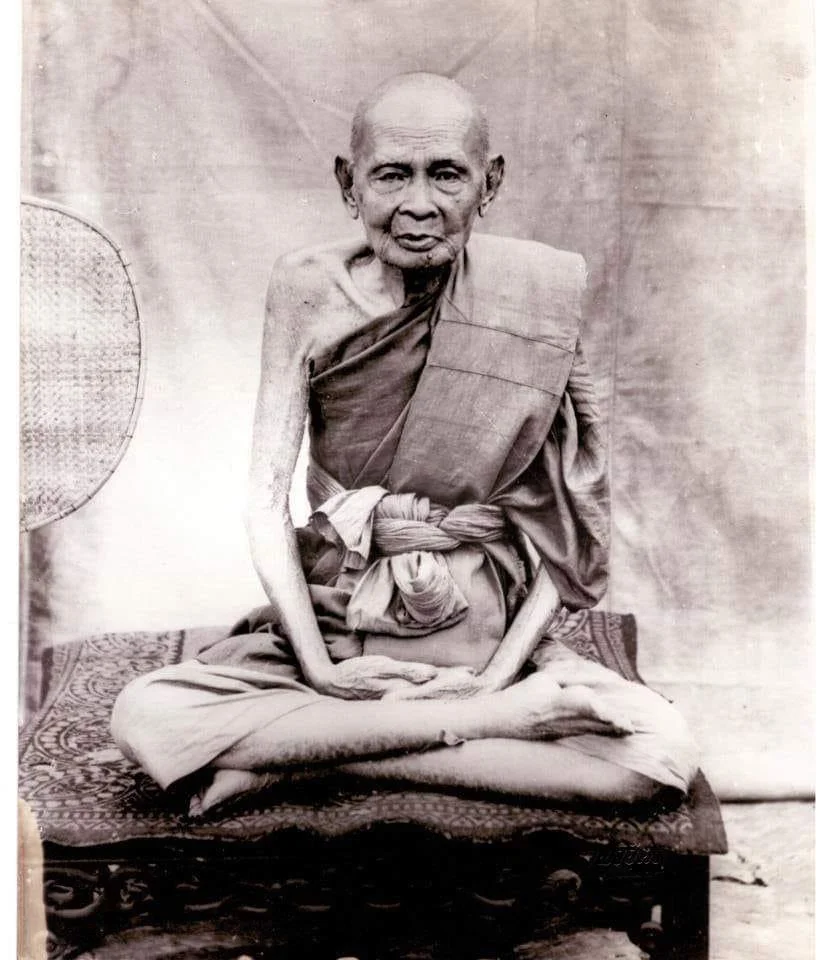
Luang Pu Iam, formally conferred the ecclesiastical title Phra Kru Kasem Kitkoson, was a senior monk of exceptional meditative discipline and ritual authority. His amulet-making practice spanned several decades at Wat Nang Ratchawihan, during which he personally supervised every stage of creation and consecration. Learn more about his life and lineage on the Luang Pu Iam (Phra Kru Kasem Kitkoson) Wat Nang Ratchawihan page.
The Phra Pidta form — depicting a seated figure with both hands covering the face — symbolises the deliberate closing of the senses to worldly distraction. For Luang Pu Iam (Phra Kru Kasem Kitkoson) Wat Nang Ratchawihan, this iconography was not merely decorative but a direct expression of the meditative withdrawal he practised throughout his monastic life. Each amulet served as a portable extension of his spiritual authority.
Phra Pidta and Wat Nang Ratchawihan Heritage
Wat Nang Ratchawihan is a Bangkok temple with a well-documented tradition of sacred amulet production, its reputation anchored principally to the tenure of Luang Pu Iam. The temple served as both his place of practice and the ritual centre where the Phra Pidta Pim Na Haw Khao amulets were created and blessed. Its legacy in amulet history is inseparable from his name.
During the late nineteenth and early twentieth centuries, Wat Nang Ratchawihan conducted multi-session consecration ceremonies that drew participation from the broader monastic community. These extended blessing rituals were designed to concentrate and layer protective energy within each amulet, a practice consistent with classical Thai Buddhist amulet tradition as documented in the wider scholarship on the subject. Collectors recognise these ceremonies as a key factor in the amulets’ enduring efficacy and desirability.
The broader context of Thai sacred amulet production — its ritual frameworks, material traditions, and doctrinal underpinnings — is part of a centuries-old practice well described within the Thai Buddhist amulet tradition. The Phra Pidta pieces from Wat Nang Ratchawihan represent one of the most historically grounded expressions of that tradition.
Sacred Powder Phra Pidta — Composition and Craftsmanship
The Phra Pidta Pim Na Haw Khao amulets created by Luang Pu Iam are composed of sacred powders (pong saksit) prepared according to esoteric formulations passed down within the Thai Theravada monastic tradition. These powders incorporated ground material from ancient Buddhist manuscripts and temple wall plaster, holy ash from ceremonial incense, and rare medicinal herbs carrying established ritual significance. The precise combination was determined by Luang Pu Iam himself and varied across different batches produced within the BE 2436–2469 period.
Consecration involved multiple rounds of incantation (kathā) during which Luang Pu Iam entered deep meditative absorption, directing concentrated intention into each piece. Certain examples within this series also feature metal inserts or surface treatments in gold or silver, applied to reinforce the amulet’s sacred and aesthetic integrity. These additions are consistent with documented craftsmanship practices of the era and are considered original to the pieces rather than later modifications.
The mould designation Na Haw Khao refers to a specific facial expression and compositional layout distinguishing this Phra Pidta variant from other Luang Pu Iam issues. Identifying this mould correctly requires familiarity with the precise contours of the face relief, the posture of the seated figure, and the base-plate markings characteristic of authentic BE 2436–2469 production.
Spiritual Benefits of Phra Pidta by Luang Pu Iam (Phra Kru Kasem Kitkoson) Wat Nang Ratchawihan
The Phra Pidta Luang Pu Iam (Phra Kru Kasem Kitkoson) Wat Nang Ratchawihan is principally sought for its protective and fortune-stabilising properties. Devotees and collectors attribute to it the capacity to neutralise harmful external influences while supporting the wearer’s clarity of mind and spiritual grounding. These qualities are understood as flowing directly from both the iconographic meaning of the Phra Pidta form and the meditative power Luang Pu Iam channelled during consecration.
- Protection from harm and misfortune: The closed-sense gesture of the Phra Pidta is believed to create a spiritual barrier against accidents, ill-will, and malevolent forces in the wearer’s environment.
- Attraction of wealth and stable fortune: Luang Pu Iam’s amulets are associated with the drawing of prosperous opportunities and the prevention of financial loss, qualities particularly prized by business communities across Singapore, Malaysia, and the Chinese-speaking collector markets.
- Inner peace and meditative focus: Consistent with the iconographic symbolism of sensory withdrawal, the amulet is regarded as supporting mental clarity and resistance to worldly distraction.
Phra Pidta BE 2436 — Authentication and Collector Value
Authentic examples of the Phra Pidta Luang Pu Iam (Phra Kru Kasem Kitkoson) Wat Nang Ratchawihan from the BE 2436–2469 period carry certification from the Samakom (Thai Amulet Association), the principal certifying body recognised across the Thai amulet collecting community. Samakom certification confirms that a given piece has passed physical inspection against documented reference standards for this specific mould and era. This certification is a baseline requirement for serious collectors and significantly affects market positioning.
Luang Pu Iam is consistently ranked among the top five Phra Pidta masters in Thai amulet scholarship and collector consensus, a distinction that directly elevates the rarity and desirability of his certified pieces. The BE 2436 date places the earliest examples in the final decade of the nineteenth century, meaning surviving pieces have now passed well over a century of age. Attrition through loss, damage, and institutional acquisition has reduced the number of verified examples in private circulation.
The piece offered here retains its original traditional casing, which is itself considered part of the authentic presentation and condition assessment. Collectors are advised to verify that any Samakom certificate accompanies the physical amulet and matches the documented mould designation before acquisition.
Attributes reflect Thai Buddhist devotional tradition and are not measurable claims.
![[SOLD] Phra Pidta Song Na Nur Mekaphat BE2485-2494 Luang Phor Derm Wat Nong Pho (encased with Italy Gold Casing)](https://tac-media.sgp1.digitaloceanspaces.com/2026/03/phra-pidta-song-na-nur-mekaphat-be2485-2494-luang-phor-derm-wat-nong-pho-encased-with-italy-gold-casing-150x150.webp)