History of Luang Phor Wat Rai Khing
Discover the History of Luang Phor Wat Rai Khing — sacred origins, temple legend, festivals, and collector value. Singapore's trusted Thai amulet resource.
History of Luang Phor Wat Rai Khing — Origin and Sacred Significance
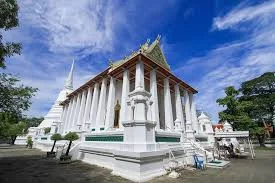
The History of Luang Phor Wat Rai Khing is one of the most cherished narratives in Thai Buddhist tradition, drawing collectors and devotees from Singapore, Malaysia, Hong Kong, and across Greater China to seek connection with this revered principal Buddha image of Wat Rai Khing, located in Sam Phran District, Nakhon Pathom Province. This sacred image is celebrated for its legendary arrival by river, its miraculous protective power, and the living community of faith that has grown around it for generations. For collectors of authentic Thai amulets and devotees of Thai Buddhist culture, understanding this history is essential to appreciating the deep spiritual and material significance of anything bearing the name of Luang Phor Wat Rai Khing.
According to local legend, five sacred Buddha images once floated along the Nakhon Chai Si River, appearing at moments of communal hardship and need. The final image was carried by the current and welcomed by villagers, eventually coming to rest at Wat Rai Khing in Sam Phran. From that day forward, the community recognised it as Luang Phor Wat Rai Khing — a presence of calm that anchored local faith and became the spiritual heart of the monastery.
History added another pivotal chapter when Somdet Phra Buddhacarya (Phuk) — who would later serve as Supreme Patriarch — visited the monastery and observed that the ordination hall was generous in size while its principal image was comparatively modest. He offered to donate a dignified bronze image from his own temple, Wat Sala Poon Worawihan in Ayutthaya, cast in the Mara-Vijaya attitude. The abbot and committee transported it by bamboo raft, guiding it along the Chao Phraya River into the Nakhon Chai Si, before enshrining it with full ceremony as the new principal Buddha of the monastery.
Origins and Historical Context of the History of Luang Phor Wat Rai Khing
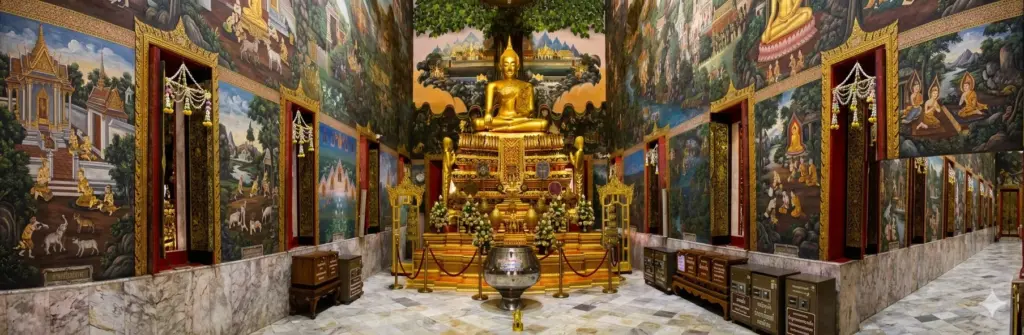
The image enshrined at Wat Rai Khing reflects a convergence of artistic traditions spanning several Thai historical periods. Devotees and scholars describe its form as a blend of Chiang Saen, Sukhothai, and early Rattanakosin artistry — three distinct aesthetic lineages unified in a single, commanding bronze figure. This multi-period stylistic synthesis makes the image a significant artefact within the broader landscape of Thai amulet history and sacred Buddhist art.
The statue’s physical dimensions have been recorded with precision by the temple: a lap width of approximately four cubits and two inches and a height of four cubits and sixteen inches. The surface is bronze, weathered by centuries of devotion and periodically renewed by worshippers applying gold leaf during annual festivals. These measurements and material details matter greatly to collectors and scholars verifying the authenticity and provenance of related amulets and commemorative items.
The role of Somdet Phra Buddhacarya (Phuk) in this history is central and well-documented. As a senior monk who later rose to the position of Supreme Patriarch, his personal donation of the bronze image from Wat Sala Poon Worawihan in Ayutthaya lent immediate prestige and spiritual authority to Wat Rai Khing. His involvement connects the monastery’s history directly to the highest levels of Thai Buddhist ecclesiastical tradition, reinforcing the image’s status as one of the kingdom’s most venerated principal Buddhas.
Key Events and Sacred Milestones in the History of Luang Phor Wat Rai Khing
The day of enshrinement remains one of the most celebrated events in the monastery’s memory. It took place on the full moon of the fifth lunar month, during the Songkran season, when a fierce sun pressed down on the procession. Midway through the ceremony, the sky darkened, thunder rolled, and rain fell heavily — interpreted by the local community as a divine sign that Luang Phor brings coolness and relief, much as rain restores life to drought-parched fields.
Three major annual festivals mark the calendar of Wat Rai Khing and keep the history of Luang Phor Wat Rai Khing alive in communal practice. The Tak Bat Devo is observed on the fifteenth waxing day of the eleventh lunar month. The Chinese New Year Festival gathers the Chinese-Thai community to pray and apply gold leaf to the image. The Annual Gilding Festival runs from the thirteenth waxing to the third waning day of the fifth lunar month — a shared act of merit-making that renews both the image and the community’s bond with it.
Miraculous stories of protection are an inseparable part of this history. A farmer who survived a lightning strike was said to have been wearing a Rai Khing medallion; a woman living abroad dreamt of the image and recovered from persistent illness, later returning to donate to the monastery’s hospital. The monastery is also widely known for its holy water, which the temple bottles for devotees seeking relief from fevers, headaches, and everyday hardships. Local customs include the offering of firecrackers and kites to fulfil vows — practices that underscore the living, participatory nature of faith at Wat Rai Khing. Significantly, the monastery teaches that Luang Phor must not be invoked to evade civic duties such as military conscription — faith and responsibility are understood to walk hand in hand.
Impact on Thai Amulet Tradition and Collector Value
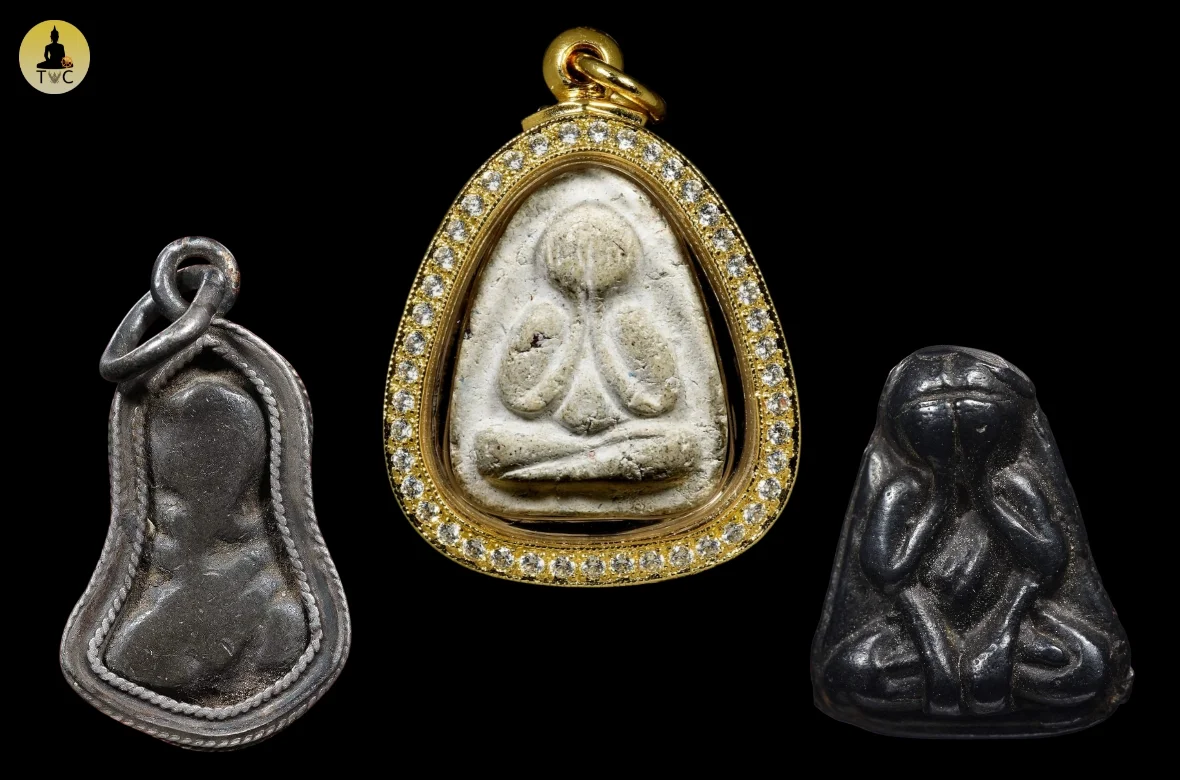
The History of Luang Phor Wat Rai Khing has shaped a distinct lineage within Thai amulet history. Amulets, medallions, and sacred items consecrated in the name of this image carry the weight of a legend rooted in river mythology, royal-level monastic patronage, and centuries of communal devotion. For collectors across Singapore, Malaysia, Taiwan, and Hong Kong, this provenance is a primary driver of both spiritual value and market significance.
Authentic items associated with Wat Rai Khing are prized for their verifiable connection to the monastery’s official consecration ceremonies, particularly those held during the Annual Gilding Festival and other major observances. The involvement of senior monks of the highest ecclesiastical rank — epitomised by Somdet Phra Buddhacarya (Phuk)’s foundational role — establishes a chain of sacred authority that collectors and devotees look for when assessing the authenticity of any piece. Understanding the Thai Buddhist amulet tradition in its broader historical context helps collectors appreciate why items from monasteries with documented, high-ranking patronage consistently command respect and value in the collector community.
The image’s multi-period artistic style — spanning Chiang Saen, Sukhothai, and early Rattanakosin influences — also contributes to its collector appeal. This stylistic richness reflects Thailand’s layered Buddhist heritage and distinguishes Wat Rai Khing amulets from those of monasteries with a more singular aesthetic tradition. For the discerning collector, this historical depth is itself a form of authentication.
History of Luang Phor Wat Rai Khing — Collector Guide for Singapore and Southeast Asia
For collectors seeking authentic Thai amulets in Singapore and across Southeast Asia, the history of Luang Phor Wat Rai Khing provides an essential framework for evaluation. Items should be traceable to officially recognised consecration events at Wat Rai Khing, ideally with temple documentation or certified provenance. The monastery’s long record of public festivals, clearly defined sacred dates, and the direct involvement of senior ecclesiastical figures make provenance verification more reliable than for many other amulet lineages.
Thai amulet Singapore collectors should also be aware that the Wat Rai Khing tradition is actively maintained — the monastery continues to hold annual festivals, consecrate new items, and serve a living community of devotees. This active sacred environment means that both historical pieces and contemporary consecrated items carry genuine spiritual authority, provided they are sourced through reputable dealers with direct temple relationships.
Frequently asked questions
History of Luang Phor Wat Rai Khing is an important chapter in Thai Buddhist amulet tradition. This article explores its historical context, key figures, and lasting influence on the collector community.
Understanding the history behind Thai amulets deepens appreciation for their spiritual and cultural value. This knowledge helps collectors make more informed decisions.
Thai Amulets Collection offers an extensive knowledge base including monk biographies, temple guides, and historical articles. Visit our Learn section for more.