History of Wat Chalerm Phra Kiet
Explore the History of Wat Chalerm Phra Kiet — a royal Nonthaburi temple, its sacred Phra Somdej amulets, and collector value for Singapore enthusiasts.
History of Wat Chalerm Phra Kiet — Origins and Royal Significance
The History of Wat Chalerm Phra Kiet is essential knowledge for any serious Thai amulet collector, including the growing community of enthusiasts in Singapore and across Southeast Asia. This royal temple in Nonthaburi Province is the origin of one of Thailand’s most revered sacred powder amulets — the Phra Somdej Wat Chaloem Phra Kiat. Its deep ties to the Rattanakosin monarchy and its exceptionally rare amulets make it a cornerstone of Thai amulet history.
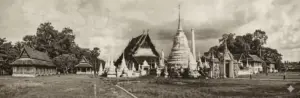
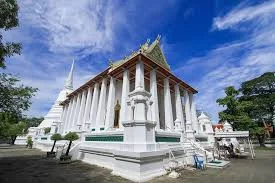
Wat Chaloem Phra Kiat Worawihan is located in Tambon Bang Si Mueang, Amphoe Mueang, Nonthaburi Province, situated on the opposite bank of the Chao Phraya River from the old city hall. The temple occupies historically significant ground — the ordination hall was originally the residence of Phraya Nonthaburi, the father of the Queen Mother.
The temple was commissioned by King Nangklao (Rama III) as a royal merit-making dedication to his mother, Somdet Phra Sri Suralai, the Queen Mother. This royal patronage elevated the temple’s spiritual and cultural standing from its very founding, embedding it firmly within the Thai Buddhist tradition.
Origins and Historical Context in the History of Wat Chalerm Phra Kiet
The History of Wat Chalerm Phra Kiet unfolds during the Rattanakosin period, one of the most prolific eras for Thai temple construction and Buddhist patronage. King Rama III, who reigned from 1824 to 1851, was a devoted Buddhist king responsible for the restoration and construction of numerous temples throughout the kingdom. His decision to build Wat Chaloem Phra Kiat in honour of his mother reflects both filial piety and royal religious devotion — values deeply embedded in Thai Buddhist tradition.
The amulets associated with this temple are believed to have been created during the abbotship of Phra Thepmoli Kaew, who served as abbot from 1888 to 1900. Although no official documentation records the exact date of production, strong oral traditions consistently place their creation within this thirteen-year tenure. The scale of production and the quality of craftsmanship suggest the amulets were consecrated during a significant religious ceremony held at the temple.
The temple’s location along the Chao Phraya River placed it within a network of important royal and religious institutions during the late nineteenth century. This geographic and historical context reinforced the temple’s prestige and contributed to the reverence with which its amulets were — and continue to be — regarded.
Key Events and Sacred Significance in the History of Wat Chalerm Phra Kiet
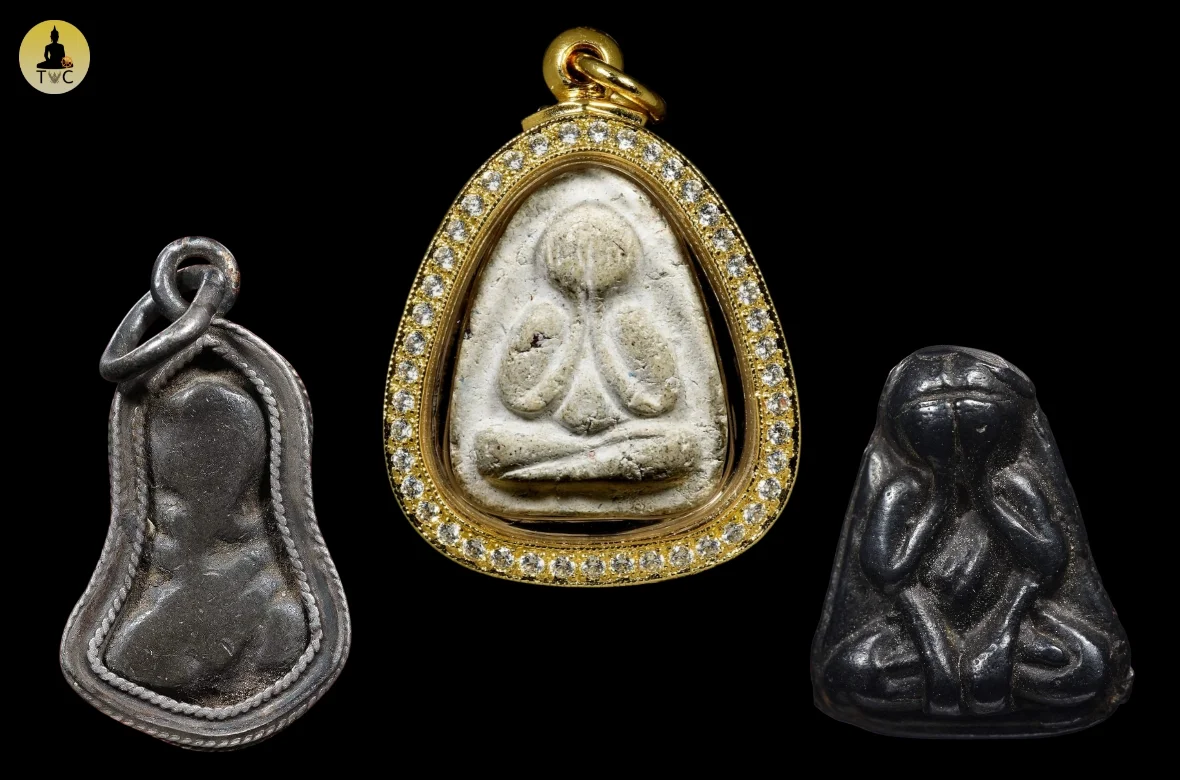
The sacred powder amulets of Wat Chaloem Phra Kiat are among the most distinctive in all of Thai amulet history. They are made from yellowish-white sacred powder and produced in a remarkable variety of molds, reflecting the ambition and religious devotion of their creators. The mold types include the Lotus Petal Mold, the Chinnarat Mold, and the Phra Kong Mold.
In addition to these figurative molds, the amulets also feature a rich range of Yantra pattern designs. These include the Five-Yantra Mold, Three-Layer Mold, Wa Yantra Mold, Five-Layer Mold, Side-U Mold, and Seven-Layer Mold. The breadth and variety of these designs indicate large-scale, ceremonially significant production.
Many of the completed amulets were enshrined within the large pagoda at Wat Chaloem Phra Kiat, underscoring their sacred status. However, around 1941, the temple suffered a robbery when thieves broke into the pagoda and stole a portion of the amulets. The remaining pieces were secured by the abbot and subsequently distributed to the wider community, further dispersing these now-rare sacred objects into private collections.
Impact on Thai Amulet Tradition and Collector Value
The History of Wat Chalerm Phra Kiet has had a lasting impact on the broader landscape of Thai amulet history and collector culture. Phra Somdej Wat Chaloem Phra Kiat is regarded within the amulet community as an excellent alternative to the famous Phra Somdej Wat Rakhang and Wat Bang Khun Phrom amulets — both considered among the highest-tier Phra Somdej pieces in existence. For collectors unable to acquire those legendary amulets, Wat Chaloem Phra Kiat offers comparable antiquity, sacred pedigree, and spiritual power.
Genuine pieces command significant market value, with authentic examples ranging from tens of thousands to hundreds of thousands of Thai Baht. The 1941 theft and subsequent dispersal only deepened their rarity. To understand more about the role such amulets play in devotional practice, refer to the authoritative overview of the Thai Buddhist amulet tradition on Wikipedia.
The amulet is specifically known for its efficacy in metta mahaniyom — the power of loving-kindness and charm — as well as enhancing luck and wealth. These qualities make it especially appealing to collectors and devotees across Singapore, Malaysia, China, Taiwan, and Hong Kong who seek both spiritual benefit and investment-grade historical pieces.
History of Wat Chalerm Phra Kiet — Collector Guide for Singapore and Southeast Asia
For collectors based in Singapore and across the region, understanding the History of Wat Chalerm Phra Kiet is the first step to making an informed acquisition. Sourcing an authentic Thai amulet from this temple requires diligence, as the market contains counterfeits of varying quality — some highly convincing. Always consult a trusted mentor or reputable dealer, verify that the asking price aligns with established market values, and take time to study the known characteristics of genuine pieces before purchasing.
The wide variety of molds produced at Wat Chaloem Phra Kiat means that collectors should educate themselves on each specific mold type. Be especially wary of amulets priced significantly below market value, as this is a common indicator of inauthenticity. Working with a specialist dealer — such as those serving the Thai amulet Singapore community — provides an added layer of assurance when navigating this complex and rewarding field.
Frequently asked questions
History of Wat Chalerm Phra Kiet is an important chapter in Thai Buddhist amulet tradition. This article explores its historical context, key figures, and lasting influence on the collector community.
Understanding the history behind Thai amulets deepens appreciation for their spiritual and cultural value. This knowledge helps collectors make more informed decisions.
Thai Amulets Collection offers an extensive knowledge base including monk biographies, temple guides, and historical articles. Visit our Learn section for more.