Story of Rian Prai Krasip
Discover the Story of Rian Prai Krasip — the Whispering Ghost Skull Coin from Wat Don, Bangkok. Origins, monk blessings & collector guide for Singapore.
Story of Rian Prai Krasip — History and Significance
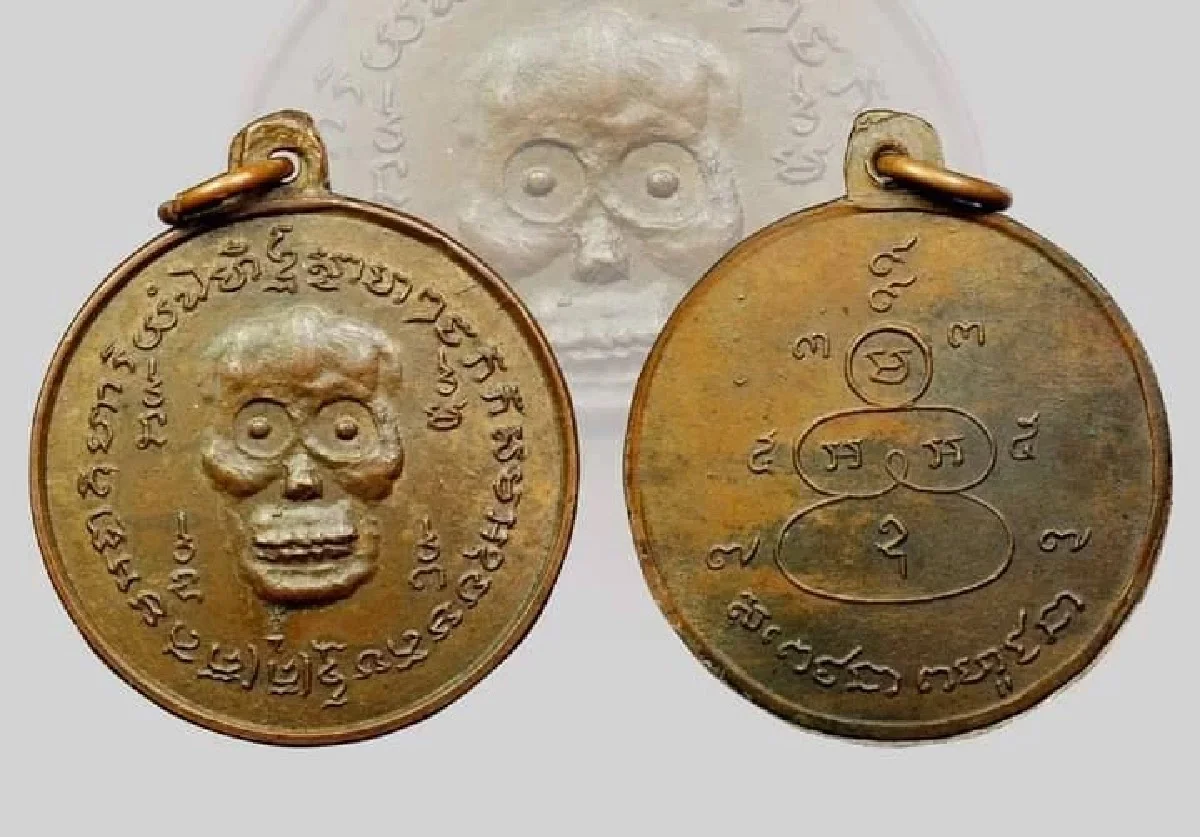
The Story of Rian Prai Krasip is one of the most captivating chapters in Thai amulet history, drawing collectors across Singapore, Malaysia, Hong Kong, and Greater China into a world where folklore, Buddhist faith, and sacred craftsmanship converge. Known in English as the Whispering Ghost Skull Coin, this legendary amulet originates from the haunted grounds of Wat Don and its ancient cemetery in the Yannawa district of Bangkok. Its enduring mystique and verifiable consecration history make it one of the most sought-after pieces among serious collectors of authentic Thai amulet art.
Wat Don and its surrounding cemetery are no ordinary burial grounds. For generations, local residents and devotees have passed down accounts of supernatural encounters, restless spirits, and unexplained phenomena tied to this site — stories so persistent that even Bangkok Governor Chadchart Sittipunt publicly acknowledged the location’s eerie reputation during a recent civic event.
The haunted legacy of Wat Don stems from a sobering historical reality: thousands of individuals were buried on its grounds, many of whom died violently or were interred without proper Buddhist funeral rites. This concentration of unresolved spiritual energy is widely understood within Thai Buddhist tradition to create sites of immense metaphysical power — fertile ground for the creation of potent sacred objects.
Origins and Historical Context of Story of Rian Prai Krasip
The Story of Rian Prai Krasip officially begins in 1957, when a large-scale clearing of the Wat Don Cemetery was undertaken. This was not merely a municipal project — it was a deeply spiritual undertaking led by Luang Por Kuen (Phra Khru Kalyanawisut), the revered abbot of Wat Don who had served the temple from the Indochina War period until his passing in 1964.
Luang Por Kuen recognised the profound spiritual significance of the cemetery clearing. Rather than treating the exhumed grounds as something to be sanitised, he channelled the event into an act of religious merit — commissioning the creation of a sacred amulet that would offer peace to the wandering spirits of the cemetery while simultaneously serving as a protector for the living.
The mid-1950s in Thailand were a time of considerable social and political change, with the country navigating the aftermath of World War II and the broader currents of the Indochina conflict. Against this backdrop, the sanctification of powerful protective amulets carried both spiritual and cultural weight, anchoring communities in faith and tradition during uncertain times.
Key Events and Sacred Significance in the Story of Rian Prai Krasip
The creation of the Rian Prai Krasip was consecrated through a grand blessing ceremony in 1957, distinguished by the participation of some of the most venerated Buddhist monks of the era. Six eminent masters gathered to lend their spiritual authority to the amulet’s empowerment:
- Luang Pu Toh of Wat Pradu Chim Pli
- Luang Por Chong of Wat Na Tang Nok
- Luang Por Tae of Wat Sam Ngam
- Father Than Klai of Wat Suan Khan
- Luang Por Lee of Wat Asokaram
- Luang Por Pae of Wat Phikun Thong
The amulet itself was crafted from fire-treated copper, a material chosen for its durability and its association with elemental transformation — a fitting medium for an object intended to bridge the worlds of the living and the departed. The coin-shaped design bears imagery rooted in prai (ghost) spiritual iconography, reflecting its unique dual purpose.
The dual mission of the Rian Prai Krasip is central to understanding its sacred significance. On one level, it was created to transfer merit to the unquiet spirits buried at Wat Don, helping them attain a more peaceful rebirth. On another level, it was designed as a powerful talisman for its wearer — embodying the protective blessings of six master monks and the raw spiritual energy of one of Bangkok’s most supernaturally charged locations.
Impact on Thai Amulet Tradition and Collector Value
The Story of Rian Prai Krasip holds a distinguished place within Thai amulet history precisely because of its layered provenance. Few amulets can claim simultaneous consecration by six masters of this calibre, including luminaries such as Luang Por Lee of Wat Asokaram — a monk whose reputation for supernatural attainment is legendary across the Thai Buddhist world. This concentration of spiritual authority is a defining marker of collector-grade amulets.
For collectors in Singapore, Malaysia, Taiwan, and Hong Kong, the Rian Prai Krasip represents a convergence of documented historical events, named monk participants, verifiable materials, and a specific consecration date — all hallmarks of an authentic Thai amulet with traceable lineage. Understanding the full story of its creation is essential for any serious collector seeking to assess its value and legitimacy.
The Thai Buddhist amulet tradition has long recognised that an amulet’s power is inseparable from the integrity of its creation process — the purity of materials, the spiritual attainment of the monks involved, and the sacred intent behind its making. By every measure, the Rian Prai Krasip satisfies these criteria at an exceptional level.
Story of Rian Prai Krasip — Collector Guide for Singapore and Southeast Asia
For collectors based in Thai amulet Singapore communities and across Southeast Asia, the Rian Prai Krasip is prized for its spiritual attributes as much as its historical rarity. Devotees attribute a distinctive range of blessings to this amulet: protection from physical and spiritual harm, enhanced charm and prosperity in business and trade, intuitive guidance against danger or misfortune, and heightened luck in games of chance and financial ventures.
Collectors are advised to authenticate specimens carefully, paying close attention to the fire-treated copper composition, the coin’s design elements, and documented provenance linking the piece to the 1957 Wat Don Cemetery clearing. Established dealers who specialise in Thai Buddhist tradition amulets — particularly those with expertise in mid-century Bangkok pieces — are best positioned to verify authenticity. Devotees who acquire this amulet are encouraged to treat it with deep respect, nurturing it as one would a cherished spiritual companion, which is said to strengthen the bond between keeper and talisman.
Frequently asked questions
Story of Rian Prai Krasip is an important chapter in Thai Buddhist amulet tradition. This article explores its historical context, key figures, and lasting influence on the collector community.
Understanding the history behind Thai amulets deepens appreciation for their spiritual and cultural value. This knowledge helps collectors make more informed decisions.
Thai Amulets Collection offers an extensive knowledge base including monk biographies, temple guides, and historical articles. Visit our Learn section for more.