History of Wat Bangkhunprom Chendi
Explore the History of Wat Bangkhunprom Chendi — sacred amulet retrievals, the 1957 crypt opening, and collector significance for Singapore and Southeast Asia.
History of Wat Bangkhunprom Chendi — History and Significance
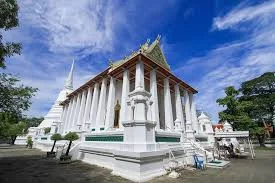
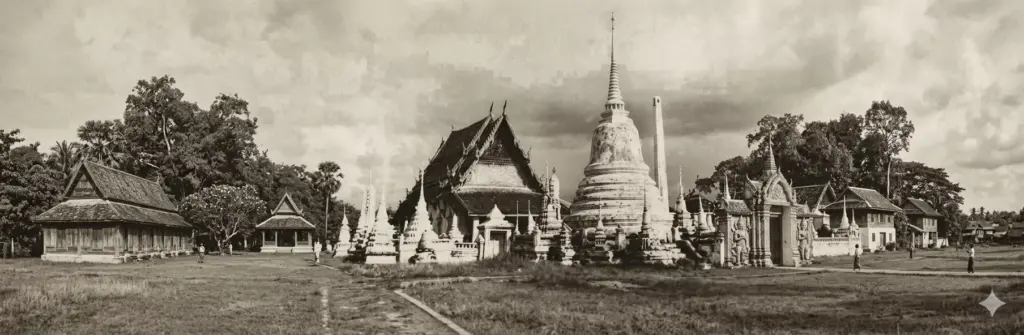
The History of Wat Bangkhunprom Chendi stands as one of the most compelling chapters in Thai amulet history, drawing the attention of serious collectors across Singapore, Malaysia, Hong Kong, and Greater China. This sacred pagoda crypt at Wat Bangkhunprom (now known as Wat Mai Amataros) housed thousands of Phra Somdej amulets consecrated by the legendary monk Somdej Phra Buddhacharn Toh, making it a site of extraordinary spiritual and numismatic importance. Understanding its history is essential for any collector seeking to appreciate the provenance and rarity of authentic Thai amulets from this lineage.
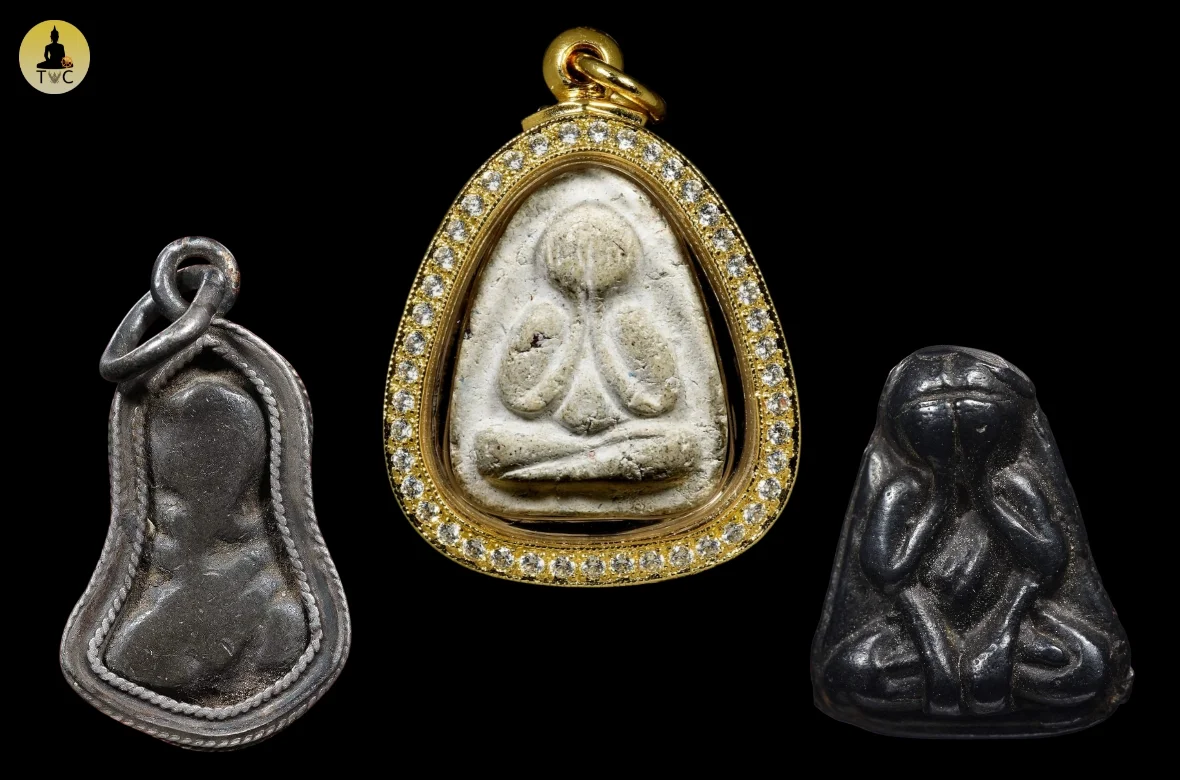
Somdej Phra Buddhacharn Toh, together with his attendant Ta Duang, is believed to have placed approximately 84,000 Phra Somdej amulets within the crypt around B.E. 2413 (1870). The number 84,000 was deliberately chosen to represent the 84,000 teachings of the Buddhist Dharma (Dhamma Khandha), anchoring the collection in profound Thai Buddhist tradition. The crypt thus became more than a repository — it was a living monument to Buddhist doctrine and the healing power attributed to Somdej Toh’s consecrated works.
Following Somdej Toh’s passing in B.E. 2415 (1872), the fame of his Phra Somdej amulets grew rapidly, and demand far outpaced supply at Wat Rakhang. This surge of devotion turned the eyes of believers toward Wat Bangkhunprom, setting the stage for the three major retrieval events that define the History of Wat Bangkhunprom Chendi.
Origins and Historical Context of the History of Wat Bangkhunprom Chendi
The temple of Wat Bangkhunprom sits along the Chao Phraya River in Bangkok and carries a rich heritage tied to the Rattanakosin era of Thai royal and religious patronage. Its connection to Somdej Phra Buddhacharn Toh elevates its status within the Thai amulet world, as Toh remains the most revered monk in the history of Phra Somdej amulet creation. The crypt — or chendi — built within the temple’s pagoda became the spiritual heart of this legacy.
Ta Duang, Somdej Toh’s trusted attendant, played a pivotal role not only in depositing amulets into the crypt but also in restoring the temple itself. His grandson, Phra Aksorn Sombat, later became a prominent local tycoon who took a leading role in the second retrieval event, demonstrating how the temple’s history interwove family lineage, faith, and community leadership across generations. This familial continuity is an important thread running through the History of Wat Bangkhunprom Chendi.
The temple’s amulets gained particular relevance during periods of national crisis, when Thai Buddhist tradition directed devotees toward sacred objects for protection and spiritual fortification. As political tensions mounted in the late 19th century, the chendi of Wat Bangkhunprom became a focal point for those seeking divine protection — a pattern that has shaped the enduring collector value of these amulets to this day.
Key Events and Sacred Significance in the History of Wat Bangkhunprom Chendi
The retrieval of Phra Somdej amulets from the Bang Khun Phrom crypt involved an ingenious, handcrafted method. A bamboo pole approximately 2 wa (4 meters) long was prepared by breaking through all its internal joints, then threading a thick raw thread through the hollow interior. The thread was knotted and spread into a tassel at one end, dipped in clay to form a ball roughly the size of a hand span, and inserted through a ventilation hole in the pagoda to draw amulets upward by adhesion — a process that required patience and repeated attempts.
First Retrieval — B.E. 2425 (1882): Luang Wit Samruam, who was 12 years old at the time and recounted this event in March 2005 at the age of 97, described the first retrieval as the most productive of the three. By this point, Phra Somdej amulets from Wat Rakhang were already exhausted, and the reputation of Somdej Toh’s healing amulets had spread widely following B.E. 2416. The abundant initial supply within the crypt meant that this first extraction yielded the highest number of amulets.
Second Retrieval — 1893 (R.S. 112): The second major retrieval coincided with rising tension between Thailand and France, triggering a surge of demand for protective amulets. Crowds gathered at Wat Mai Bangkhunprom, as recalled by Luang Sri Saraban, who arrived to find the temple grounds packed with people competing for amulets. Phra Aksorn Sombat, grandson of Ta Duang, oversaw the retrieval and personally acquired around 500 amulets. He even ground broken amulets into powder, remoulded them into new Phra Somdej amulets with a denser texture, and returned these recreated pieces to the original stupa.
Third Retrieval — 1907: The final major retrieval lasted several months but yielded disappointing results initially, often uncovering only bricks. A practical solution was devised: water was poured through the ventilation holes continuously — sometimes throughout the night — to erode the soil layer concealing the amulets. After allowing the crypt to dry, the water-exposed amulets became accessible. This method revealed a higher number of pieces, and sporadic retrieval continued for months before gradually ceasing.
Impact on Thai Amulet Tradition and Collector Value
The official opening of the Phra Somdej Bangkhunprom Crypt in B.E. 2500 (1957) marked a watershed moment in modern Thai amulet history. Wat Bangkhunprom, by then renamed Wat Mai Amataros, sought assistance from the Fine Arts Department of Thailand to conduct a formal and controlled opening of the crypt. Field Marshal Prabhas Charusathien, serving as Deputy Prime Minister and Minister of Interior, presided over the ceremony on November 24, 1957.
Following careful sorting, 2,950 amulets were found in excellent condition and stamped with the temple’s official seal to prevent counterfeiting — a measure that speaks directly to the importance of authentication in the world of authentic Thai amulet collecting. These amulets, collectively dubbed “New Kru Somdej Bangkhunprom” by collectors and devotees, were distributed to the public as part of a merit-making initiative and were rented out quickly. A significant portion was presented to Field Marshal Prabhas Charusathien in recognition of his donation of approximately 1.5 million baht to the temple.
Field Marshal Prabhas stored many of these amulets at Ban Sam Ruedu in Lampang Province, under the care of his mother, Chao Buathong (Na Lampang) Charusathien. Over time, they were donated to temples throughout Lampang and distributed during Kathin, Pha Pa, and other merit-making occasions, spreading the legacy of these sacred amulets across northern Thailand. The History of Wat Bangkhunprom Chendi thus shaped not only Bangkok’s amulet culture but also that of entire provincial communities, as explored further in the Thai Buddhist amulet tradition on Wikipedia.
History of Wat Bangkhunprom Chendi — Collector Guide for Singapore and Southeast Asia
For collectors based in Singapore, Malaysia, Taiwan, and Hong Kong, the History of Wat Bangkhunprom Chendi provides critical context for evaluating Phra Somdej amulets from this lineage. Amulets from the 1957 official opening carry the temple’s stamped seal — an important authentication marker — while pieces from the earlier three retrievals (1882, 1893, and 1907) are distinguished by their age, surface texture, and material composition. The slight variations in mould definition on the 1957 “New Kru” amulets, caused by the hurried creation and pressing process, are themselves recognised identifying features rather than flaws.
Collectors seeking authentic Thai amulets from Wat Bangkhunprom should be aware that some amulets from the 1957 batch remained unstamped, as stamping was applied per 100 pieces during distribution. This nuance makes expert verification and provenance documentation all the more valuable when acquiring pieces from this historically significant crypt. As a trusted Thai amulet Singapore resource, we encourage collectors to study the full history of each amulet’s retrieval context before making acquisition decisions.
Frequently asked questions
History of Wat Bangkhunprom Chendi is an important chapter in Thai Buddhist amulet tradition. This article explores its historical context, key figures, and lasting influence on the collector community.
Understanding the history behind Thai amulets deepens appreciation for their spiritual and cultural value. This knowledge helps collectors make more informed decisions.
Thai Amulets Collection offers an extensive knowledge base including monk biographies, temple guides, and historical articles. Visit our Learn section for more.