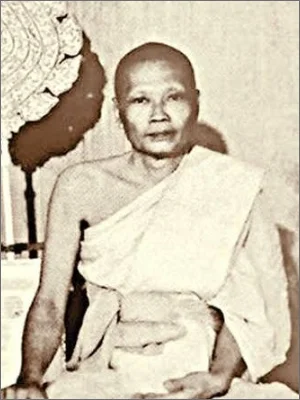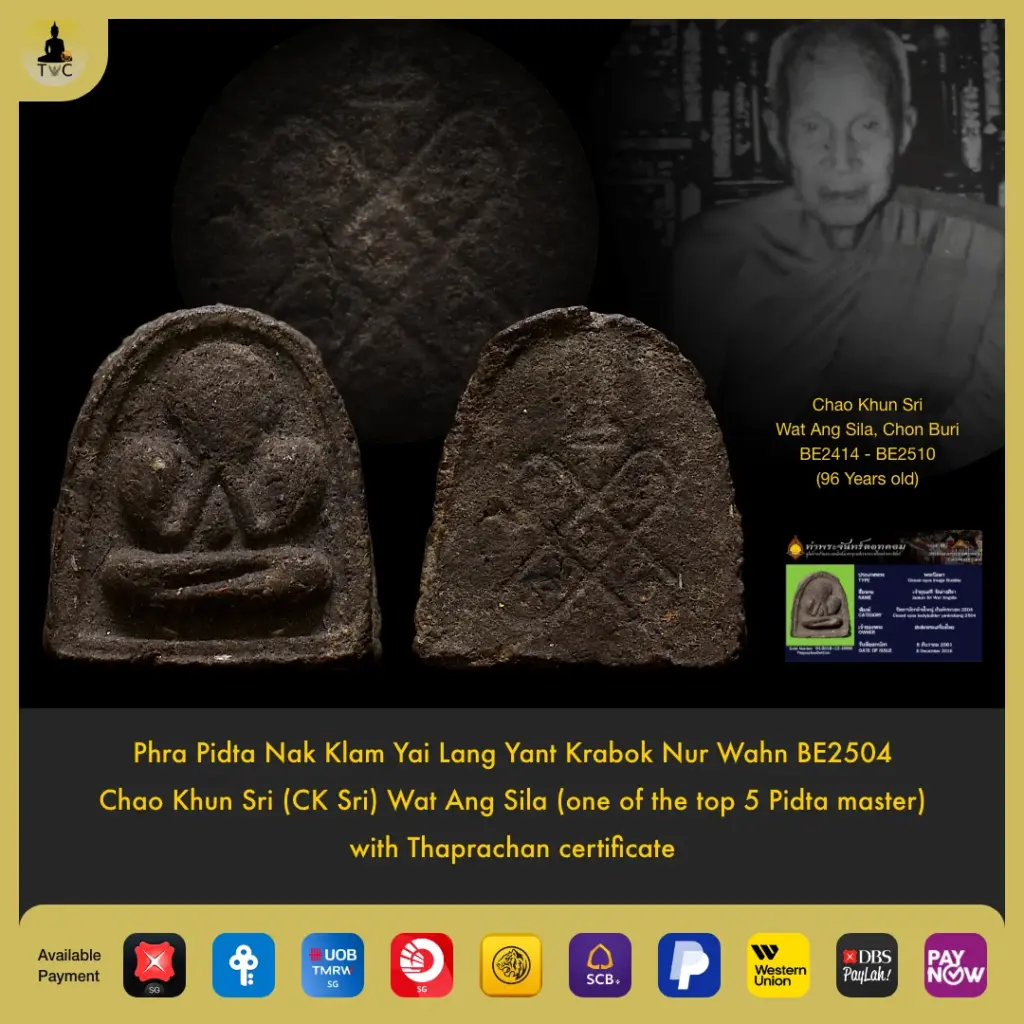
Phra Pidta Nak Klam Yai Lang Yant Krabok Nur Wahn Rak BE2504 Chao Khun Sri Wat Ang Sila
| Type | Phra Pidta |
| Monk | Chao Khun Sri Wat Suthat |
| Temple | Wat Ang Sila |
| B.E. Year | 2504 |
| Material | Wahn Rak |
| SKU | TAC-0507 |
Phra Pidta Nak Klam Yai Lang Yant Krabok • Nur Wahn Rak BE2504 / CE1961 • Wat Ang Sila, Chonburi • Consecrated by Chao Khun Sri (CK Sri / Phra Ratchawetmunee) • Associated with the Wat Ang Sila Pidta lineage
Phra Pidta Nak Klam Yai Lang Yant Krabok • Nur Wahn Rak
BE2504 / CE1961 • Wat Ang Sila, Chonburi • Consecrated by Chao Khun Sri (CK Sri / Phra Ratchawetmunee) • Associated with the Wat Ang Sila Pidta lineage
What This Piece Represents (Collector Lens)
Among serious Phra Pidta collectors, this is the type of amulet that immediately commands attention. The name alone carries weight: Nak Klam Yai refers to the large curled-arm posture, while Lang Yant Krabok points to the distinctive sacred reverse inscription that helps define the identity of the piece. When such a form is paired with the name of Chao Khun Sri of Wat Ang Sila, the amulet moves beyond simple devotional status and enters the realm of established collector significance. For many devotees and advanced students alike, this is a classic example of a mid-20th-century Pidta issue where form, ritual intention, and master lineage come together in a single composition.
Amulet Information
Name: Phra Pidta Nak Klam Yai Lang Yant Krabok
Material: Nur Wahn Rak (sacred herbal powder composition)
Year: BE2504 / CE1961
Temple: Wat Ang Sila
Province: Chonburi
Monk: Chao Khun Sri (CK Sri / Phra Ratchawetmunee)
Reverse Design: Lang Yant Krabok
Authentication: Thaprachan certificate
Lineage Note: A respected Wat Ang Sila Pidta issue associated with one of Thailand’s most highly regarded Pidta masters.
SKU: TAC-CKSri-PidtaNakKlamYai-YantKrabok-BE2504-001
Price:
SGD 388
History & Lineage — Phra Pidta Nak Klam Yai Lang Yant Krabok (Wat Ang Sila, Chonburi)
Chao Khun Sri, also known as Phra Ratchawetmunee, is remembered as one of the defining names in the history of Phra Pidta. His reputation was built not on marketing language, but on decades of religious standing, ritual discipline, and the enduring regard of collectors who studied the results of his work. Wat Ang Sila in Chonburi became inseparably linked with his Pidta issues, and over time those issues came to be viewed as serious collector material rather than merely local temple amulets.
The BE2504 period belongs to the mature phase of his consecration activity, which is one reason collectors pay special attention to amulets from this era. In Thai amulet circles, Chao Khun Sri is frequently placed among the foremost Phra Pidta masters, a status that reflects broad admiration for his ritual authority and the long-standing effectiveness attributed to his creations. That standing is an important part of why this amulet continues to be sought after today.
Within the wider Pidta tradition, the Nak Klam Yai form is especially appreciated because it expresses the classic closed-eye symbolism of inward restraint and spiritual protection, while the Yant Krabok reverse gives the piece a strong ritual signature. Together, these elements place the amulet comfortably within the main current of traditional Thai Pidta collecting.
Purpose of Creation
The creation of this batch reflects the practical and spiritual logic of mid-century Thai temple amulets. Such amulets were often made not only for ritual blessing, but also to support temple upkeep, strengthen the moral bond between monastery and lay community, and provide devotees with a portable sacred object for daily life. In this case, the devotional intent centers on protection, fortune, spiritual resilience, and social harmony — all themes that align closely with how Phra Pidta amulets have long been understood in Thai belief.
- To provide comprehensive protection and safe passage.
- To strengthen spiritual resilience against misfortune and negative influences.
- To support Wat Ang Sila through merit-making and temple-related fundraising.
- To bless devotees with fortune, acceptance, and favorable human relations.
About the Material — Nur Wahn Composition
This amulet is described as nur wahn, a sacred herbal powder composition deeply respected in Thai amulet culture. Unlike a simple clay body, nur wahn suggests a ritual matrix built from herbs, powders, and other blessed ingredients brought together with intention. Collectors usually read such material through texture, maturity, and density: an old nur wahn piece often shows an organic, settled body with a dry surface, subtle tonal variation, and natural evidence of age. That character matters because it helps convey both the material sincerity and the period feeling of the amulet.
- Sacred herbal powder composition traditionally associated with protective and auspicious ritual use.
- References include holy powders and herbal components such as temple-blessed substances and classic mystical powder traditions.
- Collectors appreciate the mature surface and naturally aged body that are typical of older nur wahn amulets.
Design / Pim / Variant Notes
The front shows the well-known Nak Klam Yai posture, one of the recognized and desirable Pidta configurations. The closed-eye form carries the traditional sense of withdrawing from distraction and guarding the inner self, while the large curled-arm presentation gives the piece strong visual identity. On the reverse, the Yant Krabok inscription serves as a defining ritual feature. In collector language, this is the kind of amulet where front and back work together: the front establishes the sacred image, while the reverse seals the ritual personality of the piece.
Reverse view highlighting the important Yant Krabok inscription that gives this variant its distinct ritual character.
Consecration & Ritual Empowerment
The batch is described as having undergone an intensive and traditional consecration process under Chao Khun Sri’s direct guidance. In Thai amulet practice, the spiritual standing of the presiding monk matters as much as the ritual form itself. Extended chanting, inscription work, empowerment of the raw materials, and placement within a sacred temple environment all contribute to how devotees understand the finished amulet. This is why older master-made Pidta pieces are often respected not just for age, but for the seriousness of the blessing tradition behind them.
- Empowerment of the raw nur wahn material through sacred inscriptions and ritual preparation.
- Extended chanting cycles and protective mantra recitation.
- Association with classic Pidta and protective katha traditions.
- Final blessing within the sacred environment of Wat Ang Sila.
Traditional Spiritual Attributes & Metaphysical Properties
In Thai amulet belief, this Pidta is traditionally associated with a powerful combination of protection, fortune, and social favor. The closed-eye image is especially linked with guarding the self from danger and unwanted influences, while the master lineage of Chao Khun Sri strengthens the devotional reading of the amulet as one of real protective depth. At the same time, Pidta amulets are often believed to support metta, prosperity, and beneficial human relationships. These meanings are part of Thai sacred culture and should be understood as devotional attributes rather than guaranteed outcomes.
- คงกระพัน / แคล้วคลาด: Traditionally revered for protection, resilience, and safe avoidance of danger.
- โชคลาภ (chok larp): Associated with fortune, financial opportunity, and favorable openings.
- เมตตามหานิยม (metta mahaniyom): Valued for charm, goodwill, acceptance, and smoother human interactions.
- มหาเสน่ห์: Often interpreted as subtle personal magnetism and enhanced likability.
Side profile showing the depth, body composition, and age-consistent structure of the herbal powder matrix.
Rarity & Collector Significance — Phra Pidta Nak Klam Yai Lang Yant Krabok BE2504
This amulet is sought after because several strong collector factors converge in one piece. First, it is tied to Chao Khun Sri, a name that already carries established market and lineage respect. Second, it belongs to a clearly identified BE2504 issue with a specific form and reverse type, which makes it easier to place within serious Pidta study. Third, the presence of Thaprachan certification adds another layer of confidence for collectors who value documentation. These points matter because the market for important Pidta amulets is increasingly selective, and pieces with clear identity and recognized master attribution tend to stand out.
- Master-tier origin from Chao Khun Sri of Wat Ang Sila.
- Recognizable Nak Klam Yai front with Yant Krabok reverse.
- Mid-century BE2504 period, attractive to both devotees and serious collectors.
- Thaprachan certificate strengthens presentation and provenance confidence.
Thaprachan certificate accompanying the piece, supporting collector documentation and authenticity presentation.
Conclusion
The Phra Pidta Nak Klam Yai Lang Yant Krabok in nur wahn is a highly meaningful Wat Ang Sila issue that combines respected master lineage, clear typological identity, and enduring devotional appeal. Its association with Chao Khun Sri places it within the serious stream of Thai Pidta collecting, while the BE2504 date and Thaprachan certification further strengthen its standing. For devotees, it is traditionally revered for protection, fortune, and metta. For collectors, it is a documented and visually distinctive master-linked Pidta with lasting study value.
Attributes reflect Thai Buddhist devotional tradition and are not measurable claims.