History of Phra Chao Ha Pra Ong: The Sacred Five Buddha Power in Thai Amulets Explained
Discover the History of Phra Chao Ha Pra Ong — five-Buddha amulet origins, sacred symbolism, notable monks, and collector value. Singapore's trusted Thai amulet guide.
History of Phra Chao Ha Pra Ong — Origins and Sacred Significance
The History of Phra Chao Ha Pra Ong (พระเจ้า 5 พระองค์) spans centuries of Thai Buddhist tradition, making it one of the most symbolically layered amulet types sought by collectors in Singapore, Malaysia, and across Greater China. This sacred design features five Buddha figures arranged in a single composition, representing completeness, balance, and multi-directional spiritual protection. For collectors engaging with authentic Thai amulet culture, understanding its origins is essential to appreciating its enduring value.
The Phra Chao Ha Pra Ong is not defined by a single temple lineage or founding event. Instead, it emerges across different eras and sacred traditions, shaped by the philosophical richness of Buddhist cosmology. This multi-origin nature makes the amulet type both versatile and deeply rooted in Thai Buddhist history.
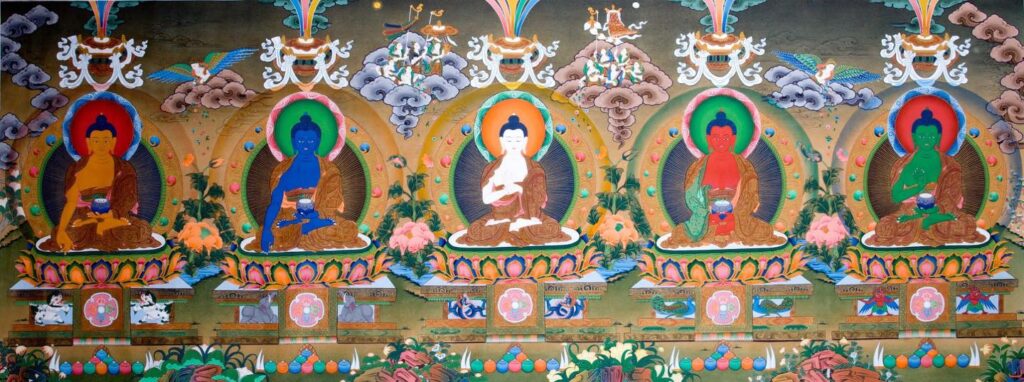
At its core, the design draws from the concept of the Five Dhyani Buddhas — a framework present in Mahayana and Vajrayana traditions where each Buddha embodies a direction, a wisdom, and a transformation of human consciousness. Over centuries, Thai masters adapted this cosmological structure into tangible amulet forms, combining Buddha imagery with yantra (ยันต์) inscriptions that collectors now recognise as hallmarks of this type.
Historical Origins and Development of Phra Chao Ha Pra Ong in Thai Amulet History
The History of Phra Chao Ha Pra Ong as a distinct amulet type is best understood within the broader sweep of Thai amulet history, particularly during the transition from the late Ayutthaya to the early Rattanakosin periods — approximately BE 2300 to BE 2500 (circa 18th to early 20th century CE). This era saw a flowering of esoteric Buddhist practice in Thailand, during which tantric interpretations of the Five Dhyani Buddhas were increasingly incorporated into sacred objects for laypeople and monastics alike. Temple workshops and learned ajahns began formalising these cosmological concepts into pressed powder and metal amulet designs.
The philosophical foundation originates in the Five Directional Buddhas of Vajrayana Buddhism: Akṣobhya (阿閦佛) in the East, representing stillness and unwavering concentration (สมาธิ); Ratnasaṃbhava (宝生佛) in the South, embodying generosity and the fulfillment of intentions; Vairocana (大日如来) at the Centre, symbolising awareness and the wisdom of observation; Amitābha (阿弥陀佛) in the West, reflecting compassion, balance, and emotional harmony (เมตตา); and Amoghasiddhi (不空成就佛) in the North, associated with accomplishment, protection, and clarity of action. Each Buddha is linked to a specific form of wisdom — from 法界体性智 (the wisdom of the dharma-realm essence) to 大円鏡智 (the wisdom of the great mirror reflection).
Several revered masters are associated with the broader tradition that shaped the Phra Chao Ha Pra Ong amulet. Luang Pu Thong of Wat Rachayota is known for his structured approach to consecration ceremonies, lending authority to any batch produced under his guidance. Luang Phor Kuay of Wat Kositaram is closely associated with sacred powder amulets, a material category central to many Phra Chao Ha Pra Ong pim. Luang Pu Tim of Wat Lahanrai stands as a widely respected ritual master whose influence elevated the spiritual calibre of powder-based amulets across this type. Somdej Toh of Wat Rakang, one of the most foundational figures in Thai amulet symbolism, provided lasting philosophical and ritual influence that continues to shape how multi-Buddha compositions are understood by collectors today.
Key Design Variants, Materials, and Sacred Attributes in the History of Phra Chao Ha Pra Ong
The History of Phra Chao Ha Pra Ong is reflected in the diversity of its design formats, which vary by temple, era, and the aesthetic sensibility of the master overseeing production. The four primary variants are: the Linear Arrangement, in which five Buddhas are aligned horizontally; the Pyramid Formation, featuring one central Buddha flanked by four surrounding figures; Yantra-Embedded Designs, incorporating sacred ยันต์ script into the composition; and Relief Clay Pim (พิมพ์เนื้อผง), pressed powder forms with soft contours characteristic of older craftsmanship. Collectors evaluate each variant by examining symmetry, figure spacing, and the clarity of all five Buddha impressions.
The materials used in Phra Chao Ha Pra Ong production carry ritual significance beyond their physical properties. Phong (ผงพุทธคุณ) — sacred powder derived from ritual substances — forms the base of many authentic examples and is directly tied to the consecration process. Metal versions (ทองแดง / เนื้อโลหะ), particularly copper alloys, are employed for durability and to support detailed inscription work. Hand-carved wood (ไม้แกะ) examples exist as well, often associated with the oldest surviving specimens and reflecting a tradition of individual craftsmanship predating mass temple production.
In Thai Buddhist tradition, the spiritual attributes of this amulet are understood as a balanced, all-encompassing field of protection. The four primary attributes are: คุ้มครอง (Khum Khong — general protection), เมตตา (Metta — loving-kindness and positive interpersonal relationships), มหาลาภ (Maha Lap — fortune and prosperity), and แคล้วคลาด (Klaew Klaad — safe passage through danger). This completeness is precisely why collectors refer to it as a “complete field” amulet — one that addresses multiple aspects of life simultaneously.
Impact on Thai Amulet Tradition and Collector Value
The History of Phra Chao Ha Pra Ong has had a sustained impact on Thai amulet history because it bridges cosmological philosophy and practical devotion in a single object. Its multi-directional symbolism ensures it remains relevant across generations and collecting communities, from seasoned Thai collectors to newcomers in Singapore and Hong Kong approaching the tradition for the first time. The amulet type’s adaptability — across materials, eras, and temple lineages — gives it a breadth of presence few other designs can match.
Rarity and desirability within this category are determined by several key factors. Older Rattanakosin-era pieces, particularly those from limited consecration batches (รุ่น), command the highest collector interest. Well-defined, clearly impressed Buddha figures are strongly preferred over worn or poorly struck examples, as condition directly reflects both age and ritual care. Certification from recognised bodies such as Samakom or Thaprachan verification adds a further layer of confidence for buyers seeking an authentic Thai amulet.
For collectors in Southeast Asia and Greater China, the Phra Chao Ha Pra Ong represents a foundational category within any serious collection. To learn more about the Thai Buddhist amulet tradition and its historical roots, the broader context of sacred objects in Thailand offers valuable perspective on why this five-Buddha format has endured for centuries. Provenance — knowing which temple and which master oversaw production — remains the single most important factor in establishing value.
History of Phra Chao Ha Pra Ong — Collector Guide for Singapore and Southeast Asia
For collectors in Thai amulet Singapore communities and across the region, evaluating a Phra Chao Ha Pra Ong piece requires attention to four core criteria: authenticity (verified molds, inscriptions, and structural details consistent with known examples), age indicators (natural patina, surface texture, and material wear consistent with claimed era), condition (preservation of all five Buddha figures without significant damage), and certification from reputable grading bodies. Because this amulet type spans multiple temple lineages rather than a single traceable origin, provenance documentation is especially critical.
Beginner collectors often appreciate the Phra Chao Ha Pra Ong for its balanced symbolism and accessible entry points, while advanced collectors focus on rare temple variants, early Rattanakosin-era batches, and pieces tied to the consecration work of masters such as Luang Pu Tim or Somdej Toh. This dual appeal — meaningful for newcomers, rewarding for experts — ensures the type remains a consistent and respected presence in the Thai amulet market across Singapore, Malaysia, Taiwan, and beyond.
Frequently asked questions
History of Phra Chao Ha Pra Ong is an important chapter in Thai Buddhist amulet tradition. This article explores its historical context, key figures, and lasting influence on the collector community.
Understanding the history behind Thai amulets deepens appreciation for their spiritual and cultural value. This knowledge helps collectors make more informed decisions.
Thai Amulets Collection offers an extensive knowledge base including monk biographies, temple guides, and historical articles. Visit our Learn section for more.